Finishing your degree is a massive achievement, a moment worth celebrating. But as the confetti settles, you're faced with what feels like the next big exam: the jobsuche nach dem studium. The great news is that the German job market is genuinely welcoming to graduates. The key, however, isn't just sending out a flood of applications and hoping for the best. It's about having a smart, strategic plan to navigate the landscape and truly stand out.
Navigating the German Job Market as a Recent Graduate
Stepping out of the familiar rhythm of university life and into the professional world can be a bit of a shock. The structured world of lectures, seminars, and deadlines is suddenly gone, replaced by the unstructured expanse of job portals, networking events, and the pressure to find that perfect first career move. It’s an exciting time, but let's be honest, it can also be pretty daunting.
The reality on the ground in Germany, though, is genuinely encouraging for new graduates. The country has one of the most effective systems in the EU for helping young people transition from education into stable, long-term employment. To put a number on it, Eurostat data from 2023 showed that the employment rate for recent graduates in Germany was around 87.7%, a figure that sits comfortably above the European average.
This positive outlook doesn't mean finding a job is a walk in the park. What it does mean is that if you approach your search with the right strategy, your chances of landing a role you're excited about are incredibly high.
To get a clearer picture of what you're stepping into, it helps to understand some key statistics and what they mean for your job search strategy.
Key Realities of the Graduate Job Market in Germany
| Market Aspect | Statistical Insight | What This Means for You | | :--- | :--- | :--- | | High Employment Rate | The employment rate for recent tertiary graduates was ~87.7% in 2023 (Eurostat). | Your odds are good! The demand is there, so focus on quality applications, not just quantity. | | STEM Field Dominance | A significant portion of open positions are in IT, engineering, and healthcare. | If you're in a STEM field, you're in a strong position. If not, focus on transferable skills like data analysis. | | The "Mittelstand" | Germany's small and medium-sized enterprises (SMEs) create over 50% of all jobs. | Don't just look at big corporations. SMEs often offer more responsibility and faster growth. | | Typical Search Duration | The average job search for a graduate takes between 3 to 6 months. | Be patient and persistent. This isn't a weekend project; it's a semester-long marathon. | | Internship Conversion | Around 30-40% of interns receive a full-time job offer from their host company. | Past internships are your secret weapon. Leverage those connections and experiences heavily. |
These numbers paint a clear picture: opportunities are plentiful, but competition is real, and the process takes time.
Understanding Current Hiring Trends
So, what are companies really looking for? Certain sectors are always on the lookout for fresh talent. Graduates with skills in IT, engineering (especially anything related to green tech or automation), and healthcare are consistently in high demand. And don't forget the "Mittelstand"—Germany's powerhouse of small and medium-sized businesses. They are often overlooked in the rush for big corporate names but offer fantastic opportunities.
Beyond your specific degree, employers are screening for a few key things:
- Digital Literacy: It's no longer a bonus; it's a baseline. Being comfortable with common software, understanding the basics of data analysis, and knowing your way around digital collaboration tools are non-negotiable.
- Problem-Solving Abilities: Can you talk about a complex project you tackled during your studies or an internship? A real-world example of how you think and solve problems is far more compelling than just listing the modules you passed.
- Intercultural Competence: Germany's business world is incredibly international. Showing that you can work effectively with people from different backgrounds is a huge plus.
Setting Realistic Expectations for Timelines
One of the biggest sources of anxiety during the post-uni job hunt is the unknown timeline. While everyone's journey is different, having a realistic timeframe in mind can help manage that stress. From the moment you start your search to signing a contract, you should expect the process to take anywhere from three to six months.
A successful job search is a marathon, not a sprint. Consistency, resilience, and a willingness to learn from every application and interview are your most powerful tools. Don't let rejections get you down; see them as feedback to fine-tune your approach.
This period covers everything—polishing your CV and cover letter, actively searching for the right roles, navigating multi-stage interviews, and finally, negotiating an offer. Staying organised is crucial. Using a tool to track where you've applied and even automate some parts of the process, like the service offered by JobCopilot, can be a massive help in saving you time and keeping your sanity.
A Mindset for Success
Finally, getting your head in the right space is just as important as perfecting your application documents. The job search will test your resilience. You're almost certainly going to face some rejection—that's a normal part of the process for absolutely everyone.
Try to think of it this way: every "no" is just one step closer to finding the right "yes." The goal isn't just to land any job; it's to find the right launchpad for your career. This shift in mindset can transform the search from a stressful chore into a proactive project of self-discovery. Stay positive, focus on consistent effort, and you'll be perfectly equipped to navigate the path ahead.
Finding Your Footing: How to Set Real-World Career Goals
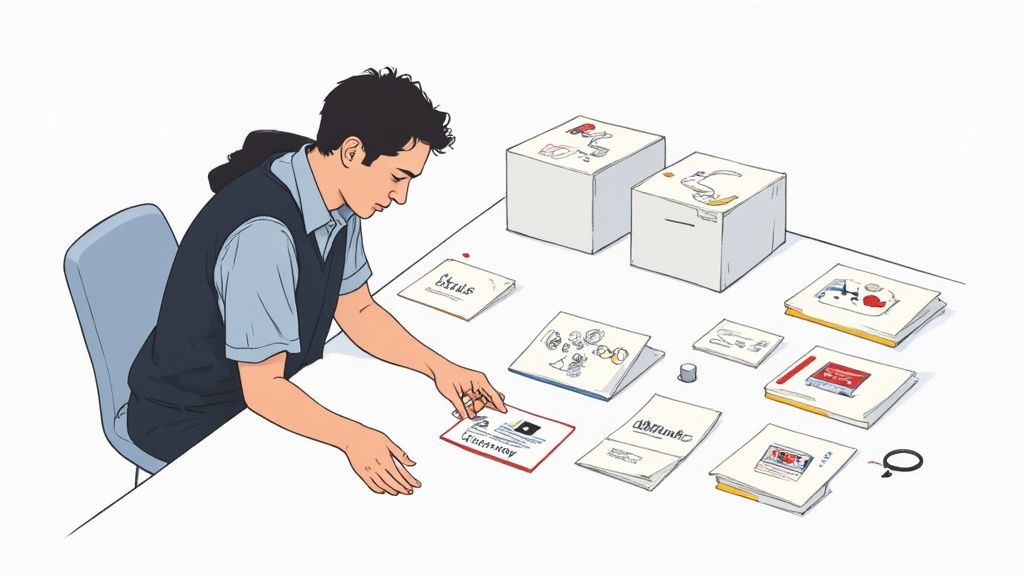
Before you even think about scrolling through job portals, the first and most important part of your jobsuche nach dem studium is figuring out where you're aiming. Flinging applications at every job that looks halfway decent is a recipe for burnout and disappointment. To be effective, you need clarity, and that starts with a bit of honest self-reflection.
This isn't about mapping out your entire life's work. It's simply about identifying a few solid starting points that genuinely connect with who you are, what you’re good at, and what you actually want from a job. A great way to begin is by looking back at your time at university and any internships or part-time work you did.
What parts did you actually enjoy? Was it the deep-dive research for that one term paper? The buzz of collaborating on a group project? Or maybe the satisfaction of finally cracking a tough problem in the lab? These moments are breadcrumbs leading you towards what truly motivates you.
Turning Your Degree into a Hiring Manager's Dream
Here's a hard truth: recruiters don't hire degrees, they hire skills. Your biggest challenge is to translate what you did in lecture halls and libraries into a language that makes sense to a hiring manager. So many graduates sell themselves short because they don't see the professional value in their academic work.
Take a history graduate, for instance. They might feel their degree is purely academic. But think about it—writing a 20-page dissertation required more than just reading. It demanded rigorous research, synthesising heaps of complex information, building a watertight argument, and managing your time down to the minute. Those are all gold-star skills for roles in marketing, communications, or even project management.
It’s the same for a biology grad who spent countless hours in a lab. They weren't just following a recipe. They were honing their analytical abilities, developing a hawk-like eye for detail, and mastering a methodical approach to problem-solving. These are the exact competencies needed for jobs in data analysis, quality assurance, or even financial consulting.
To get started, make a list of your biggest projects and experiences. For each one, break down the skills you used:
- Technical Skills: Name the specific software (Python, MATLAB, Adobe Creative Suite), lab techniques, or languages you know.
- Interpersonal Skills: Think about teamwork, presentations, resolving disagreements in a group, or any leadership roles you took on.
- Conceptual Skills: This is where your critical thinking, research, data analysis, and problem-solving abilities shine.
Pinpointing Your Workplace "Must-Haves"
Once you have a better handle on your skills, it's time to think about the kind of environment you'll thrive in. Your first job out of university really sets the tone for your career, and finding a place where you fit in culturally is just as crucial as the job description itself.
What really matters to you on a day-to-day basis? Do you get your energy from a loud, collaborative open-plan office, or do you need a quiet corner to do your best work? Are you hungry for a steep learning curve with a mentor guiding you, or would you rather have the freedom to figure things out on your own?
Defining your workplace non-negotiables isn't about being picky; it's about being strategic. Knowing what you value helps you filter out opportunities that look good on paper but would ultimately leave you feeling unfulfilled.
Give some serious thought to these areas and decide what's most important to you:
- Work-Life Balance: Are you after a classic 9-to-5, or are you okay with flexible hours that might sometimes run long?
- Company Culture: Do you see yourself in a formal, corporate setting or a more laid-back, start-up vibe?
- Learning and Development: How critical are formal training programmes or the chance to get more qualifications?
- Team Dynamics: Would you prefer being part of a big, diverse team or a small, tight-knit group?
- Salary and Benefits: It's important, of course, but where does it stack up against things like job satisfaction and a clear path for growth?
Answering these questions gives you a blueprint for your ideal employer. This blueprint becomes your compass during the jobsuche nach dem studium, pointing you towards companies where you'll not only succeed but also feel genuinely motivated. Armed with a clear list of your skills and workplace values, you can now start building a focused list of job titles and industries, turning a random search into a purposeful mission.
Crafting Application Documents That Stand Out
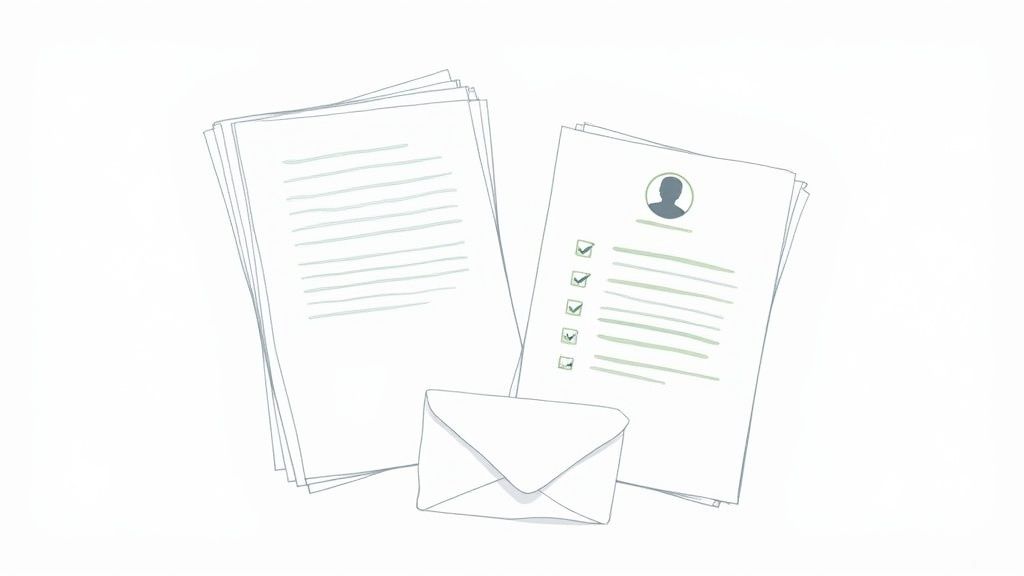
Think of your CV and cover letter as your personal marketing campaign. In the competitive German job market, these documents are much more than a simple summary of your past; they're your direct pitch for the value you'll bring to a company. Getting them right is probably the single most important step in turning your job search into an actual job offer.
The landscape for new graduates can be tough, and you need every advantage. Even in a relatively stable market, you're not the only one applying. For instance, recent figures from August 2025 showed the number of unemployed individuals in Germany reached 1.79 million, with the unemployment rate sitting at 4.0%. While those numbers aren't catastrophic, they do highlight why your application needs to grab a recruiter's attention immediately. You can dig into more German labour market trends on the Destatis website.
This all means that a generic, one-size-fits-all application is a waste of your time. It simply won't cut it. Each CV and cover letter you send out needs to be a thoughtful, meticulously crafted response to that specific role, at that specific company.
Demystifying the German Lebenslauf
The German CV, or Lebenslauf, has its own set of rules that can easily trip people up. It’s usually more detailed than what you might see in other countries and sticks to a clear, reverse-chronological format. Always put your most recent experience first—whether that's your final year project at university or a key internship.
A hot topic is always the professional photo. While it’s not legally required anymore, it's still a very common and, frankly, often expected practice. A high-quality, professional headshot adds a personal touch and helps recruiters connect with you as a person, not just a list of qualifications.
To make your experience section really pop, you need to shift your mindset from listing duties to showcasing achievements. Don’t just say what you did; show the impact you made. Quantify your results whenever you can.
- Before: "Responsible for data analysis in a research project."
- After: "Analysed a dataset of over 5,000 entries using SPSS, identifying key trends that contributed to a 15% revision in the project's hypothesis."
See the difference? That simple change from passive responsibility to active achievement makes you sound like a doer, not just an observer.
The Power of the Mirroring Technique
Before a human ever sees your application, it will likely be scanned by an Applicant Tracking System (ATS). These are software programs designed to filter candidates by looking for keywords from the job description. To get past this digital gatekeeper, you need to master the "mirroring" technique.
It’s simple, really. You carefully read the job advert and pinpoint the exact skills, qualifications, and phrases the employer is looking for. Then, you weave those same terms naturally throughout your CV and cover letter. If the ad asks for "project management skills" and "experience with stakeholder communication," those exact phrases need to appear in your documents.
Mirroring isn’t about blindly copying and pasting. It’s about strategically aligning your language with the employer's needs, proving you’re the perfect fit before a human even reads your application.
This level of customisation instantly shows you’ve done your homework. It proves you're genuinely interested in this role, not just firing off applications to anyone and everyone. It’s a make-or-break part of a successful jobsuche nach dem studium.
Structuring a Compelling Anschreiben
The German cover letter, known as the Anschreiben, should be sharp, powerful, and never, ever go over one page. I've found the most effective way to structure it is using a simple three-paragraph model that’s designed to grab attention and hold it.
- The Hook (Paragraph 1): You have to start strong. Right away, state the position you're applying for and share your core motivation for wanting it. The key is to connect your single most relevant skill or achievement directly to a major requirement of the job.
- The Evidence (Paragraph 2): Now it's time to back up your claims. Pick two or three essential requirements from the job description and give specific examples from your studies, internships, or work experience that prove you can deliver. A great way to structure these examples is with the STAR method (Situation, Task, Action, Result).
- The Close (Paragraph 3): Bring it home by reiterating your genuine enthusiasm for the role and the company itself. Confidently state your interest in an interview and sign off with a professional closing.
This clear, focused approach ensures your Anschreiben is persuasive and respectful of the recruiter's time. For even more tips on fine-tuning your documents and overall job search strategy, you can find a ton of great resources over on the https://jobcopilot.de/blog.
Think Outside the Job Board: Where the Best Graduate Roles Are Hiding
Of course, you're going to hit the big online job boards. That’s a given. But if that's the only thing you do in your jobsuche nach dem studium, you’re making a huge mistake and missing out on the best opportunities.
The most exciting graduate roles often never see the light of day on a public job site. Recruiters call this the "hidden job market," and it’s where companies fill positions through referrals, networking, or by hiring someone who was smart enough to approach them directly.
To break into this market, you have to switch from being a passive applicant who waits for ads to an active candidate who goes out and creates their own chances. It’s this mindset shift that makes all the difference between a long, frustrating job hunt and a successful one. The good news is, you don't need a massive professional network to get started. It's all about using the tools you already have.
Put Your Professional Profiles to Work
Platforms like LinkedIn and its German-speaking counterpart, XING, are so much more than just a place to park your CV online. They are active networking hubs where recruiters are constantly on the lookout for fresh talent. A sharp, well-optimised profile can literally pull job opportunities right into your inbox.
But to make that happen, your profile needs to do more than just state your degree. Treat it like your personal professional billboard.
- Nail Your Headline: Don't just settle for "Graduate from [University Name]." Be specific and forward-looking. Try something like, "Recent Mechanical Engineering Graduate | Seeking Roles in Renewable Energy | Skilled in CAD & Simulation." That immediately tells a recruiter who you are, what you want, and what you can do.
- Write a Summary That Tells a Story: This is your elevator pitch. Briefly touch on your academic focus, the key skills you picked up along the way, and the kind of impact you’re hoping to make. Sprinkle in some keywords from job descriptions you’ve been eyeing to help recruiters find you.
- Show, Don't Just Tell: Did you work on an interesting university project or write a compelling thesis? Create a dedicated section for it. Describe the challenge, the skills you applied (like data analysis or project management), and what the outcome was. This is concrete proof of your abilities.
Once your profile is looking good, start connecting with purpose. Follow companies that excite you, join groups in your industry, and actually engage with what people are posting. A thoughtful comment can get you noticed far more than a simple "like."
Don’t Forget Your Real-World Resources
Your university's career service centre is one of the most powerful, and often overlooked, tools at your disposal. These folks have built-up relationships with companies that are specifically looking to hire graduates from your university. They offer everything from CV workshops to exclusive job portals and practice interviews. Use them!
Another fantastic way to get in front of employers is by going to specialised job fairs for graduates, known as Absolventenmessen. These events are a goldmine. You get dozens of employers in one room, all there for the sole purpose of hiring new talent. It's a rare chance to have a real conversation with a recruiter, make a personal impression, and discover companies you’d never find online.
Even in a strong job market, the jump from university to a career has its hurdles. In Germany, the unemployment rate for those with an advanced degree was a low 2.15% in 2023. While that sounds great, it still means thousands of graduates are competing for the best roles. Thinking beyond the online application portal is what will give you the edge. You can dig deeper into these labour market dynamics from World Bank data.
The Power of a Bold, Speculative Application
Sending your CV and a cover letter to a company that isn't advertising a job might feel like a long shot, but it's a move that can seriously pay off. This is called a speculative application, and it immediately signals initiative, confidence, and a real interest in that specific company.
The trick is to do your homework first. Don't just send a generic email to the HR inbox. Pinpoint a specific department or manager your skills could directly support. Keep your letter short and to the point. Show them you've researched their recent projects or goals and explain how you could help them solve a problem or add value. This proactive approach ensures your jobsuche nach dem studium covers every possible angle, putting you firmly in the driver's seat.
Acing the Interview and Negotiating Your Salary

Getting that interview invitation is a fantastic feeling. It means all your hard work on your CV and cover letter paid off. Now, it's time to show them in person why you're the right person for the job. Think of it as a conversation where you can connect, show your value, and turn that interest into an offer.
Especially for graduate roles, don't be surprised if the process has a few stages. It might start with a quick phone call and end with a final chat with senior management. Each conversation has a different goal, so knowing what to expect will help you prepare and feel more confident every step of the way.
Mastering Common Interview Questions
There are a handful of questions you're almost certain to hear. Preparing for them isn't about memorising answers word-for-word, but about having a solid structure that lets your skills and personality come through.
When you hear, "Tell me about yourself," resist the urge to just list everything on your CV. This is your chance to give a quick, compelling pitch. I've found it helps to frame your answer around your past (your degree and key projects), your present (what you're looking for right now), and your future (and why this specific role is the perfect next step).
For behavioural questions that begin with "Tell me about a time when...", the STAR method is an absolute lifesaver. It gives you a simple framework to tell a clear and impactful story.
- Situation: Briefly paint the picture. What was the project or challenge?
- Task: What was your specific goal or responsibility?
- Action: Walk them through the exact steps you took to handle it.
- Result: What was the outcome? If you can, add numbers to show your impact.
Using this technique stops you from rambling and keeps your answers focused on real achievements. That’s a huge part of a successful jobsuche nach dem studium.
Answering the "Biggest Weakness" Question
Ah, the question everyone dreads. But honestly, it's a great opportunity to show you're self-aware and committed to improving. The absolute worst response is a cliché like, "I'm a perfectionist." They've heard it a thousand times.
Instead, pick a genuine, minor weakness and talk about how you’ve worked on it. For instance, you could mention that you used to struggle with delegating tasks in group projects. Then, explain the steps you took to get better, like using project management tools to assign clear roles, which made the whole team more efficient. It's honest, proactive, and ends on a positive note.
Preparing for Graduate-Specific Questions
As someone fresh out of university, interviewers want to understand your potential and motivation. You should be ready to talk about why you chose your degree and how it prepared you for this career path.
Remember, an interview is a two-way conversation. Asking smart questions about the team, company culture, or the role's biggest challenges shows you're genuinely interested and helps you figure out if it's the right place for you.
They will also want to know about your long-term goals. They’re looking for someone who has thought about their future and sees the company as part of it. Try to connect your own ambitions with the opportunities they offer, whether it's specific training programmes or clear paths for career growth.
Confidently Negotiating Your First Salary
Talking about money can feel awkward, especially when it's your first full-time job. But not negotiating can cost you a lot over the long run. The secret is to be prepared, professional, and confident in the value you offer.
First things first: do your research. Jump on platforms like Kununu or Gehalt.de to figure out the typical salary range for your role, industry, and location in Germany. This data is your best friend—it turns what you want into a reasonable, market-based request.
When the salary question inevitably comes up, do your best to avoid being the first to name a number. You could say something like, "Based on my research for similar roles and my qualifications, I'm expecting a salary in line with the market rate. Could you tell me the budget you have allocated for this position?"
If they push for a number, give a range instead of a single figure. For example, "I'm targeting a salary between €48,000 and €52,000." This gives you both some room to manoeuvre and shows you've done your homework. A truly successful jobsuche nach dem studium ends with you landing a great role that pays you what you're worth from day one.
Got Questions About Your Post-University Job Hunt?
Stepping out of university and into the job market can feel like navigating a maze. You've got the big picture sorted, but what about all those little questions that pop up along the way? Things like dealing with a gap on your CV or figuring out the right time to send a follow-up email can be just as crucial as a perfect application. Let's tackle some of the most common queries that come up during the jobsuche nach dem studium.
How Long Should My CV Be as a Graduate?
As a fresh graduate, stick to the golden rule: one page. That's it. Recruiters are swamped, often spending just a few seconds scanning each CV. Your mission is to make those seconds count by presenting your most powerful qualifications clearly and concisely.
Think about what really sells you at this stage. Your degree, standout modules, a relevant thesis, any internships, and significant part-time roles or projects should take centre stage. Use sharp bullet points to highlight what you achieved, not just what you did. A clean, well-organised, single-page CV tells a recruiter you know how to prioritise and that you respect their time.
Is It Okay to Apply for Jobs I'm Not 100% Qualified For?
Yes, absolutely. In fact, you should. Think of a job description as the company's ultimate wish list, not a rigid set of non-negotiable demands. If you confidently meet around 70-80% of the main requirements and you're genuinely excited about the role, go for it.
Your cover letter is the perfect place to bridge any gaps. Focus on the skills you do have and show a real hunger to learn the rest. Emphasise your transferable skills—every graduate has them! We're talking about your ability to solve problems, learn quickly, and adapt to new situations. Don't let a couple of missing "nice-to-haves" hold you back from a fantastic opportunity.
So many graduates fall into the trap of waiting for the "perfect" job that ticks every single box. Being proactive and applying for roles that are a strong—but not perfect—fit will massively boost your chances of getting interviews and finding a position with real growth potential.
How Should I Address a Gap on My CV After Graduation?
First off, don't panic. It’s completely normal to have a few months between finishing your degree and landing your first professional role. The key is how you frame it. Instead of leaving a blank space that invites questions, fill it with something positive.
What were you actually doing during that time? Maybe you were travelling, taking an online course, volunteering, or even working on a personal project. All of these experiences have value.
Here's how you could present it on your CV:
- Professional Development (June 2024 - Present): "Completed online certifications in Advanced Excel and Google Analytics while actively seeking opportunities in the marketing sector."
- Personal Project (July 2024 - Present): "Developed a personal website using HTML/CSS to showcase a portfolio of academic writing and design work."
This simple trick shows you’re driven and committed to your own growth, turning a potential red flag into a real positive.
How Soon Should I Follow Up After an Interview?
Knowing when to follow up is a bit of an art form. You want to be keen, not a nuisance. My go-to advice is to send a short and sweet thank-you email within 24 hours of the interview. It’s polite, professional, and puts your name right back at the top of the hiring manager’s inbox.
What if the deadline they gave you comes and goes? If you haven't heard anything, it's perfectly fine to send a polite follow-up email. Just reiterate how interested you are in the position and ask if they have any updates on their decision-making timeline. It shows you're proactive without coming across as pushy.
Ready to make your jobsuche nach dem studium smarter, not harder? Acquispect uses AI to find the perfect jobs for you, crafts customised cover letters in minutes, and tracks your application success. Stop spending hours on applications and start getting more interviews. Try it free for 30 days and see the difference data-driven job searching can make. Find your next opportunity faster.