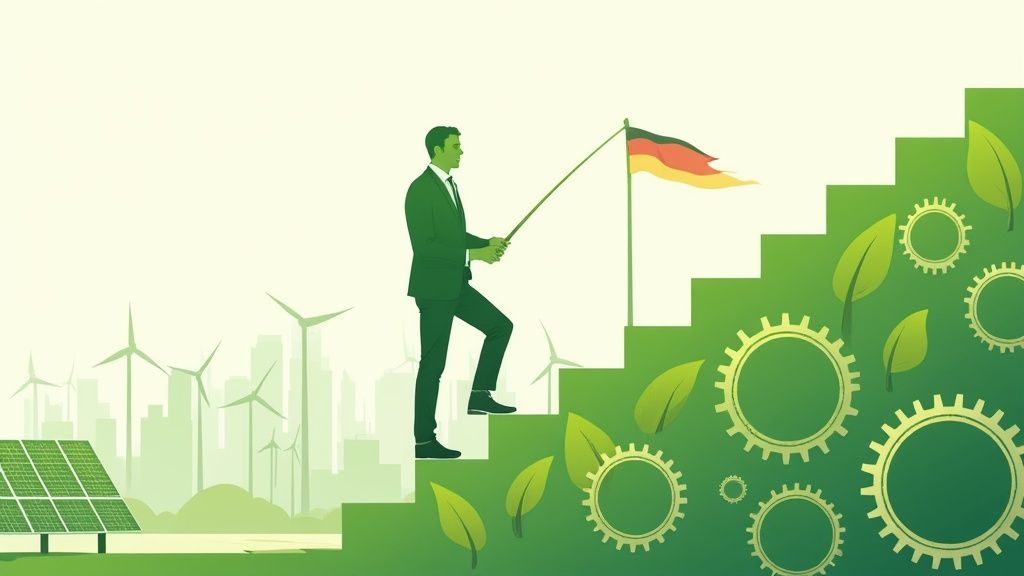
Not too long ago, a "sustainability" job might have been a small, siloed part of the public relations department—something of a token gesture. Now, that couldn't be further from the truth. These roles have moved from the fringe right into the strategic heart of modern business, becoming absolutely essential for any company that wants to balance profit with genuine environmental and social responsibility.
This isn't just a slow evolution; it's a field experiencing explosive growth, particularly in forward-thinking economies like Germany, driven by new regulations and a massive shift in what consumers expect from brands.
The Tipping Point for Sustainability Careers

We've passed the point where sustainability was just a "nice-to-have." The demand for skilled sustainability managers isn't just growing; it's picking up speed at a remarkable rate. This isn't some fleeting corporate trend; it's a fundamental change in how successful businesses are built and run for the long term.
So, what's behind this surge? It's really a perfect storm of opportunity, created by a few powerful forces coming together at once. Tougher government regulations, especially from the European Union, now require detailed Environmental, Social, and Governance (ESG) reporting. Suddenly, companies need in-house experts who can actually understand and navigate these complex rules.
The Forces Driving Demand
At the same time, people are putting their money where their values are. Consumers are actively choosing brands that can prove a real commitment to ethical practices and environmental care. A company's green reputation is no longer a simple marketing angle; it's a cornerstone of its brand identity and customer loyalty. This pressure from the market creates a clear need for leaders who can put meaningful sustainability plans into action.
The financial argument is just as strong. When done right, sustainability isn't a cost centre—it's a source of value. The benefits are clear and direct:
- Cost Reduction: Simple things like improving energy efficiency and cutting down on waste have an immediate impact on operational expenses.
- Risk Management: Getting ahead of climate-related risks and shoring up supply chain weak spots makes a business far more resilient.
- Innovation: Chasing sustainability goals often forces a company to think differently, sparking new product ideas and better ways of working.
It helps to think of a sustainability manager less as an environmental activist and more as a strategic business partner. Their job is to find those sweet spots where what’s good for the planet also happens to strengthen the company’s bottom line.
This blend of regulatory necessity, consumer demand, and clear economic upside has made jobs in sustainability management absolutely vital. In countries like Germany, with its ambitious carbon neutrality goals, these roles are now some of the fastest-growing professions out there, creating a real hotspot for talent.
What a Sustainability Manager Actually Does
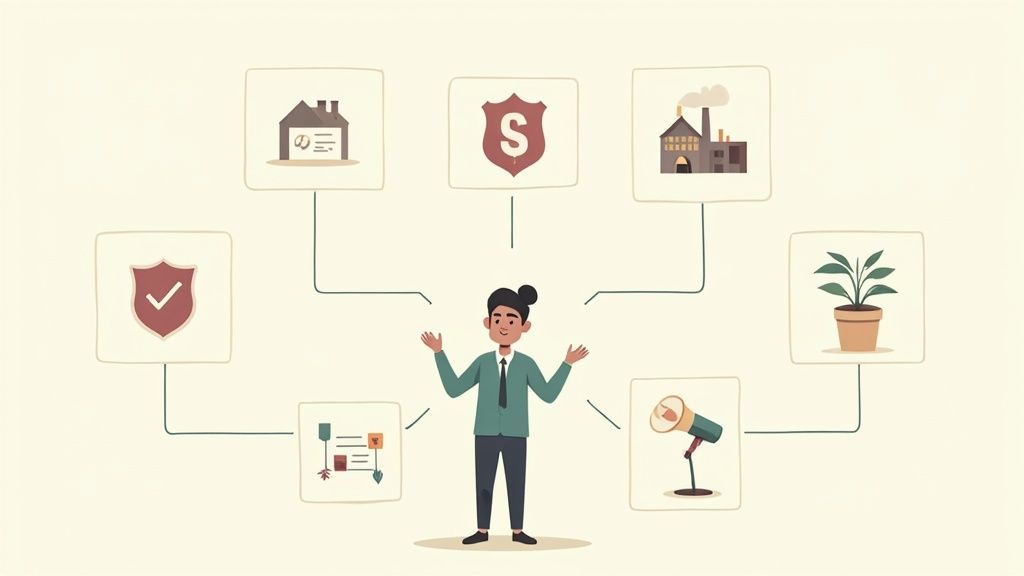
It’s easy to get lost in the jargon, but what a sustainability manager does is actually quite straightforward. The best way to think of them is as a kind of ‘corporate translator’—someone who takes big-picture green ambitions and turns them into practical, everyday business actions. They sit at the very centre of it all, connecting a company's environmental goals with its operational reality.
At its core, their mission is to build and roll out a company-wide sustainability strategy. This goes far beyond just planting a few trees or switching to recycled paper. It’s a deep dive into the entire business model, looking for every opportunity to refine processes, slash waste, and build a more resilient and ethical organisation from the ground up.
This means they have to be both a visionary and a realist, holding the long-term environmental picture in one hand and the immediate financial and operational realities of the business in the other.
Connecting the Dots Across the Organisation
A sustainability manager almost never works alone. In fact, their real value comes from their ability to act as a bridge between different departments. They ensure that sustainability is woven into the fabric of the company, not just tacked on as a clumsy afterthought.
They have to work closely with a whole range of teams to make this happen:
- Supply Chain: This involves sourcing materials more ethically, cutting transport emissions, and making sure suppliers are meeting environmental standards.
- Finance: Here, they help analyse the financial risks and opportunities tied to climate change and play a key role in ESG (Environmental, Social, and Governance) reporting.
- Marketing: They make sure any green claims are authentic and backed by solid data, steering the company clear of the dreaded "greenwashing" trap.
- Operations: This is all about finding ways to make factories and offices more energy-efficient and shrinking their overall carbon footprint.
This cross-functional role is absolutely critical. Without someone to coordinate everything, sustainability initiatives can easily become fragmented and lose steam. The manager is there to make sure everyone is pulling in the same direction.
A sustainability manager's role is not just about compliance; it's about competitive advantage. They help the company innovate, manage risk, and build a brand that resonates with modern consumers, turning sustainability from a cost into a strategic asset.
Day-to-Day Responsibilities and Core Tasks
So, what does all this look like on a typical Tuesday? The work is incredibly varied, mixing hard data analysis with very human interaction. One minute they could be deep in a spreadsheet crunching carbon emissions data, and the next they might be on the factory floor, presenting a new recycling initiative to the team.
The sheer breadth of their duties is impressive, covering everything from advising leadership on reducing environmental impact to implementing greenhouse gas reduction strategies. You can find out more about the specific duties tied to this role over at Payscale.com.
Because of this, no two days are ever quite the same. Key activities often include:
- Data Collection and Analysis: Tracking metrics like energy consumption, water usage, and waste generation to set a baseline and actually measure progress.
- Regulatory Compliance: Keeping on top of complex regulations, like the EU's Corporate Sustainability Reporting Directive (CSRD), to ensure the company meets all its legal obligations.
- Stakeholder Engagement: Talking to everyone from investors and board members to employees and local community groups to build support for green initiatives.
- Project Management: Leading specific improvement projects, whether that’s installing solar panels, launching a new sustainable product line, or completely overhauling packaging to cut out plastic.
Ultimately, the goal is to drive real, meaningful change. By connecting the grand vision with concrete action, a sustainability manager helps steer their organisation towards a future that is not only profitable but also responsible. This is what makes jobs in sustainability management so genuinely impactful.
What Kinds of Jobs Are There in Sustainability Management?
The world of sustainability management isn't just one job; it's a huge and growing field filled with all sorts of specialised roles. Each one tackles a different part of the environmental and social puzzle. Figuring out these different paths is the first real step to finding a role that clicks with your own skills and what you're passionate about. Whether you're a data whiz, a big-picture strategist, or someone driven by social change, there's a spot for you here.
You can think of the sustainability sector a bit like a modern hospital. There's the general practitioner who looks after overall health—that’s your classic Sustainability Manager. But you also have specialists: the cardiologist digging into the heart of the data (the ESG Analyst), the neurologist rethinking complex systems (the Circular Economy Specialist), and the community health worker focused on public well-being (the CSR Manager). Every single one is crucial for the health of the patient—in this case, both the company and the planet.
Let's take a closer look at some of the most common jobs in sustainability to see which one might be the right fit for you.
The Strategic Advisor: Sustainability Consultant
A Sustainability Consultant is an outside expert companies bring in to crack specific environmental or social challenges. They are the strategic problem-solvers, hired to provide a fresh set of eyes, run in-depth audits, and create practical roadmaps for getting better. Their work is usually project-based, which means it’s incredibly varied.
One week, a consultant could be deep in the weeds with a manufacturing company, mapping out their entire supply chain to slash carbon emissions. The next, they might be guiding a retail brand through the complex process of getting B Corp certified. To succeed, they need a broad base of knowledge and the knack for quickly figuring out what’s wrong and recommending solutions that actually work.
This is the perfect role if you love variety, enjoy untangling complex puzzles, and have top-notch analytical and communication skills. Consultants are essentially the special forces of the sustainability world, called in for the most critical missions.
The Data Detective: ESG Analyst
Data is the bedrock of modern sustainability, and the ESG Analyst is the person who makes sense of it all. ESG stands for Environmental, Social, and Governance—the three main pillars used to size up an organisation's ethical and sustainable footprint. An analyst's main job is to gather, dissect, and interpret huge amounts of non-financial data.
Their findings directly shape investment decisions, risk management plans, and official company reports. For example, an ESG analyst might track a company's water usage over time, investigate its labour practices, or check the diversity of its board of directors. This information gets turned into detailed reports that help everyone from investors looking for responsible businesses to executives trying to improve their company's impact.
The ESG Analyst is the one who turns abstract ideas like 'corporate responsibility' into solid, measurable numbers. They provide the hard evidence a company needs to prove it’s doing what it says it is, which is the best defence against accusations of greenwashing.
To give you a clearer picture of how these roles differ, here’s a quick comparison of some common job titles in the sustainability field.
Common Sustainability Management Roles and Focus Areas
| Job Title | Primary Focus | Key Responsibilities | Core Skills | | :--- | :--- | :--- | :--- | | Sustainability Consultant | Strategic Problem-Solving | Auditing performance, developing sustainability strategies, and advising on compliance for external clients. | Analytical thinking, communication, project management, broad industry knowledge. | | ESG Analyst | Data & Investment | Collecting and analysing ESG data, creating reports for investors, and assessing non-financial risks. | Data analysis, financial literacy, attention to detail, reporting. | | CSR Manager | Community & Social Impact | Managing volunteer programmes, corporate philanthropy, and ethical supply chain initiatives. | Project management, stakeholder engagement, communication, empathy. | | Circular Economy Specialist| Waste Reduction & System Design| Redesigning products for longevity, developing closed-loop systems, and creating new business models. | Systems thinking, creativity, innovation, R&D, business acumen. |
Each of these roles plays a distinct but interconnected part in pushing an organisation towards a more sustainable future.
The Community Champion: Corporate Social Responsibility Manager
While ESG tends to be data-heavy and focused on investors, Corporate Social Responsibility (CSR) is all about a company's relationship with people—its community and society as a whole. A CSR Manager is responsible for creating and running initiatives that make a positive social impact.
Their work is very people-focused and often includes:
- Setting up employee volunteering days.
- Managing partnerships with charities and corporate donations.
- Making sure suppliers use ethical sourcing and fair labour practices.
- Developing projects that engage with and support the local community.
This job is a great match for someone with a passion for social justice, excellent project management skills, and a real talent for building relationships with all kinds of people. They are the conscience of the company, working to make sure its success benefits everyone, not just the shareholders.
The System Redesigner: Circular Economy Specialist
Last but not least, the Circular Economy Specialist is a true innovator, focused on completely rethinking our systems to get rid of waste. They challenge the old "take-make-dispose" linear model and instead push for a circular one, where resources are kept in use for as long as humanly possible.
This might mean designing products that are easier to repair or recycle, creating business models based on leasing things instead of selling them, or discovering clever ways to turn one industry's waste into another's raw material. Their work is right at the intersection of sustainable design and business innovation. This role is a fantastic fit for creative thinkers and systems-level problem-solvers who want to fundamentally change the way we make and use things.
Why Germany Is a Hub for Green Economy Jobs
Germany's standing as a green economy powerhouse is no accident. It’s the direct result of deliberate, long-term policy and a cultural commitment to environmental stewardship. For anyone looking to build a career in sustainability management, the country isn't just another option; it's a global leader offering a stable, expanding landscape for ambitious professionals.
You could think of it like building a high-performance electric car. Germany has engineered a solid chassis with strong national laws like the Climate Change Act, which sets legally binding targets for cutting greenhouse gas emissions. This alone creates a powerful internal drive for change, pushing industries across the board to innovate and decarbonise.
But the real power comes when you add the EU’s regulatory turbo-charger.
The Power of Policy and Regulation
Directives like the "Fit for 55" package, which aims for a 55% cut in emissions by 2030, and the Corporate Sustainability Reporting Directive (CSRD) are massive catalysts. These aren't gentle suggestions—they are mandates that fundamentally rewire how businesses operate. The CSRD, for example, now forces thousands of companies to conduct detailed audits and publicly report on their environmental and social impact.
Suddenly, sustainability isn't just a nice-to-have for the marketing team. It’s a core operational and financial imperative, demanding specialised expertise to navigate the complex new rules. This top-down pressure means companies are investing heavily in qualified professionals who can manage data, roll out new strategies, and ensure compliance. In short, these regulations are the single biggest driver creating a surge of jobs in sustainability management all over the country.
These regulations are not just bureaucratic hurdles; they are powerful market-shapers. By setting clear, ambitious targets, they create certainty for businesses to invest in green technologies and, most importantly, in the people needed to lead these transformations.
The infographic below shows just how central the sustainability manager's role has become, connecting various specialised fields that are now essential to meet these new demands.
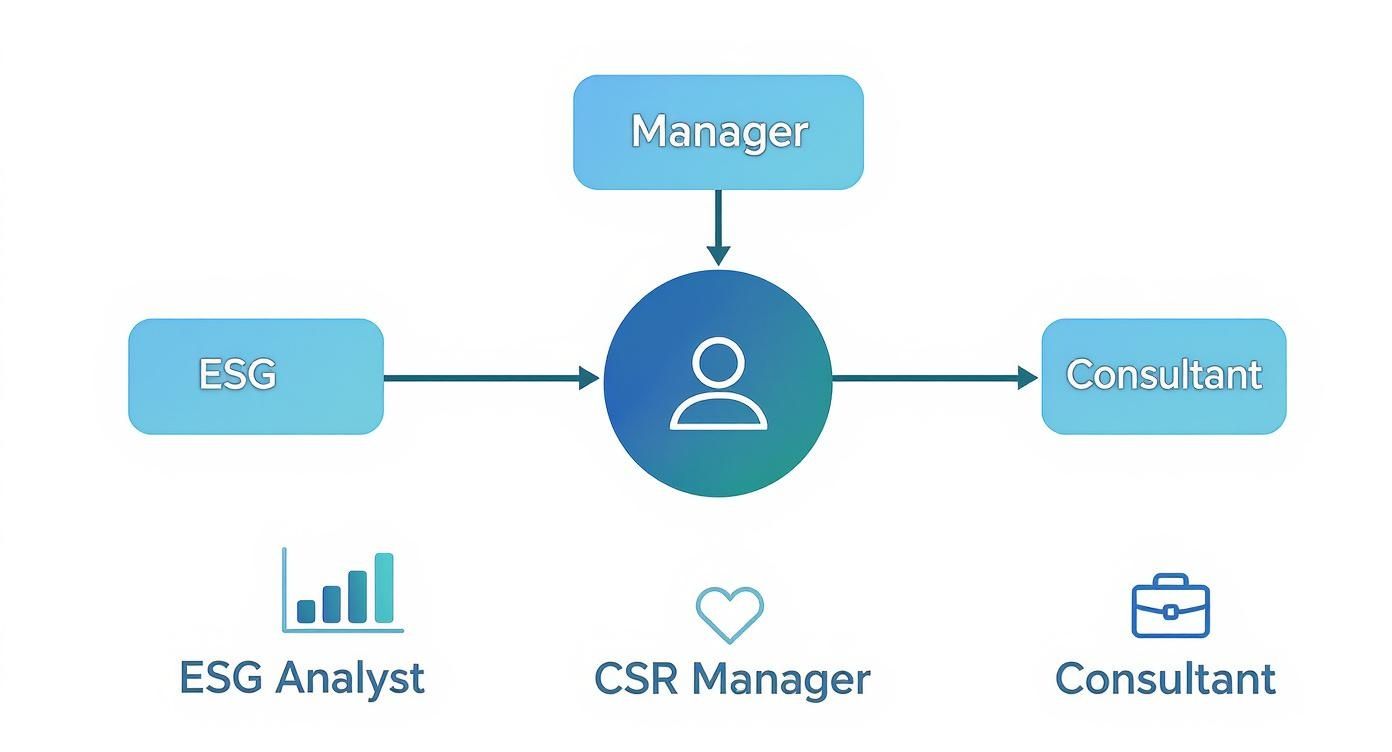
It’s clear that a manager’s role is a central hub, coordinating the efforts of data analysts, socially-focused CSR experts, and strategic consultants to hit comprehensive sustainability targets.
A Market Ripe with Opportunity
This blend of national ambition and EU-level enforcement has created a job market that's both robust and dynamic. The demand for sustainability professionals isn't just a talking point; it's right there in the sheer volume of open positions. Germany is leading the pack in Europe, a clear sign of how deeply these regulatory and market shifts have taken hold.
A recent analysis found that Germany had 3,842 sustainability-related job postings, the highest in Europe. That figure puts it well ahead of countries like France (2,489) and Italy (774), cementing Germany's position as the epicentre of the green job boom. You can dig deeper into these trends and see how Germany compares to other European nations.
This high demand creates a positive feedback loop. As more companies bring sustainability experts on board, they become more innovative and competitive. This, in turn, strengthens the green economy and creates even more roles, resulting in a stable and growing job market for professionals with the right skills.
Key Sectors Driving Growth
While the need for sustainability management is becoming universal, a few key sectors in Germany are really leading the charge and creating hotspots of opportunity.
- Renewable Energy: Thanks to its world-renowned Energiewende (energy transition), Germany is a global leader in wind, solar, and biomass. This sector is crying out for managers to oversee project development, ensure supply chain sustainability, and manage grid integration.
- Automotive Industry: German car manufacturers are in the middle of a massive pivot to electric mobility. They need sustainability experts to manage battery lifecycles, decarbonise production lines, and guarantee the ethical sourcing of raw materials.
- Manufacturing and Engineering: The industrial heart of Germany is laser-focused on resource-efficient processes and circular economy models. Professionals here work on cutting waste, improving energy efficiency, and designing sustainable products from the ground up.
For anyone serious about building an impactful, long-term career, the German market offers an unmatched mix of regulatory drivers, industrial commitment, and a sheer volume of opportunities. It’s a place where a career in sustainability management isn’t just a job—it’s a central part of a national economic mission.
Building Your Sustainability Skill Set

Breaking into a sustainability management career takes more than just a passion for the planet. It demands a sharp mix of technical know-how and genuine people skills. Think of yourself as an architect for a better business—you need the engineering chops to design a solid plan and the communication skills to get everyone on board to help build it.
This unique combination is exactly what employers are hunting for. They need professionals who can dig into complex environmental data and, in the next moment, inspire a whole company to change its ways. Building this dual skill set is your ticket to becoming a top candidate in a crowded field.
Mastering the Hard Skills
Hard skills are the concrete, measurable abilities that form the bedrock of any sustainability role. These are the tools you'll use to diagnose problems, track progress, and make sure the company is actually meeting its commitments. Without them, a sustainability strategy is just wishful thinking.
To make a real impact, you have to be fluent in the language of data and regulation. These skills give you the credibility to build a solid business case for going green, turning abstract ideas into tangible results.
Here are the absolute essentials for your toolkit:
- Data Analysis and ESG Reporting: This one’s non-negotiable. You have to be comfortable gathering, cleaning, and making sense of data on everything from carbon emissions to water usage. It’s the foundation for credible ESG reporting frameworks like the CSRD.
- Life Cycle Assessments (LCA): This means looking at the entire environmental footprint of a product, from the moment raw materials are pulled from the ground to the day it's thrown away. It’s a brilliant tool for uncovering hidden environmental problems in the supply chain.
- Regulatory Knowledge: You’ll need a solid grasp of key environmental laws and EU directives. Keeping up with constantly changing legislation is vital for keeping your company compliant and ahead of the game.
- Carbon Accounting: This is the specific skill of measuring and managing greenhouse gas (GHG) emissions. It’s a core competency for anyone responsible for hitting climate targets.
These technical skills are what let you turn big-picture goals into specific, actionable plans.
Cultivating Essential Soft Skills
If hard skills are the "what," then soft skills are the "how." These are the interpersonal talents that allow you to get things done inside a big, complicated organisation. You could have the most brilliant decarbonisation plan in the world, but it's useless if you can't get the operations team, the finance department, and the C-suite to back it.
A sustainability manager is, first and foremost, an agent of change. Your success will often hinge less on the quality of your data and more on your ability to persuade, influence, and collaborate with people at every single level of the business.
These skills are all about building bridges and creating momentum:
- Stakeholder Engagement: This is the art of identifying, understanding, and communicating with all sorts of different groups—from investors and employees to customers and community leaders. The goal is to build a consensus and get everyone pulling in the same direction.
- Persuasive Communication: You have to be able to translate complex sustainability jargon into compelling stories that click with different audiences. That means framing your message to highlight the business value, not just the environmental benefits.
- Change Management: Pushing for sustainability often means changing habits and processes that have been in place for years. Knowing the principles of change management helps you guide teams through that transition smoothly and with less resistance.
Educational Pathways and Standout Certifications
While you don't always need a degree with "sustainability" in the title, a relevant educational background gives you a huge head start. Common paths include environmental science, business administration (especially with a sustainability focus), engineering, and public policy. The real magic happens when you combine technical environmental knowledge with a solid understanding of how a business actually runs.
Beyond your degree, professional certifications can really make your profile pop. They show employers you’ve invested in practical, up-to-date knowledge that you can apply from day one. Certifications from organisations like the Global Reporting Initiative (GRI) or becoming a Certified Sustainability (CSR) Practitioner are highly respected. For more ideas on crafting a compelling profile, check out our guide on modernising your job search over on the JobCoPilot blog.
At the end of the day, the strongest candidates for jobs in sustainability management are those who blend a scientist's analytical mind with a diplomat's touch, ready to drive real, lasting change from inside an organisation.
Salary Insights and Career Trajectories
It’s one thing to build a career that makes a real difference, but let's be practical—you also need to know about the financial side of things. The good news is that as sustainability becomes a core business priority, especially in Germany, the salaries and career opportunities in this field are growing right alongside it.
Your pay packet isn't a one-size-fits-all number. It’s shaped by a few key things: the industry you're in, your company's size, where you're based in Germany, and of course, your unique skills. A sustainability role at a huge DAX-listed car manufacturer in Munich will naturally come with a different salary than a similar job at a Berlin tech start-up.
Typical Salary Benchmarks in Germany
If you're just getting started, the outlook is promising. On average, a Sustainability Manager in Germany pulls in around €60,371 per year. Even if you're relatively new to the field, with one to four years of experience under your belt, you can expect a very respectable starting salary of about €56,428.
As you gain more experience and prove your worth, those numbers climb. A mid-career manager can expect to earn closer to €63,990. For a deeper dive into the numbers, you can explore more detailed salary data on Payscale.com. These figures clearly show that as your expertise grows, so does your paycheck.
Charting Your Career Path
A career in sustainability isn't just a job; it's a ladder. You start with the hands-on details and can climb all the way to shaping company-wide strategy. While everyone's path is different, a typical journey often follows a pretty logical progression.
Entry-Level Role (Analyst/Coordinator): This is where you cut your teeth. You’ll be deep in the data, helping with reporting (like for the CSRD), and supporting specific projects. Think titles like Sustainability Analyst or ESG Coordinator.
Mid-Career Role (Manager/Consultant): After a few years, you're ready to take the lead. As a manager, you'll be the one developing and running sustainability strategies, managing projects, and working directly with leaders across different departments.
Senior Leadership Role (Head of/Director): At this stage, you're the visionary. As a Head of Sustainability or Director of ESG, your job is to weave sustainability into the company's core strategy. You'll be reporting to top executives and leading your own team of specialists.
The top of the mountain for many is the Chief Sustainability Officer (CSO) role. This is an executive-level position, right up there with the CEO and CFO, making it crystal clear that sustainability is fundamental to the company's governance and future.
This path from analyst to the C-suite shows just how much room there is to grow. For anyone with ambition, it’s a rare chance to climb the corporate ladder while leaving a positive mark on the world.
How to Land Your First Sustainability Role
Understanding the roles and having the right skills is a great start, but turning that knowledge into a job offer is the real challenge. Breaking into the sustainability field isn’t just about what you know; it’s about proving your passion and showing you can make a genuine impact. It's a game of strategy, combining a polished application with smart networking.
Think of it like building a high-efficiency solar panel. Every single component—your CV, your professional network, your interview technique—needs to be perfectly placed to capture the best opportunities. If one piece is off, the whole system is less effective. Let’s put your strategy together, one piece at a time.
Make Your Application Materials Shine
A generic application will almost always get a generic response: silence. When you're applying for jobs in sustainability management, your CV and cover letter need to scream "impact." Don't just list your old duties; reframe them as sustainability wins.
For example, instead of saying you "managed office supplies," try something like, "launched a waste reduction programme for office supplies that cut costs by 15%." That one small tweak connects your experience directly to core sustainability goals like resource efficiency and financial savings.
Here are a few ways to sharpen your application:
- Highlight transferable skills: Got experience in project management, data analysis, or communicating with different teams? Show how those skills directly apply to sustainability goals.
- Use the right keywords: Read the job description carefully and echo the language the employer uses. This shows you’ve done your homework and are a perfect match for what they need.
- Quantify everything: Numbers talk. Use metrics and data whenever you can to prove you deliver real, measurable results.
Your CV isn't just a history of your jobs. It's a sales pitch for your future. Every bullet point should be a solid piece of evidence showing you can bring value to a sustainability role.
Network with a Clear Purpose
Networking isn't about collecting contacts like trading cards; it's about building real relationships with people in the green community. A great place to start is on platforms like LinkedIn. Follow sustainability leaders, leave thoughtful comments on their posts, and when you connect, send a personalised message that shows a genuine shared interest.
Professional associations are also goldmines. Organisations focused on sustainability in Germany often host webinars, conferences, and local events. These are fantastic places to meet peers, find mentors, and hear about jobs that never even make it to the big job boards. Showing up proves you're committed to the field for the long run.
Find and Chase the Right Openings
Knowing where to look is half the battle. General job sites have their place, but you'll often find higher-quality leads on specialised platforms. These sites are built for professionals who are serious about making a positive environmental and social impact.
The demand for these roles is booming. Germany's ambitious climate goals have created a huge need for sustainability professionals, and the country is making it easier for qualified international experts to fill these jobs. You can find more insights into Germany's green job market on alumniportal-deutschland.org.
To make your search more efficient and ensure your applications are always on point, a dedicated tool can be a lifesaver. The right platform can help you discover relevant roles and tailor your materials perfectly for each one. To see how this works, learn more about how JobCoPilot helps you find the right job faster.
Ready to fast-track your job search? Acquispect uses AI to automate your hunt for the perfect sustainability role, from finding openings to crafting personalised cover letters. Spend less time applying and more time preparing for interviews. Try Acquispect free for 30 days and see the difference.