The world of data analytics has well and truly broken free from the traditional office. More companies than ever are hunting for sharp minds who can dig into complex datasets and pull out game-changing insights—all from a home office, a café, or halfway across the world. If you're aiming to land one of these data analyst remote jobs, you first need a solid grasp of what the market really looks like today.
The Reality of Today's Remote Data Job Market
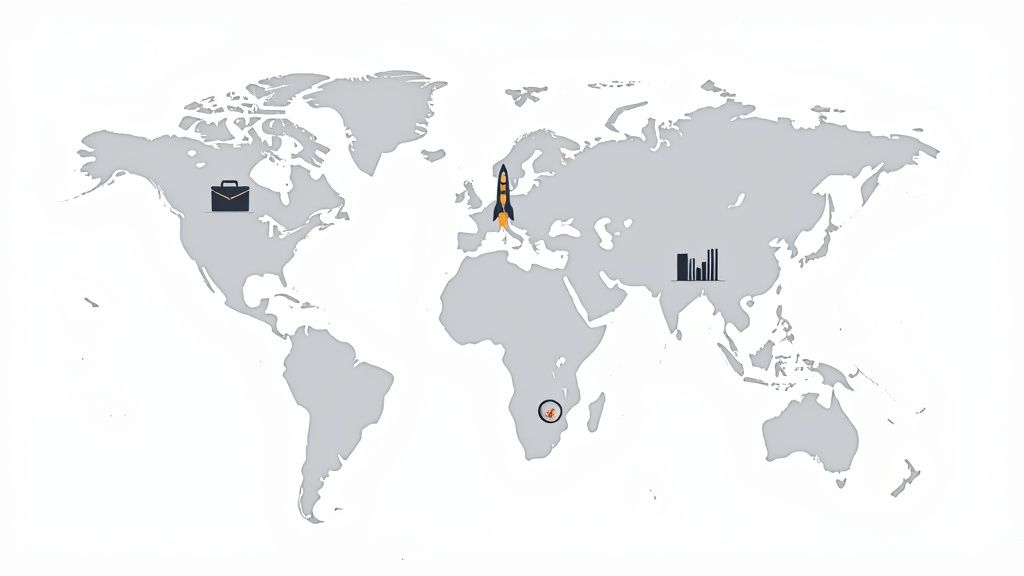
Let's be clear: remote work for data analysts isn't a quirky perk anymore. It’s rapidly becoming the standard. The shift has created a fiercely competitive field, but it’s also brimming with incredible opportunities for analysts who know where to look and how to position themselves.
This isn't a temporary fad, either. Far from it. Projections show that by 2028, an eye-watering 73% of all professional teams will have remote members. Businesses are seeing real, measurable benefits, which means these roles are here to stay.
Who's Actually Hiring Remotely?
You might be surprised by the sheer variety of industries offering data analyst remote jobs. Of course, tech companies and agile start-ups are leading the charge, but they're far from the only players in the game. Essentially, any business that deals with a mountain of digital data is a potential employer.
- Tech and SaaS: These companies were built for this. They already have the digital infrastructure and remote-first culture baked in.
- E-commerce and Retail: Think about it—analysing online customer journeys, optimising supply chains, and forecasting sales are all tasks perfectly suited for a remote setup.
- Finance and FinTech: Financial firms heavily depend on analysts for everything from spotting fraudulent transactions to predicting market movements, and they need people who can do this securely from anywhere.
- Healthcare: Remote analytics teams are now common, tasked with everything from reviewing clinical trial data to improving hospital efficiency.
Just look at the German job market as a prime example. Before 2020, finding a fully remote data analyst role was like searching for a needle in a haystack. Today, thanks to the massive shift to digital-first operations, these opportunities have multiplied. A quick scan of any major job board reveals hundreds of data analysis positions with remote or hybrid options. You can explore more on the growth of these roles in Germany over on DataCareer.de.
The Skills That Really Matter for Remote Roles
Your technical skills are your ticket to the game, but they won't win it for you on their own. When hiring for a remote position, companies are looking for a lot more than just your ability to write a clean SQL query. They need to be absolutely certain you can perform at a high level without someone looking over your shoulder.
The most valuable remote analysts aren't just data wizards. They're self-starters who can solve problems on their own, clearly explain their findings to a team spread across different time zones, and manage their time with incredible discipline.
So, while your expertise in Python, SQL, or Tableau is non-negotiable, what truly sets you apart is proof of:
- Proactive Communication: Can you keep everyone in the loop using tools like Slack or Microsoft Teams? Can you flag a problem before it becomes a crisis?
- Time Management and Autonomy: Have you successfully managed your own projects and consistently hit deadlines without hand-holding?
- Problem-Solving Initiative: Are you the type of person who waits for an assignment, or do you dive into the data looking for untapped opportunities and insights?
Being able to clearly demonstrate these traits with real examples from your past work is what will make you a top-tier candidate. It shows you have the professional maturity to not just survive, but thrive, in a remote environment, putting you in pole position for the best data analyst remote jobs out there.
Build a Profile That Catches the Eye of Remote Recruiters
Think of your CV and LinkedIn profile as your digital handshake. When you're going for data analyst remote jobs, they're everything. A recruiter will likely never meet you in person, so your profile has to do all the heavy lifting—it’s your number one sales tool to convince them you can deliver top-notch work from anywhere in the world.
To really stand out, you've got to do more than just rattle off a list of technical skills. The key is to frame your experience in a way that proves you're not just skilled, but also an effective, autonomous, and collaborative professional who thrives in a remote setting. Every single project description and skill you list needs to answer the one question every remote hiring manager is asking: "Can this person get the job done without someone looking over their shoulder?"
Weave Remote-Ready Keywords into Your Story
Let's be real: recruiters don't read every word on their first pass. They scan. They're looking for specific keywords that match their job description, and they're using both their eyes and Applicant Tracking Systems (ATS) to do it. If your profile doesn't have the right terms, you're practically invisible.
Start sprinkling words that shout "remote-ready" throughout your profile summary, your experience section, and even your skills list.
- Communication Tools: Get specific. Mention platforms you know inside and out, like Slack, Jira, Asana, and Microsoft Teams.
- Collaboration Language: Don't be shy. Use phrases like "cross-functional teams," "asynchronous communication," and "distributed team environment."
- Work Ethic: Show them you're a self-starter. Highlight qualities like "self-directed," "autonomous project management," and "proactive problem-solving."
Placing these keywords strategically does two things: it gets you past the initial automated filters and immediately tells a human reader that you get what it takes to work remotely.
Focus on Impact, Not Just Tasks
One of the biggest mistakes I see is people describing their past jobs as a laundry list of duties. For remote roles, you absolutely must shift your focus to the tangible results you delivered. This is your proof that you create value without needing constant in-person supervision.
It's time to transform your bullet points from passive descriptions into powerful accomplishments.
Instead of writing, "Responsible for creating weekly sales reports," try this: "Designed and automated a weekly sales dashboard in Tableau that provided real-time insights, leading to a 15% improvement in lead conversion tracking for the distributed sales team."
See the difference? The second version doesn't just list a task. It showcases your technical chops (Tableau), your initiative (designed and automated), the business impact (15% improvement), and your experience with remote work (distributed team). It tells a complete, compelling story. If you're looking for more tips on building a killer application, you can find more career advice on the JobCopilot blog.
Here’s a great example of a LinkedIn "About" section that's been properly optimised for a remote data analyst position.
Notice how it immediately blends technical tools with the soft skills that are absolutely essential for remote collaboration.
Structure Your Projects to Highlight Autonomy
Your projects are your proof. Dedicate a specific section of your CV or a prominent spot on your LinkedIn profile to showcase them. For each project, frame the description to spotlight the skills that matter most for remote success.
A simple framework for each project can work wonders:
- Problem: Kick things off by briefly explaining the business challenge you were trying to solve.
- Action & Tools: Detail the specific steps you took and which technologies you used (SQL, Python, Power BI, you name it).
- Collaboration: This is crucial. Explicitly mention how you communicated with stakeholders asynchronously or worked with a distributed team.
- Outcome: End with the results. Quantify your impact. Did you save money, boost efficiency, or drive revenue? Give them the numbers.
This structure doesn't just make your experience easy to digest; it demonstrates a clear, logical approach to problem-solving—a quality that's gold in any analyst, but especially one working remotely.
Find and Target the Best Remote Data Analyst Jobs
Stop endlessly scrolling through generic job boards. If you’re serious about landing a great remote data analyst role, you need a smarter strategy. The best opportunities are rarely the ones blasted across every major platform. It's about cutting through the noise and connecting directly with companies that are genuinely invested in remote talent.
Forget the scattergun approach. Sending out 10 highly customised applications will always beat a generic blast of 100. This means digging deeper than the usual suspects and finding the platforms where remote-first companies actually hang out.
Look Beyond the Usual Suspects
While you shouldn’t ignore big players like LinkedIn or Indeed, they should only be one part of your search. The real gold is often found on niche job boards dedicated entirely to remote work. Why? Because the companies posting there have already bought into the remote culture.
To give you a clearer picture, here’s a breakdown of where to focus your energy.
Effective Platforms for Finding Remote Data Analyst Jobs
| Platform Type | Examples | Best For | Pro Tip | | :--- | :--- | :--- | :--- | | Remote-First Boards | Remotive, FlexJobs | Finding roles at companies that are 100% committed to distributed teams. These listings are heavily vetted. | Set up alerts for "Data Analyst" or "BI Analyst." The quality is high, but so is the competition, so act fast. | | Data-Specific Platforms | DataJobs, AI-Jobs.net | Discovering specialised analyst positions from tech companies and startups looking for specific expertise (e.g., Python, SQL, Tableau). | Your portfolio is key here. Have links to your GitHub or a personal project website ready to include in your application. | | Company "Careers" Pages | Direct websites | Targeting specific companies you admire. Many remote-first companies post openings here before anywhere else. | Create a list of 20-30 dream remote companies and check their career pages weekly. It shows initiative. | | Advanced Social Search | LinkedIn, Twitter | Uncovering "hidden" jobs posted by hiring managers or recruiters. It's great for networking and finding unadvertised roles. | On LinkedIn, search for posts containing phrases like "hiring data analyst remote" or "#hiring #data." Engage with the posts, don't just apply. |
By diversifying your search across these channels, you significantly increase your chances of finding a role that’s a perfect fit, not just another listing.
This infographic is a great mental checklist to see if your profile is actually ready to attract the right kind of attention.
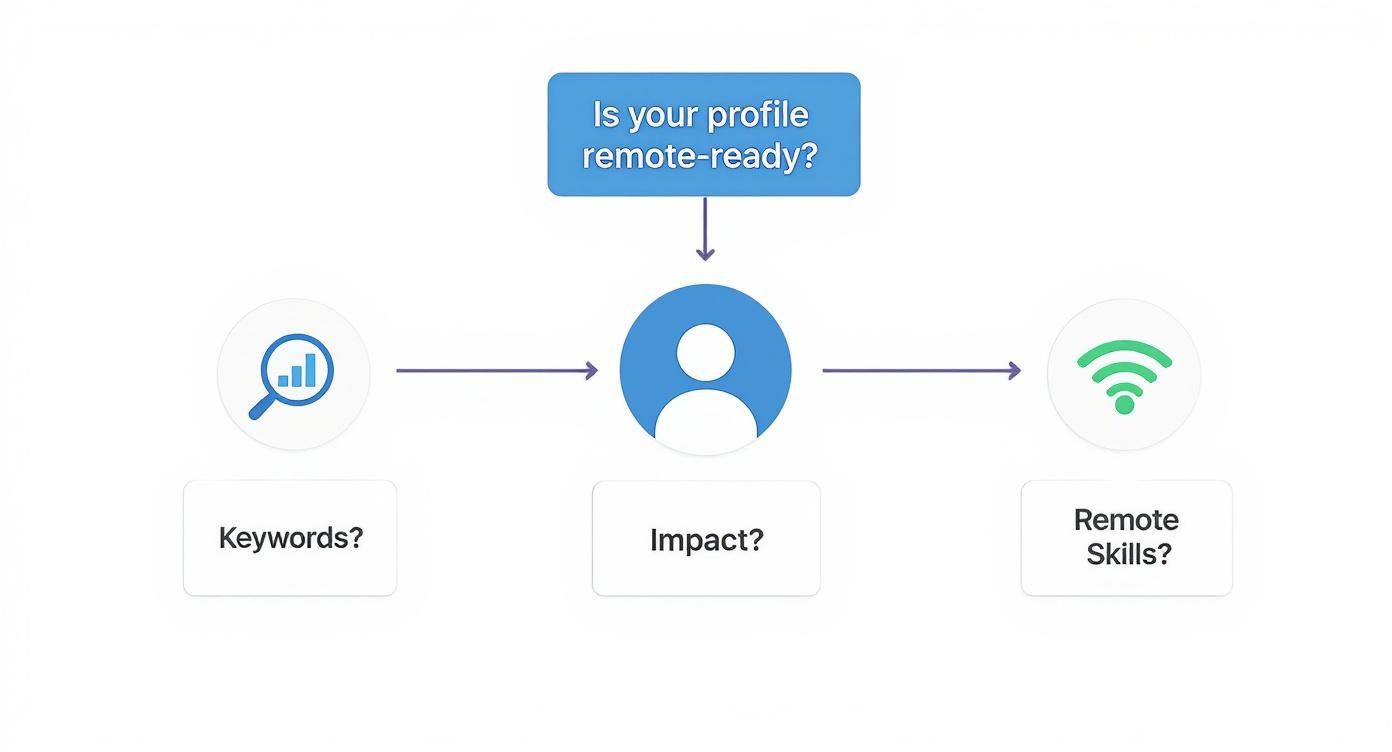
As you can see, it's not just about listing your technical skills. It's about proving your impact and explicitly showing you know how to work effectively in a remote setting.
Customise Your Approach for Remote Companies
Applying for a remote job requires a different angle. You have to prove you can deliver exceptional work without someone looking over your shoulder. That means your application needs to speak directly to the challenges and benefits of a distributed team.
The German job market, for example, really highlights this trend. We've seen a huge jump in remote data analyst positions since the pandemic. In fact, nearly one-third of all data-related roles in the country now offer some form of flexible work. You can learn more about the hundreds of remote data analyst jobs in Germany to see just how common this has become.
When you're tailoring your application, don't just list your technical skills. Talk about your communication habits, your time management systems, and how you solve problems on your own. Frame your project experience in a way that shows you're a pro at collaborating with a team you only see on Slack or Zoom.
This focused approach shows you get what it takes to succeed in a remote role. To take it a step further, you can use intelligent tools to automate the tedious parts of your search. For example, you might want to look into platforms that help streamline your job search and application process. This frees you up to spend less time hunting and more time crafting those killer applications that actually get a response.
How to Ace the Remote Interview Process
Landing an interview for a remote data analyst job is one thing; nailing it is another. The game is different when you're not in the same room. You're not just showing off your technical chops; you have to prove you can be a self-sufficient, communicative, and effective part of a team you might never meet in person. It’s as much about mastering the virtual stage as it is about knowing your SQL.
Your first impression is entirely digital, which means your setup matters. A lot. You don't need a high-tech home office, but you do need a professional, quiet space. Tidy up your background, make sure the lighting is decent (a simple ring light can make a huge difference), and double-check that your internet connection is solid. Test your camera and mic beforehand—technical hiccups are the fastest way to kill the momentum.
Mastering Virtual Communication
On a video call, every little thing you do is amplified. Making eye contact is key, but it feels a bit unnatural at first. You have to train yourself to look directly into the webcam, not at the interviewer on your screen. It’s a small tweak, but it completely changes how connected and confident you appear.
Active listening also looks different on screen. Nod along, offer quick verbal cues like "I see" or "that makes sense," and use hand gestures to show you’re following. Since the natural rhythm of conversation is often lost, it’s a good idea to pause for a second before you speak. It's a simple way to avoid accidentally talking over the interviewer.
When it's time for a technical test or a case study, you have to be your own narrator. The interviewer can't see you sketching out ideas, so you need to bring them into your thought process.
- Share your screen. If you're coding or pulling up a dashboard, let them see what you're doing in real-time.
- Explain your "why." Don't just give them the final query or number. Tell them why you chose a particular function or how you decided to clean the data. Explain the assumptions you're making along the way.
- Think out loud. This is crucial. By verbalising how you're tackling the problem, you're showing them your analytical mind at work. Honestly, your process is often more telling than the final answer.
Preparing for Remote-Specific Questions
Hiring managers for remote roles have a specific agenda. They need to know you can handle working on your own. Expect questions that dig into your self-discipline, communication habits, and ability to thrive without a manager looking over your shoulder.
Expect questions designed to test your remote-work readiness. The best way to answer is with specific examples that show you're proactive, great at managing your time, and a solid collaborator in a virtual environment.
Get ready for questions like these:
- "How do you stay motivated and on track when you're working by yourself?"
- "Tell me about a time you collaborated with team members in different time zones."
- "What tools do you rely on for asynchronous communication?"
When you get that motivation question, avoid generic answers like "I'm a self-starter." Instead, talk about your system. Maybe you use time-blocking in your calendar to protect your focus time, or you rely on a tool like Asana to keep your tasks and deadlines organised. Giving real, concrete examples proves you’ve already got the habits of a successful remote employee down pat.
Negotiating Your Remote Salary and Benefits

So, you’ve landed the offer! That's a huge win, but don't pop the champagne just yet. The next step is often the most critical for your long-term satisfaction: the negotiation. Getting this right means understanding how to confidently articulate your value in a remote-first world.
One of the first things to get a handle on is the company’s pay philosophy. Some adjust salaries based on where you live (location-based pay), while others have a set rate for the role no matter your city (location-agnostic pay). Knowing their approach gives you a massive advantage before the conversation even starts.
Benchmarking Your Market Value
You can't negotiate effectively without data to back you up. Your first move is to research what data analysts with your skills and experience are actually earning. Don't just grab a national average and call it a day; you need to get more specific. The company's industry, size, and even its funding stage can all have a huge impact on compensation.
Take the remote data analyst market in Germany, for example, which has absolutely exploded. The salary range is enormous, stretching from around €45,000 to €150,000 annually. This massive gap shows just how much your specific skills, experience level, and the size of the company matter. Many of the companies hiring remotely are well-established enterprises with more formal pay structures. You can find more salary insights for the German remote job market to build your case.
A key takeaway here: Your value is tied to the results you can deliver, not your address. Always anchor your negotiation in the impact you'll make on the business, using your portfolio as hard proof.
A crucial part of your preparation is understanding the key drivers behind salary figures. The table below outlines the primary factors that influence remote data analyst compensation.
Key Factors Influencing Remote Data Analyst Salaries
This table breaks down the primary elements that determine salary levels for remote data analyst positions to help with negotiation and expectation setting.
| Influencing Factor | Description | Impact on Salary | | :--- | :--- | :--- | | Years of Experience | The amount of time you've spent in relevant data roles. This is often categorised as junior (0-2 years), mid-level (3-5 years), or senior (5+ years). | High. This is one of the most significant factors. Senior-level roles with proven leadership command the highest salaries. | | Technical Skill Set | Your proficiency in specific tools and languages like SQL, Python, R, Tableau, and Power BI. Advanced skills in areas like machine learning or data engineering are highly valued. | High. Expertise in in-demand tools can significantly increase your earning potential. A candidate with advanced Python skills, for example, will often earn more than one who only knows Excel. | | Company Size & Stage | Whether the company is a small start-up, a mid-sized tech firm, or a large multinational corporation. | Medium to High. Large, established companies typically offer higher base salaries and more structured benefits, while start-ups might offer more equity. | | Industry | The sector the company operates in, such as finance, healthcare, e-commerce, or tech. | Medium. Industries like finance and tech often pay more for data talent due to the high value they place on data-driven decisions. | | Geographic Pay Policy | The company's approach to compensation, whether it's tied to the cost of living in your location or based on a national/international standard for the role. | Variable. A location-agnostic policy can be a major advantage if you live in a lower-cost-of-living area, while location-based pay can be beneficial if you're in a major city. |
Understanding where you fit within these categories will empower you to present a well-reasoned and confident salary request.
Looking Beyond the Base Salary
A strong remote offer is about the whole package, not just the number on your payslip. Benefits can add thousands in value and massively improve your day-to-day work life, and they're often easier for a company to flex on than the base salary.
Think practically about what you need to be successful and comfortable working from home. More and more companies understand that investing in their remote team's setup is a smart move.
Here are a few perks that are well worth bringing into the conversation:
- Home Office Stipend: This could be a one-time payment or an annual allowance for a proper ergonomic chair, a good desk, or that second monitor you need. It shows they’re serious about your well-being.
- Flexible Working Hours: This is one of the biggest draws of remote work. Make sure you clarify the expectations. Are there core hours, or do you have true autonomy to structure your day?
- Professional Development Fund: Ask for a dedicated budget for certifications (like advanced SQL or a Power BI course), online learning platforms, or virtual conferences. It’s an investment in skills that directly benefit them, too.
- Tech and Internet Allowance: A monthly stipend to cover your high-speed internet bill or subscriptions to essential software is a common and reasonable ask.
When you get on that call, keep it calm and professional. Start by reiterating your excitement for the role and the team. Then, confidently state your salary expectations, backed by the research you've done and the value you know you'll bring. By thinking about the entire compensation package, you can land a remote data analyst job that truly works for you.
Answering Your Top Questions About Remote Data Analyst Jobs
When you're trying to break into the world of remote data analysis, a lot of questions pop up. It's totally normal. You're not just looking for a job; you're trying to figure out how to fit your skills into a completely different way of working.
Let's cut through the noise and get you some straight answers to the questions I hear most often from aspiring remote analysts.
What Are the Real Technical Skills I Need?
Okay, let's get beyond the obvious. Yes, you need SQL and Excel – that’s table stakes. But for remote roles, the real test is whether you can operate smoothly within a modern, cloud-based setup. Companies need to know you can hit the ground running without an IT guy down the hall.
That means data visualisation tools like Tableau or Power BI are non-negotiable. You have to be able to build and share insights with a team that's spread across different time zones. Python or R are still in high demand for digging deeper, but the real game-changer is your comfort with the cloud.
- Cloud Data Warehouses: Experience with platforms like Google BigQuery, Amazon Redshift, or Snowflake is quickly becoming a must-have.
- Why it's a big deal: This shows you can work with the kind of decentralised data infrastructure that remote-first companies rely on. It proves you won't be a bottleneck.
Think of it this way: they need to trust that you can plug into their system on day one and start adding value right away.
How Do I Prove I'm 'Remote-Ready' Without Experience?
This is the classic "need experience to get experience" puzzle, but you can absolutely solve it. The secret is to reframe your existing experience to highlight the skills that matter for remote work: autonomy, communication, and discipline.
Don't just say you're a self-starter; prove it. Talk about a university project where you took the lead, a freelance gig where you managed your own deadlines, or even a complex personal project you saw through from start to finish. Anything that shows you can get things done without someone looking over your shoulder is gold.
Your goal is to build a case that you're proactive, a clear communicator, and someone who can be trusted to deliver quality work on their own. Frame every relevant experience through this lens.
Did you use Slack, Microsoft Teams, or Asana for a group project? Mention it. Completed a bunch of online courses? That’s not just learning; that's proof you have the self-discipline to see things through independently.
Are There Any Entry-Level Remote Data Analyst Jobs Out There?
They’re tougher to find than mid-level or senior roles, for sure, but they absolutely exist. The number of entry-level remote positions is on the rise, especially at companies that have nailed down their remote onboarding and mentorship processes.
You just have to be a bit more strategic about how you look for them.
- Get Specific with Titles: Search for "Junior Data Analyst," "Data Analyst I," or even "Analytics Intern," always with that "remote" filter on.
- Think Bigger: Larger companies often have well-oiled graduate programmes that have been successfully adapted for a remote workforce.
- Join the Conversation: Get active in data-focused communities on Slack, LinkedIn, or Reddit. You'll often hear about opportunities there long before they hit the major job boards.
For anyone trying to land that first role, a killer portfolio is your single most important asset. It's how you show what you can do when you don't have the job titles to back it up yet. A solid project proves you can apply your knowledge to solve actual problems, and that’s a massive green flag for any hiring manager.
Ready to stop scrolling and start applying smarter? Acquispect uses AI to automate your job search, find the perfect roles, and create customised applications in minutes. Take control of your job hunt with a free 30-day trial of Acquispect today.