Ever wondered how to get your foot in the door at your dream company, even when they aren't actively hiring? That's where a letter of interest comes in. It’s not just another document; it’s a proactive handshake you send to an organisation you genuinely admire.
This letter is your chance to introduce yourself and show your enthusiasm for their work, putting you on their radar for future opportunities long before a job is ever posted. You’re essentially starting a conversation, not just firing off an application into the void.
Why a Letter of Interest Is Your Secret Weapon
Most people wait for job adverts to appear. This is a mistake. By the time a role is public, you're competing with a flood of other applicants. A well-crafted letter of interest, however, is a strategic move that can feel like a secret weapon in your job search.
It’s a direct line to the hiring manager, giving you a platform to show your personality and drive in a way a standard CV never could. You’re not just another applicant; you’re someone who shows initiative, does their homework, and genuinely wants to be part of their team. Those are qualities that make any recruiter sit up and take notice.
Stand Out from the Crowd
Think about it: while everyone else is reacting to job postings, you’re being proactive. This simple act immediately sets you apart. You're no longer just a name in a massive pile of applications but a professional who has identified a place where you can make a real contribution.
This approach often unlocks the “hidden job market”—those roles that are filled before they're ever advertised. When a new position opens up, who do you think they’ll remember? The person who proactively reached out and made a great impression. It's about building a connection, not just applying for a job. If you're looking for ways to keep track of these proactive applications, tools like JobCopilot can be incredibly helpful.
The infographic below shows exactly why this strategy is so effective.
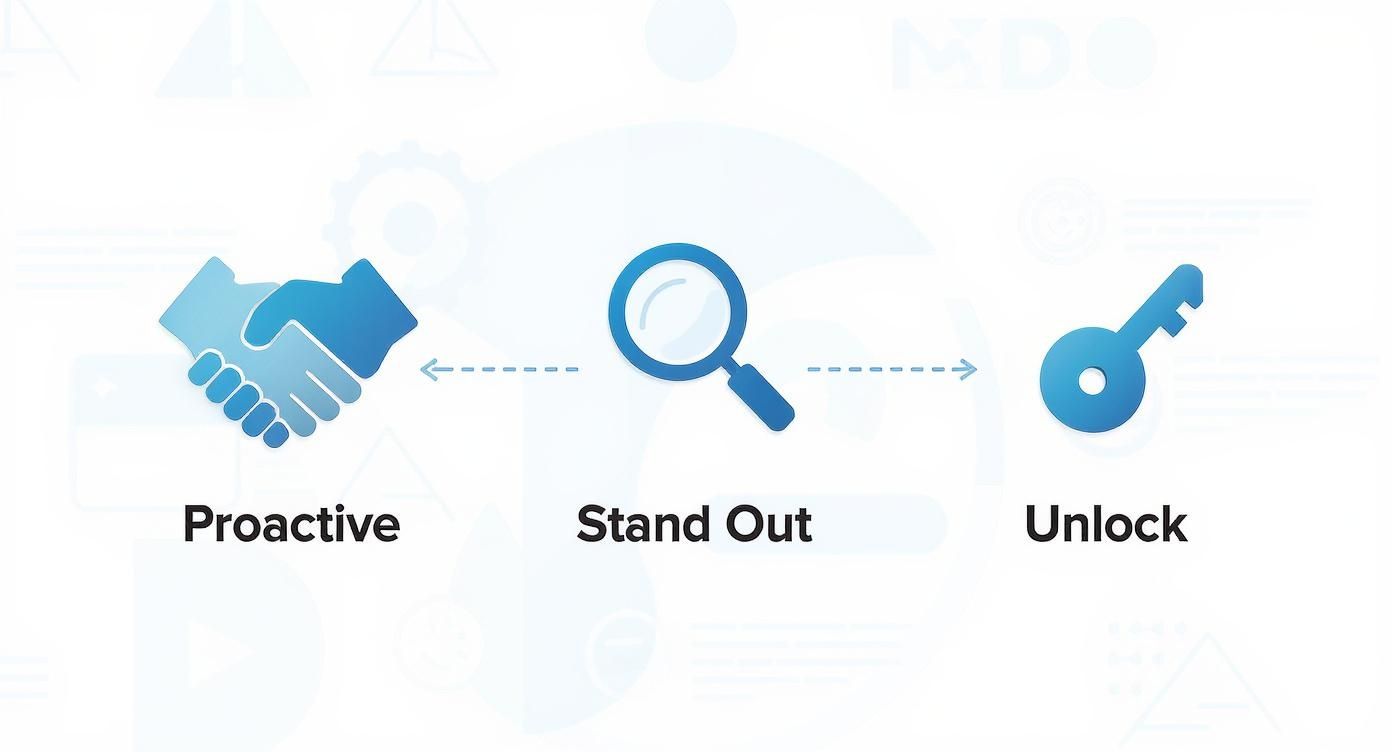
As you can see, it all comes down to showing initiative, getting noticed, and tapping into opportunities no one else knows about yet.
A Powerful Tool in the German Job Market
In Germany, this proactive approach is particularly well-received. While not always a strict requirement, sending a thoughtful letter of interest or a tailored cover letter can significantly boost your chances of landing an interview.
This is especially true for mid-level and senior positions. German recruiters often see these letters as a clear sign of motivation and a genuine understanding of the company's culture and goals. It shows you’ve invested time and effort, which goes a long way.
CV vs Interest Letter Key Differences
It's easy to get a CV and an interest letter mixed up, but they serve very different purposes. A CV is your professional history, a factual record of your skills and experience. An interest letter, on the other hand, is all about the future—why you believe you're a perfect fit for this specific company's future.
Here’s a quick breakdown of the main differences:
| Attribute | Curriculum Vitae (CV) | Interest Job Letter | | :--- | :--- | :--- | | Purpose | To provide a comprehensive overview of your professional background, skills, and accomplishments. | To express specific interest in a company, even without an open role, and to showcase your potential fit. | | Focus | Past and present: What you have done and what your qualifications are. | Future-oriented: How your skills can contribute to the company's future goals and challenges. | | Audience | General; can be adapted for different roles but the core information remains the same. | Highly specific; tailored to one company, referencing their values, projects, and culture. | | Tone | Factual and objective. | Personal, persuasive, and enthusiastic. |
Think of it this way: your CV is the "what," and your letter of interest is the "why"—why you, why this company, and why now. Using them together gives a complete picture of you as a candidate.
How to Research Before You Write
A powerful letter of interest doesn’t just happen. It’s built on a foundation of smart research, and frankly, this is where most people fall short. Firing off a generic, one-size-fits-all letter is the fastest way to get your message deleted. Your real goal is to understand the company’s world so deeply that your letter feels less like an application and more like the start of a compelling conversation.
This is about more than just a quick skim of their "About Us" page. It’s about digging in to figure out where the company is today and, more importantly, where it’s headed. This groundwork is what proves you aren't just looking for any job—you’re specifically invested in contributing to their future success.
Go Beyond the Company Homepage
Think of yourself as a detective. You're searching for clues that directly connect your skills to their current and future needs. Your research should paint a vivid, detailed picture of the organisation.
To get started, I always recommend exploring these key areas:
- Recent News and Press Releases: Hunt for announcements about new products, expansion plans, or recent funding rounds. These are often massive clues pointing to growth and where they might need people.
- Leadership on Social Media: Follow a few key executives or department heads on a platform like LinkedIn. What they post and write about can give you incredible insight into departmental priorities and upcoming projects.
- Industry Reports: Get a feel for the bigger picture. Understanding the challenges and opportunities facing their entire sector shows you think strategically, not just about a single role.
“Personalised outreach messages receive significantly more replies than those that aren’t. Customisation isn't just a nice touch; it's a strategic necessity that demonstrates genuine effort and interest.”
By going deeper, you can drop specific, timely references into your letter that make it immediately stand out. Mentioning a recent award they won or a new market they just entered shows you’re paying attention in a way most applicants simply don't.

Find the Right Person to Address
Let’s be blunt: "To Whom It May Concern" is the kiss of death for a letter of interest. Finding a specific name is a non-negotiable step that shows initiative and ensures your letter actually lands on the right desk.
LinkedIn is your best friend here. Search for titles like "Head of [Your Department]," "Hiring Manager," or "Talent Acquisition Manager." If you’re aiming for a smaller company, the department director or even a C-level executive could be your best bet. If you turn up a few potential contacts, pick the person most directly relevant to the kind of role you're envisioning for yourself.
A tailored letter is especially crucial in a competitive environment. Take Germany, for instance. Its robust labour market had over 44.4 million active participants in 2023, and the employment rate was a high 77.2%. In a market like that, with a job vacancy rate of 4.1%, a personalised interest job letter becomes a key differentiator. This is especially true in traditional sectors like engineering and finance, where these formalities are still highly respected. You can dive deeper into the German labour market trends from Eures.
This one small step—finding a name—transforms your cold outreach into a warm introduction. It's a simple detail, but it signals a level of professionalism and serious commitment that gets you noticed.
How to Structure Your Letter for Maximum Impact
How you put your letter together is just as crucial as what you write inside it. A clean, logical structure acts like a guide, walking the hiring manager through your professional story and making it incredibly easy for them to see what you bring to the table. Think of it as building a bridge between your skills and their problems, one paragraph at a time.
The real goal here isn't to just list your qualifications—your CV already does that. It's to weave a compelling narrative. Each part of your letter should flow naturally into the next, building a solid case for why you’re the person who can help them hit their targets. A jumbled, confusing letter gets tossed aside. A well-structured one pulls the reader in and keeps them engaged.
Nailing the Opening Paragraph
Your first paragraph has one critical job: grab the reader's attention and state your purpose right away. Ditch the generic, tired openers. To prove this isn't just another template you've blasted out, you need to be specific and personal from the very first line.
As we covered earlier, always try to address a specific person. Then, immediately get to why you're writing. You could mention a recent company achievement you admired, an industry trend they're spearheading, or a particular project that caught your attention. This instantly shows you've done your research.
Here’s what a strong opening looks like in practice:
"After reading about [Company Name]'s recent expansion into sustainable packaging in WirtschaftsWoche, I felt compelled to reach out. My experience developing eco-friendly supply chain logistics at [Previous Company] seems to align perfectly with the innovative direction your team is taking."
This opener hits all the right notes because it’s:
- Timely: It references a specific, current event.
- Relevant: It draws a direct line from the writer’s background to the company’s new initiative.
- Purposeful: It’s crystal clear why the letter has landed in their inbox.
An approach like this turns a cold email into a warm, informed conversation starter.
Building the Body: Where You Prove Your Value
The middle section of your letter is where you really make your case. This is your chance to go beyond the bullet points on your CV and tell a story about the value you create. Don’t just list your skills; show them in action with concrete achievements.
Each paragraph should be dedicated to connecting your past wins to the company's potential needs. Use the research you did to touch on challenges they might be facing or opportunities on their horizon, and frame yourself as the solution. Whenever you can, use numbers and data to back up your claims—it adds serious weight.
For example, instead of saying, "I have strong project management skills," try something like this:
"In my last role, I led a cross-functional team to launch a new product line two months ahead of schedule, which drove a 15% increase in quarterly revenue. I can see a similar opportunity to bring that kind of efficiency to your upcoming product launches, especially with your focus on rapid market entry."
See the difference? This is far more persuasive. You aren't just telling them you have a skill; you're showing its impact and thoughtfully applying it to their world. That’s the secret sauce of a great letter of interest.
Finally, set aside a paragraph to answer the "why this company?" question. This is absolutely critical for showing you're genuinely interested and not just firing off applications. Talk about their company culture, a specific value they uphold, or their long-term mission. Explain what it is about their organisation that clicks with your own professional values. This touch of personal connection makes your letter feel authentic and helps it stand out from a sea of generic applications.
Writing Techniques That Persuade and Impress
Once you've got the basic structure down, it's time for the real craft: the writing itself. The words you choose will turn a standard document into a memorable introduction. This is your chance to strike that perfect balance between professional polish and your own authentic voice, making sure your letter sounds like it came from a real person, not a corporate template.
First things first, ditch the generic business jargon. Phrases like "synergistic team player" and "results-oriented professional" are just filler. Recruiters have read them thousands of times, and they’ve lost all meaning. Instead, aim for clear, direct language that gets right to the point.
Your goal is to be persuasive without tipping into arrogance. The tone should be confident and genuinely enthusiastic, showing that you truly believe in the value you can bring to their organisation.
Use Action Verbs and Quantifiable Results
The single most effective way to show your impact is to pair strong action verbs with hard numbers. This is what turns a vague claim into compelling proof of what you can do. Instead of just listing what you were supposed to do in a past role, you’re showing what you actually achieved.
For example, instead of saying, "Responsible for managing social media accounts," try this: "Grew our Instagram following by 45% in six months by launching a targeted video content strategy." See the difference?
This approach is powerful because it:
- Paints a picture: The reader can actually visualise you getting things done.
- Adds credibility: Numbers provide solid evidence and give a sense of scale to your work.
- Demonstrates impact: It directly links your actions to a positive business result.
A letter packed with active verbs and measurable outcomes tells a story of your success. It shifts the focus from "what I did" to "the value I created"—and that’s precisely what a hiring manager is looking for.
This is especially crucial in a competitive landscape. Take Germany, where the job market is expected to have over 770,000 open positions by 2025, with big gaps in fields like IT and engineering. If you can showcase skills like Python or AWS and back them up with solid achievements, you’re directly addressing the skills shortages that German employers are desperate to fill. For a deeper dive, check out the German job market forecast on accessfuture.net.
Showcase Soft Skills Through Storytelling
Hard skills and metrics are essential, but they're only half the equation. Your soft skills—things like problem-solving, collaboration, and adaptability—are often what make or break your success within a team. The trick is proving you have them without just listing them like a shopping list.
The best way to do this is through mini-stories. Instead of just saying, "I am a creative problem-solver," describe a specific time when you actually solved a problem creatively.
Here’s an example for showcasing collaboration:
"When our design and engineering teams hit a roadblock on the Alpha project, I organised a joint workshop to map out a new workflow. This small intervention resolved the communication breakdown and got the project back on track within a week."
A short narrative like this is far more convincing than a simple claim. It puts your soft skills into a real-world context, making your letter more engaging and your abilities much more believable. For more writing strategies and career insights, you'll find great resources on the JobCopilot blog.
The Final Polish Before You Hit Send
You’ve done the heavy lifting. You’ve researched the company, mapped out your value, and written a compelling letter of interest. But before you even think about clicking "send," there's one last hurdle that trips up so many people: the final review.
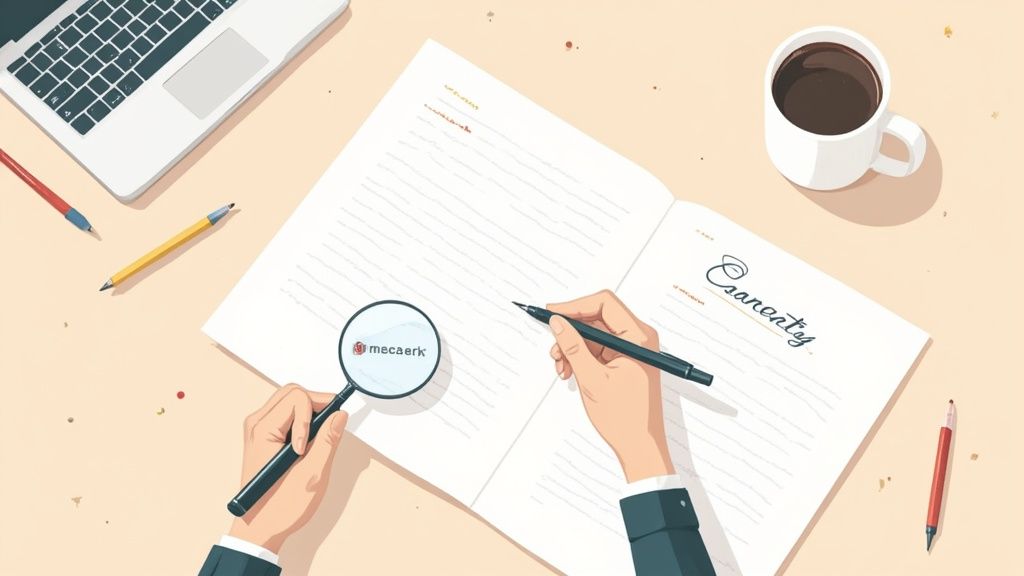
Don’t let a simple typo or a clumsy sentence undermine all your hard work. A polished letter shows you're meticulous and professional—qualities every employer looks for. Think of this last step as your final quality check.
Proofread Like Your Job Depends On It
It's almost impossible to edit your own writing effectively. Your brain is wired to see what it expects to see, often skipping right over glaring errors. You need to trick it into looking at the document with a fresh pair of eyes.
Here are a few methods I’ve relied on over the years:
- Read your letter out loud. Seriously. Hearing the words forces you to slow down. You'll catch awkward phrasing, run-on sentences, and missed words that your eyes simply glide over.
- Change how it looks. Switch the font, increase the text size, or even change the background colour in your document. Making the text unfamiliar forces your brain to re-engage and spot mistakes.
- Go old-school and print it out. Errors you’ve missed a dozen times on screen can suddenly jump off a physical page. Grab a red pen and get to work.
My best piece of advice? Hand it over to someone else. A trusted friend or mentor will catch the little things you’ve become blind to after staring at the same document for hours. A fresh perspective is invaluable.
Format and Send with Confidence
With the text perfected, the final piece of the puzzle is delivery. How you send the letter is just as important as what’s in it. Whatever you do, don't just paste your letter into the body of an email unless the company's guidelines specifically ask for it.
The professional standard is to save your letter as a PDF. This locks in your formatting, ensuring it looks exactly as you intended on any device. It also prevents any accidental changes on their end.
Give your file a clear, professional name. Something like "YourName-Letter-of-Interest-CompanyName.pdf" works perfectly.
When you're ready to attach it to an email, craft a subject line that’s impossible to ignore (for the right reasons). It needs to be professional and immediately clear.
Effective Email Subject Lines:
- Interest in Opportunities at [Company Name] - [Your Specialisation]
- Inquiry Regarding [Your Field] Roles from a [Your Title]
- Following Up on [Event or Connection] - Interest in [Company Name]
A smart subject line ensures your email actually gets opened by the right person. Once all these checks are done, you’re finally ready. Hit send and feel good about it.
Common Questions About Letters of Interest
Even with the best game plan, sending an interest job letter can feel like you’re shouting into the void. It’s natural to have questions. Let’s walk through some of the most common ones so you can move forward with a bit more certainty.
One of the biggest anxieties is simply, "Will anyone even read this?" The short answer is yes, but only if you send it to the right person. A letter blasted to a generic "info@" email is almost guaranteed to get buried. A thoughtfully personalised message sent directly to a hiring manager or the head of a relevant department? That has a real chance of landing.
How Is This Different from a Cover Letter
This is a point of confusion for a lot of people, and it’s a critical one to get right. Think of it this way: a cover letter is reactive. You write it in direct response to a specific job ad. Its whole purpose is to connect the dots between what they're asking for and what you can do.
An interest job letter, however, is proactive. You’re the one initiating contact when there’s no advertised role. Your aim isn't to fit into a pre-defined box but to introduce yourself, show you admire what the organisation is doing, and suggest how your skills could add value. You’re starting a conversation from scratch.
A cover letter answers the question, “Why are you the best fit for this job?” An interest letter answers the question, “Why should this company create an opportunity for you?”
What Should I Do After Sending It
The waiting game is tough. You need to balance patience with persistence. My rule of thumb is to give it about five to seven business days before following up. A polite, brief email is all you need.
Just reply to your original message to keep the context. Reiterate your interest and maybe add a quick, relevant update—perhaps you noticed a recent company achievement you wanted to congratulate them on. It shows you're still engaged.
Here's a simple follow-up cadence I've found works well:
- First Nudge: Send your email 5-7 business days after the initial letter. Keep it short, sweet, and professional.
- Second (and Final) Nudge: If you still hear crickets, you can send one more gentle reminder about 7-10 days later.
- Time to Move On: After two follow-ups with no response, it’s best to let it go. There's a fine line between persistent and pestering, and you want to stay on the right side of it.
Remember, a letter of interest is often about planting a seed for the future. You might not get an immediate response or a job offer, but a professional and well-crafted approach means you’ll be on their radar when the right opportunity does come along. Think of it as a long-term career play.
Ready to stop manually crafting letters and start automating your job search? Acquispect uses AI to find the right jobs and create personalised application documents in minutes, giving you a powerful edge. Start your free 30-day trial and see the difference.