The hunt for legitimate online jobs in home has really moved from a niche interest to a major career path here in Germany. This isn't just a temporary fix anymore; it's a permanent part of how we work now, all thanks to a huge demand for more flexibility and the solid digital tools that make it possible.
The Reality of Working From Home in Germany
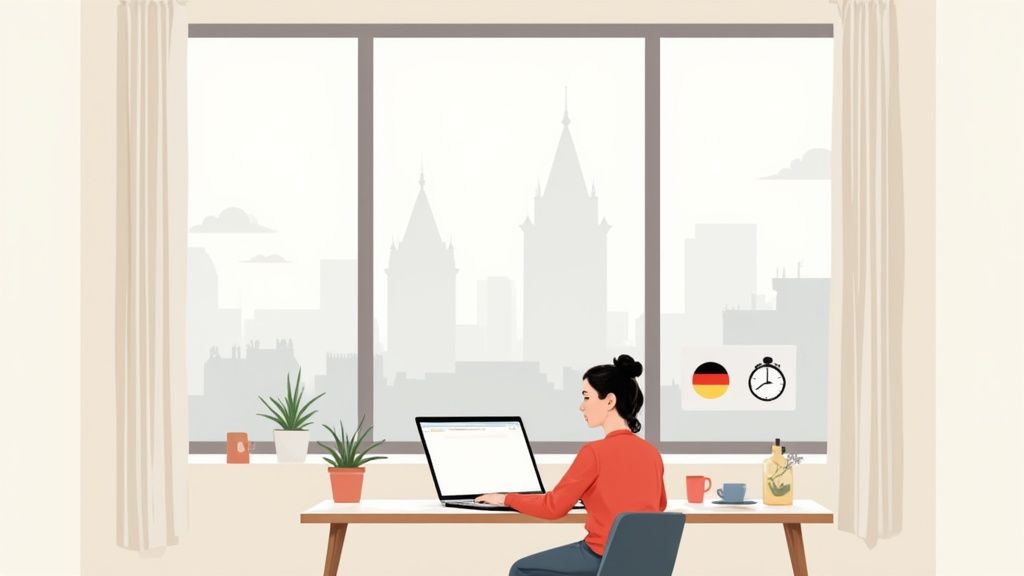
The whole concept of a remote career in Germany has grown up. It's no longer just a reaction to world events but a standard, sought-after way to work. Companies have put serious money into the tech and cultural changes needed to make distributed teams work, realising that flexibility is a massive draw for attracting the best people.
This change means the opportunities you'll find today are far more structured, secure, and properly integrated into how businesses run. What used to be a rare exception is now a firm expectation for a huge chunk of the workforce.
What’s Driving the Remote Work Culture?
This shift towards working from home didn't just happen by accident. It's a deliberate move based on real-world benefits for everyone involved. A few key things have cemented its place in the German economy:
- People want it: A healthy work-life balance isn't just a nice-to-have anymore; it's a top priority. Professionals are actively looking for employers that offer the freedom to work from home, either all the time or as part of a hybrid setup.
- The tech is there: Fast internet, great collaboration software, and secure cloud systems have torn down most of the old barriers that made remote work tricky.
- Access to more talent: Companies aren't limited by location anymore. They can hire the best person for the job, no matter where they live, which has made the job market much more competitive and diverse.
By 2025, hybrid and remote models have become the main way of working in Germany. It’s a huge shift you can see in both job ads and what people are looking for. You'll find that hybrid setups, mixing home and office days, have pretty much replaced the old 9-to-5 office routine for most companies. You can read more about these trends and how they impact your job search on our blog: https://jobcopilot.de/blog
Key Takeaway: Looking for online jobs from home isn’t about finding a rare gem anymore. You're tapping into a large, established part of the German job market that cares more about what you deliver than where you are.
Top Industries For Remote Work In Germany
It’s true that almost every industry has made room for remote work, but some have gone all-in more than others. The table below gives you a quick look at the sectors leading the charge and the kinds of roles you can expect to find.
| Industry Sector | Common Online Job Roles | Typical Flexibility Level (Fully Remote/Hybrid) | | :--- | :--- | :--- | | IT & Software Development | Software Engineer, Cloud Architect, Cybersecurity Analyst | Mostly Fully Remote | | Digital Marketing & Media | SEO Specialist, Content Manager, Social Media Manager | Fully Remote & Hybrid | | Customer Service & Support | Customer Support Agent, Technical Support Specialist | Mostly Fully Remote | | Consulting & Business Services | Management Consultant, Financial Advisor, HR Specialist | Hybrid | | Education & E-Learning | Online Tutor, Instructional Designer, Curriculum Developer | Fully Remote & Hybrid |
As you can see, tech is still out in front, with jobs in software development, cybersecurity, and data analysis often being 100% remote. But fields like digital marketing, customer support, and various consulting gigs have also become remote-first. This wide adoption opens up clear paths for people with all sorts of skills to find meaningful work without the daily commute.
How to Spot the Real Opportunities from the Fakes
Diving into the world of remote work is exciting, but let’s be honest: it’s also flooded with noise. The sheer number of postings for online jobs in home can be overwhelming. Your first, most critical mission is to learn how to tell a genuine career move from a cleverly disguised scam. Mastering this skill will save you an incredible amount of time, energy, and potential heartache.
Think of it this way: a real job posting is specific. It lays out the duties, responsibilities, and qualifications with clarity. If an ad feels vague, full of hype but low on substance, that’s your first sign to be sceptical.
Reading Between the Lines of a Job Ad
The job advertisement itself is your first clue. Scammers love to play on emotions, dangling promises of huge pay cheques for little to no effort. It's a classic tactic designed to cast a wide net and catch people who are eager or desperate.
A real company, on the other hand, isn't looking for just anyone; they're looking for the right person. Their ads will list specific skills, talk about experience levels, and paint a clear picture of what you’ll actually be doing day-to-day. For instance, a legitimate "Remote Customer Support Agent" role will probably mention the specific software they use (like Zendesk or Salesforce), the kinds of customer issues you'd handle, and the expected hours or shift patterns.
Keep an eye out for these classic red flags:
- Outlandish Salary Promises: A post offering €75,000 for entry-level data entry with zero experience? That’s not a dream job; it’s a warning siren.
- Vague Duties: Be wary of descriptions like "work on various online tasks" or "assist with marketing projects". What does that even mean?
- High-Pressure Tactics: Scammers often create a fake sense of urgency. If you see phrases like "limited spots available, apply now!", take a step back.
- Sloppy Writing: A few typos can slip past anyone, but a professional job ad from a serious company is almost always well-written and proofread.
At the end of the day, a legitimate remote job posting should read just like any other professional job description. The only difference is the location.
Doing a Little Digital Detective Work
So, a job ad has passed your initial gut check. Great. Now it’s time to put on your detective hat. Any company worth working for will have a professional and verifiable presence online. Don't just trust the ad; you need to do your own digging.
Start with a simple web search for the company’s name. A real business will have a proper website that looks professional and clearly explains what they do. Look for an "About Us" section, contact details, and maybe even a physical address. Check the domain name, too. A company using a free email provider (like Gmail or Yahoo) for official business is a massive red flag.
A company's digital footprint tells a story. If it's sparse or non-existent, it means they're either brand new or not who they say they are. Real businesses invest in their online identity because their brand and credibility depend on it.
Once you’ve checked their site, it’s time to see what the professionals are saying.
Verifying Their Credibility on Professional Networks
This is where platforms like LinkedIn and Kununu become your best friends. A solid LinkedIn company page with a history of activity, a healthy number of followers, and a list of actual employees is a very good sign.
Here’s a quick checklist to run through:
- Check for Employees: Search for the company on LinkedIn and look at the profiles of people listed as employees. Do their job titles and work histories seem legitimate? Do you see them engaging with company posts?
- Find the Recruiter: Look up the person who posted the job or reached out to you. A real recruiter will have a fleshed-out profile, a network of connections, and activity that matches their role.
- Read the Reviews: Head over to Kununu or a site like Glassdoor to see what current and former employees have to say. A complete lack of reviews for a supposedly established company can be just as suspicious as a string of terrible ones. Pay close attention to what people say about the company culture, management, and—most importantly—whether they get paid on time.
This vetting process might feel like a bit of a chore, but it’s absolutely essential. Spending twenty minutes on research can save you from weeks of frustration or, even worse, falling for a scam that puts your personal and financial information at risk. If you can't find solid, independent proof that a company is real, just walk away. There are plenty of verifiable online jobs in home out there to focus your energy on.
Where to Actually Find the Best Remote Jobs
Knowing a good remote job from a scam is half the battle. Now, where do you actually hunt for these quality opportunities?
Forget mindlessly scrolling through the usual job aggregators. A truly effective search for online jobs in home requires a smarter strategy. The trick I've found most successful is to diversify your search across a few key areas: broad German job boards, global remote-specific sites, and niche platforms tailored to your exact industry.
This multi-pronged approach casts a wider, yet more targeted, net, dramatically boosting your odds of landing a role that genuinely fits.
Big Job Boards: Using Filters Like a Pro
The big-name job sites have come a long way. Platforms like StepStone.de and Indeed aren't just for traditional office gigs anymore; they're packed with remote and hybrid roles across Germany, but you have to know how to unearth them.
Here's a personal tip: don't just type "remote" in the search bar and hope for the best. Dive into the advanced filters and specifically look for terms like "Home Office," "Remote," or "Mobile Arbeit." This weeds out all the "remote-optional" posts and shows you only the jobs that are built from the ground up for remote work. Set up alerts for these precise searches, and you'll get the best new listings delivered right to your inbox.
A Comparison of Top Remote Job Platforms
To cut through the noise, it helps to know which platform to use for what. I've put together this quick comparison based on my own experience hunting for and hiring remote talent. It’s an honest look at where you should be spending your time.
| Platform Name | Best For (Job Types) | Key Features | Pro Tip for Success | | :--- | :--- | :--- | :--- | | StepStone.de | German-based remote roles in corporate functions (HR, Finance, Sales). | Excellent geo-specific filters for "Home Office" within Germany. | Set up daily email alerts for "Mobile Arbeit" to catch new listings first. | | We Work Remotely | Global tech, marketing, and design roles. | Exclusively remote listings, no hybrid or office jobs to filter through. | Fill out your profile completely; many recruiters search the user database directly. | | Honeypot | Software developers, engineers, and IT specialists in Europe. | A "reverse" marketplace where companies apply to you based on your profile. | Highlight specific programming languages and project outcomes on your profile. | | Remote OK | A very broad range of international remote jobs, especially for startups. | Tags for "4-day week," "asynchronous," and other specific remote perks. | Use the unique tags to find companies whose culture aligns with your work style. |
Choosing the right platform is about aligning the tool with your career goals. A developer will have more luck on Honeypot, while someone in corporate HR in Germany might find their next role on StepStone.
Niche Platforms: Where the Hidden Gems Are
This is where you'll often strike gold. If you’re in a specialised field like tech, marketing, or design, niche job boards are your secret weapon. These sites are curated for your profession and are the first place serious companies look for specific talent.
- For Tech Professionals: Forget the generalist sites. Head straight to places like Honeypot and Stack Overflow Jobs. The companies posting here get tech and understand the remote culture.
- For Creatives: If you're a designer, writer, or marketer, platforms like Dribbble and Behance are essential. It's all about your portfolio and proven skills.
- For General Remote Work: Global boards like We Work Remotely and Remote OK are fantastic because they only list remote jobs. No sifting required.
These focused platforms cut out the noise. The quality of the roles is often higher because the employers are fully bought into the remote-first model from the start. For more specific tools and advice on making your search more efficient, have a look at the resources available at https://jobcopilot.de/.
A targeted search on a niche job board is often more productive than a broad search on a massive one. You're not just finding a job; you're finding your professional community.
Going Straight to the Source
One of the most powerful, and surprisingly underused, strategies is to bypass job boards entirely. Pick out companies with a reputation for a great remote culture and head directly to their careers page. Many of the best employers post new openings on their own site first.
Make a target list of 10-15 companies you'd love to work for. Follow them on LinkedIn, bookmark their careers pages, and check back weekly. This proactive approach shows real initiative and can get you noticed before a role is ever advertised publicly.
Germany has really embraced this model. Research from the ifo Institute in 2024 found that German employees work from home an average of 1.6 days per week, well above the global average. This means there are plenty of German companies with established remote policies to target.
As you search, keep an eye out for common red flags, like vague job descriptions, requests for payment, or a string of bad online reviews.
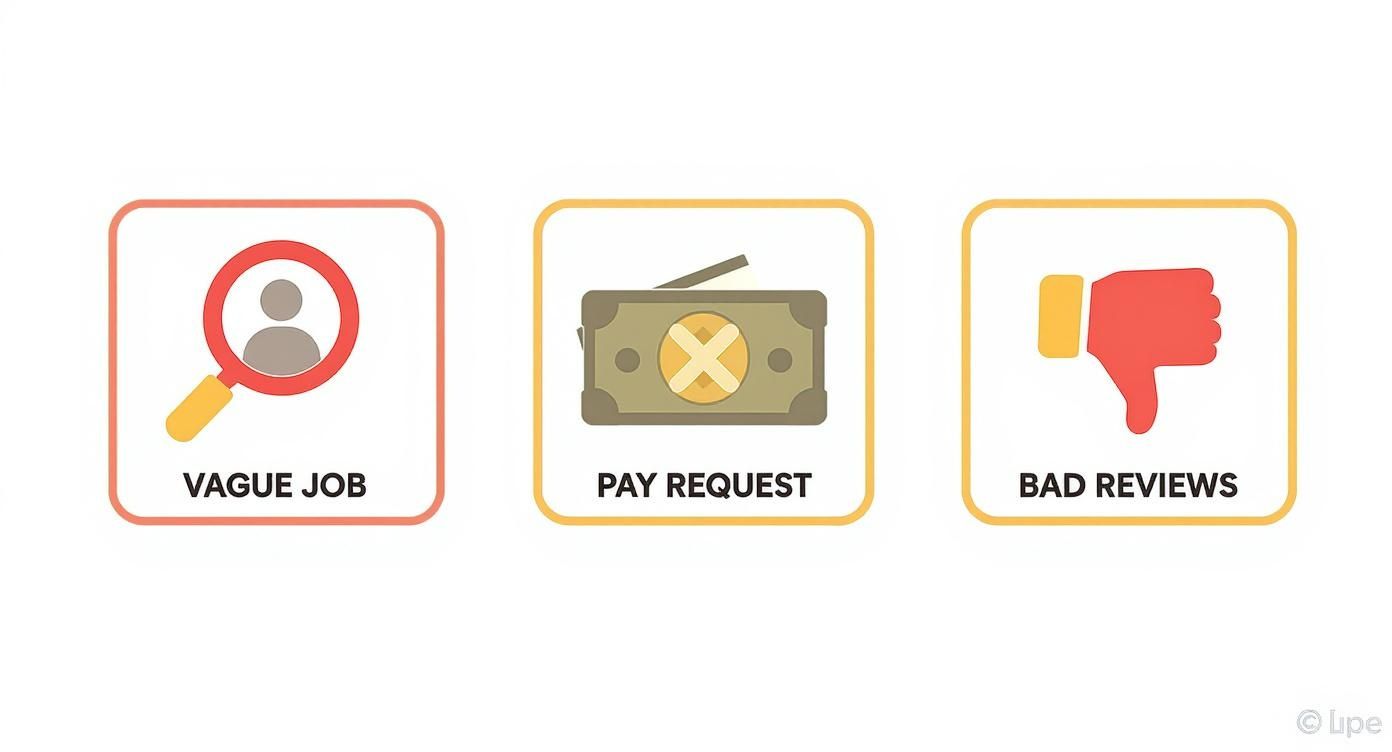
Trusting your gut and keeping these simple checks in mind will help you steer clear of suspicious listings and focus your energy where it counts: on legitimate, exciting opportunities.
Making Your Application Stand Out

When you're competing for online jobs in home, sending out a generic CV is the fastest way to get ignored. It's a tough market. Recruiters often get hundreds of applications for a single remote role, so your only mission is to make your application feel like it was written just for them.
This means you need to go way beyond simply listing your old job duties. You have to build a case for why you're a great remote worker. Companies hiring for home-based positions are always looking for a specific set of skills that prove you can deliver results without a manager hovering over your shoulder.
First, Decode the Job Description
Before you even think about writing, you need to become a detective. The job description is your road map, revealing everything the hiring manager is truly looking for. Don't just skim it; dissect it. Look for the clues hidden between the lines, especially keywords related to remote work.
You’ll see terms like these pop up all the time:
- Self-management: Can you actually stay on track and hit deadlines on your own?
- Asynchronous communication: Are you a pro at getting your point across clearly in writing, using tools like Slack or email, when you can't just walk over to someone's desk?
- Digital tool proficiency: Do they mention specific software? Keep an eye out for names like Asana, Trello, Microsoft Teams, or Jira.
These aren't just trendy buzzwords. They're the core skills needed to succeed in an online job. Your job is to prove you've got them, using real examples from your work history.
Think of your application as an argument. The job description is the question, and every single bullet point on your CV should be a piece of evidence proving you are the answer.
This focused approach is particularly vital in Germany, where working from home is now a standard part of the economy. In fact, 2023 data showed that almost a quarter (23.5%) of all employed people regularly worked from home — a huge jump from before the pandemic. You can find more of these insights into the German labour market from the Federal Statistical Office.
Reshape Your CV for Remote Success
Once you’ve got your list of keywords and essential skills, it's time to translate your past experience into the language of remote work. Even if you've never had an "official" remote job, you can still frame your accomplishments to highlight how well-suited you are for online jobs in home.
Let's take a common, boring CV point:
- "Responsible for coordinating team projects."
Okay, but what does that really mean? Let's give it a remote-work makeover:
- "Independently managed a five-person project team across three departments using Asana, ensuring all deadlines were met with minimal direct supervision."
See the difference? The second version is packed with power. It screams self-management ("independently managed"), shows you know your way around key software ("using Asana"), and proves you can communicate effectively when your team isn't in the same room ("across three departments").
Write a Cover Letter That Actually Connects
Your cover letter is where you get to show a bit of personality. Don't just rehash your CV—that's a wasted opportunity. Instead, tell a quick story about why you're the right person for this company and its remote culture.
Start by proving you've done your homework. Mention something specific, like a recent project they launched, a blog post you enjoyed, or a company value that you connect with. It shows you're genuinely interested, not just spamming applications.
Then, tackle the remote aspect head-on. Show that you understand what it takes to thrive while working from home. You could drop in a sentence like, "I was particularly drawn to this role because your company’s commitment to asynchronous communication aligns perfectly with my proactive and well-documented work style."
Finally, end with confidence. If you're feeling like your application could use a professional polish to make sure it truly shines, it might be worth getting some expert advice. You can explore options for personalised support by checking out our consulting services. Sometimes, a small investment in your application can make all the difference in getting that interview.
Setting Up a Home Office That Actually Works

Congratulations, you've landed one of the many online jobs in home! That's a massive win, but it's really just the starting line. Now comes the real challenge: creating a space—both physical and mental—where you can be focused, productive, and genuinely happy for the long haul.
Your home is, by its very nature, full of distractions. There’s the laundry pile giving you the side-eye, the dog wanting a walk, or family members popping in. Thriving in a remote role isn't about having a fancy setup; it's about being intentional with your environment.
Your Non-Negotiable Physical Setup
Look, we've all started out at the kitchen table. It works for a day or two, but it's not a long-term plan. Ignoring ergonomics is the fastest way I've seen people burn out or develop aches and pains that can seriously derail a new remote career. A few core investments aren't just nice-to-haves; they're non-negotiable.
Think of these as the absolute foundations for working from home without breaking your body.
- An Ergonomic Chair: Seriously, don't skimp here. This is your single most important purchase. A quality chair supports your posture and means you won't end the day feeling like you've been in a wrestling match.
- A Proper Desk: You need a desk high enough that your arms can rest at a 90-degree angle while typing. If you can swing it, a sit-stand desk is a complete game-changer for breaking up those long seated hours.
- External Monitor and Keyboard: Hunching over a tiny laptop screen is a one-way ticket to neck and shoulder pain. An external monitor at eye level, combined with a separate keyboard and mouse, makes an incredible difference to your posture.
These three items are the bedrock of a sustainable home office. They’re not just furniture; they are the professional tools that protect your health, letting you focus on the work itself, not the pain in your back.
The Digital Toolkit You'll Actually Use
Beyond your desk, your digital environment is just as critical. The right software is what keeps you connected to your team and your projects on track. Your new company will likely provide the main tools, but knowing what's what helps you hit the ground running.
Most modern remote teams run on a pretty standard stack of apps.
- Communication Hubs: Platforms like Slack or Microsoft Teams have replaced the office water cooler. They’re essential for everything from quick questions to structured team conversations.
- Project Management Software: You'll almost certainly live in a tool like Asana, Trello, or Jira. This is how everyone knows who’s doing what and when it’s due.
- Video Conferencing: A solid video tool like Zoom or Google Meet is indispensable. It's how you'll have face-to-face meetings and build real connections with your colleagues.
Getting comfortable with these is non-negotiable for anyone serious about building a career with online jobs in home.
"The biggest challenge in remote work isn't doing the work; it's creating the boundaries that allow you to stop. Without clear signals, your workday can easily bleed into your personal life, leading to exhaustion."
This is where the real work begins. The trickiest—and most rewarding—part of working from home is mastering the art of the boundary.
Drawing a Clear Line Between Work and Life
When your "office" is ten steps from your sofa, the workday can feel like it never truly ends. To sidestep burnout, you have to create rituals that tell your brain when it's time to work and, crucially, when it's time to switch off.
This isn't about being rigid; it's about building healthy, repeatable habits that stick.
- Bookend Your Day With a Routine: Don't just roll out of bed and crack open the laptop. Create a "fake commute." Maybe it’s a 15-minute walk, brewing a proper coffee, or reading a chapter of a book. At day's end, have a shutdown ritual: close all your tabs, sign out of Slack, and physically step away from your workspace.
- Define Your Workspace: If you have a spare room, perfect. If not, a specific corner of the living room works too. The key is to create a space that your brain associates only with work.
- Tame Your Notifications: This one is huge. Turn off all work-related pings on your phone and computer outside of your working hours. This simple act helps you reclaim your personal time and stops you from being mentally pulled back into work mode at all hours.
Building these habits takes conscious effort, but they are the secret to a long and successful career from home. They ensure your job supports your life, rather than taking it over.
Common Questions About Working from Home
Stepping into the world of remote work can feel a bit like exploring new territory. You're bound to have questions. Whether you're just starting to look for online jobs in home or you're already sending out applications, getting clear answers is crucial.
Let's cut through the noise and tackle some of the most common questions I hear from job seekers. Think of this as your personal cheat sheet for navigating the remote job market in Germany with confidence.
Do I Need Previous Remote Experience to Get Hired?
This is the big one, isn't it? The short answer is a resounding no. While having "remote" on your CV is a nice-to-have, it's definitely not a deal-breaker for most companies.
What hiring managers really care about are the skills that make someone successful in a remote role. They're looking for proof that you can thrive without someone looking over your shoulder.
Instead of worrying about what's missing, focus on what you've already got. Frame your existing experience in a remote-friendly way:
- Self-Discipline: Talk about a project you owned from start to finish with minimal supervision.
- Communication Skills: Did you keep your team in the loop on a complex project using email, Slack, or project management software? That's perfect.
- Tech-Savviness: Mention your experience with collaboration tools like Microsoft Teams, Slack, or Asana.
Showing you have these core skills through real examples from your past jobs is far more powerful than just saying you've worked from home before.
Are Most Online Jobs Freelance or Full-Time?
A few years back, the remote world was heavily skewed towards freelance and contract gigs. That's changed. The market has matured, and now there’s a much healthier balance, with options to suit almost any preference.
You'll find a solid mix of arrangements out there:
- Full-Time Salaried Positions (Festanstellung): These are the permanent roles you’re used to, complete with benefits, job security, and a steady salary.
- Part-Time Roles (Teilzeit): Perfect for balancing work with other commitments, many companies now offer permanent part-time remote positions.
- Freelance or Contract Work (Freiberuflich): Still a fantastic option, especially in creative and tech fields, offering maximum flexibility and control over your projects and schedule.
The trick is to get good at using the filters on job boards. That’s how you’ll zero in on the type of employment that’s right for you.
My Takeaway: The explosion of permanent, full-time remote roles shows that companies are all-in. They see working from home not as a temporary perk, but as a smart, sustainable way to operate for the long haul.
How Much Can I Realistically Expect to Earn?
There’s a stubborn myth floating around that remote jobs pay less. For professional roles in Germany, that's simply not the case anymore. Legitimate companies base your salary on your skills, your experience, and the market rate for that position—not whether your desk is at home or in their office.
A data entry clerk will earn a data entry salary, and a senior software developer will earn a developer's salary. It's that simple. Be very wary of any job posting that promises a ridiculously high salary for low-skilled work; it’s a classic red flag for a scam.
Do your homework. Research the average salary for your role and experience level in the German market to ground your expectations in reality.
What Equipment Do Companies Typically Provide?
This can differ from company to company, but a good rule of thumb is that any established German business will provide the core equipment you need to do your job securely and well. You should never have to pay for essential tools out of pocket.
Here’s what’s fairly standard:
- A Company Laptop: This is non-negotiable for most places, mainly for security and software management.
- Essential Software Licences: You’ll get access to everything you need, whether it's Microsoft 365, Adobe Creative Suite, or specialised industry tools.
- A Potential Stipend: Many companies offer a one-off or annual allowance to help you buy things like a second monitor, an ergonomic chair, or a good headset.
Don’t be shy about asking about this during the interview process. A company that invests in a proper home office setup is one that's serious about its remote culture and its people.
Finding the right online job takes time and a smart strategy. With Acquispect, you can automate the repetitive parts of your job search and focus on what matters most—preparing for interviews. Our AI-powered platform finds the best roles for you, crafts tailored cover letters, and tracks your application success, helping you land more interviews with less effort. Start your free 30-day trial and see the difference at https://acquispect.com.