Finding a great remote social media job takes more than just being good at Instagram. What companies are really looking for are strategic thinkers and self-starters who can deliver results without someone looking over their shoulder. Let’s break down how you can actually land one of these roles.
What Remote Social Media Jobs Are Really Like
The demand for social media pros who can work from anywhere is booming. But it's not just about scheduling posts from your couch. These roles expect you to be a fully integrated, though physically distant, member of the marketing team, blending sharp creative instincts with a head for numbers.
Success in a remote social media role often comes down to the skills that don't make it onto the formal job description. It’s less about where you are and more about how you work: being disciplined, organised, and always on the ball.
A Look at the Day-to-Day Grind
Forget the cliché of typing away on a laptop from a tropical beach. The reality is much more structured, often a busy day juggling data analysis, content creation, and collaborating with a team scattered across different time zones.
- A Social Media Strategist is often deep in analytics, spotting audience trends, and mapping out long-term campaigns. Their world is driven by data and proving a return on investment.
- The Community Manager acts as the brand's personality online, building genuine relationships with followers and navigating online discussions. This is a job that demands a ton of empathy and excellent communication, often without real-time conversation.
- Content Creators are focused on the creative output—the visuals, the videos, the copy. It’s all about managing your own projects and hitting tight deadlines without a manager physically present to nudge you along.
The most valuable skill you can have isn't just knowing the platforms inside and out. It's being able to clearly and proactively communicate what you're doing—and the results you're getting—when nobody is there to ask.
What Employers Are Looking For Now
Companies have had to change how they operate, and you can see it in what they're looking for when they hire. The move to remote and hybrid work is changing everything. In Germany, for example, hybrid job postings are expected to jump from 15 percent in mid-2023 to about 24 percent by mid-2025, while fully on-site roles are dropping off. This isn't just a blip; it's a clear signal that employers want people who thrive in a flexible setup.
This shift means that soft skills like autonomy, discipline, and accountability are now just as important as your technical abilities. They need to know they can trust you to get the work done. If you're ready to find a company that gets it, you can check out the latest opportunities in our careers section.
Looking for Roles in All the Right Places
If you're only scrolling through the big-name job boards for remote social media roles, you're missing out. Think of it like fishing in an over-crowded public pond; sure, you might get a nibble, but the best catches are often found in quieter, more exclusive spots. The truth is, the most exciting remote opportunities rarely make it to the mainstream platforms.
Top remote-first companies often skip the massive job sites entirely. Why? They prefer to post on niche boards dedicated to remote work or their specific industry. It helps them attract a pre-vetted pool of candidates who already get the culture and demands of a distributed team.
Tap into Niche Job Boards and Hidden Networks
Some of the best job leads are never formally advertised at all. They get passed around within trusted communities and private networks where hiring managers often look for referrals before casting a wider net.
- Go Beyond the Big Names: Instead of just LinkedIn or Indeed, spend your time on platforms built for remote work. Sites like We Work Remotely and Remotive are fantastic because they cut through the noise, showing you only fully remote positions.
- Join the Conversation: Find and join active Slack or Discord communities for social media marketers, digital nomads, or remote professionals. Keep an eye out for dedicated "job-postings" channels—this is where you'll find roles shared directly by the people doing the hiring.
- Go Straight to the Source: Make a dream list of 20-30 remote-first companies you'd love to work for. Bookmark their career pages and check them weekly. Many businesses post openings here first—or exclusively—to attract people who are already passionate about their mission.
This approach requires a bit more effort, but it pays off by putting you in front of opportunities your competition will never even see.
A breakdown of top platforms, from mainstream to niche, highlighting what makes each one effective for finding your next remote role.
Where to Find Quality Remote Social Media Jobs
| Platform | Best For | Key Feature | | :--- | :--- | :--- | | Niche Remote Boards (e.g., We Work Remotely) | Finding 100% remote roles from vetted, remote-first companies. | Curated listings that filter out hybrid and location-based jobs. | | Company Careers Pages | Targeting specific companies you admire and want to work for. | Direct access to openings before they are posted elsewhere. | | Slack/Discord Communities | Uncovering "hidden" jobs shared through professional networks. | Real-time job postings and direct access to hiring managers. | | LinkedIn | Leveraging your professional network and setting up highly specific alerts. | Advanced search filters and the ability to see who in your network works there. |
By diversifying where you look, you move from being a passive applicant to a proactive job seeker—a quality that every remote employer values highly.
This is a great visual summary of the core skills remote hiring managers are constantly looking for.
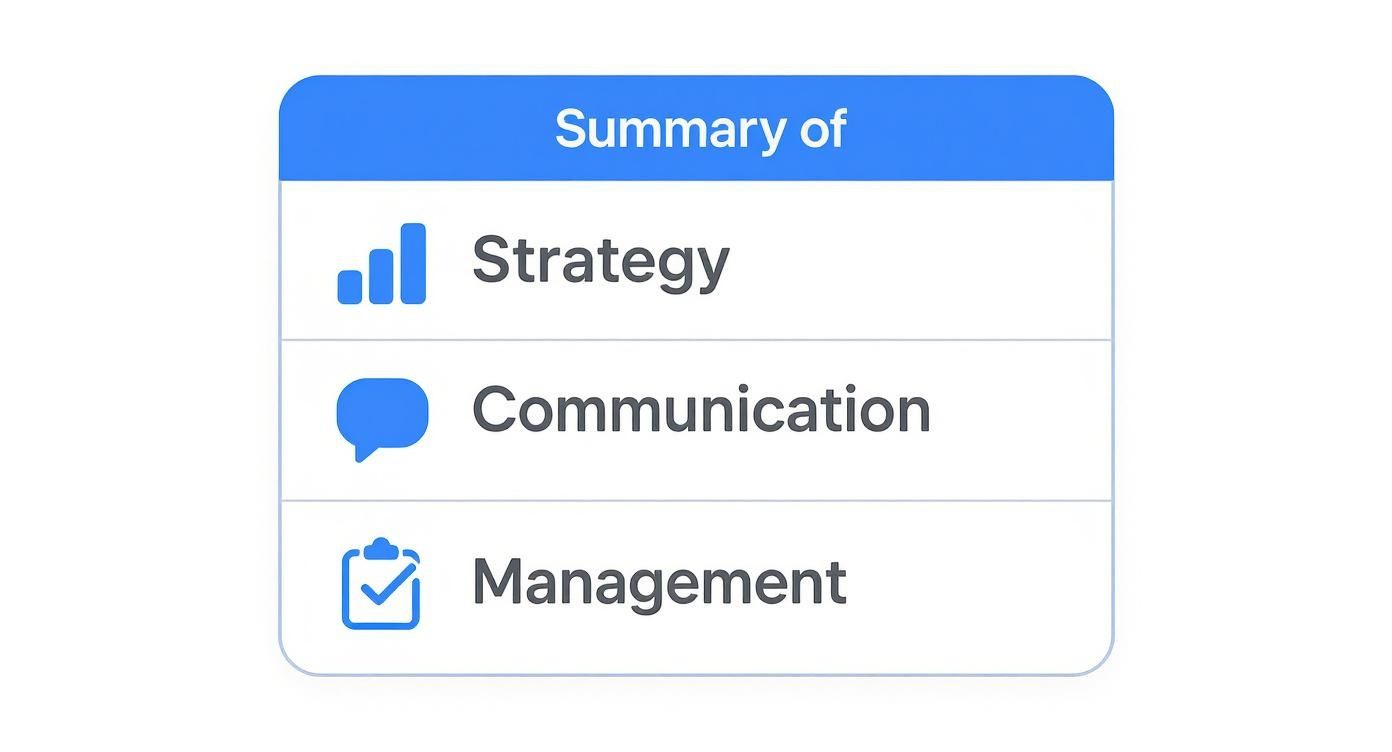
It really boils down to proving you can balance high-level strategy with the day-to-day execution and crystal-clear communication needed to thrive without a shared office.
Master Your Search with Smart Alerts
Generic job alerts are just digital noise. To make a powerful platform like LinkedIn work for you, you have to get specific. Don't just set an alert for "social media manager." You need to tell the algorithm exactly what you want using Boolean search operators.
For instance, a much smarter search would be: ("Social Media Manager" OR "Community Manager") AND (remote OR "work from home") NOT (hybrid OR onsite). This simple query tells the platform to show you relevant manager roles, ensures they are fully remote, and actively filters out anything requiring you to be in an office.
Set up daily or weekly alerts for these hyper-specific searches, and you'll get high-quality leads delivered right to your inbox. For more tips on building the perfect job search strategy, you can find more in-depth guides on the JobCopilot blog.
A quick word of warning: Be very careful with unsolicited job offers you receive on social media. Scammers love to create fake posts for well-known companies to phish for personal information. A real recruiter will never ask you to pay for equipment or send you a cheque for "home office supplies" before you’ve signed a contract.
Ultimately, putting all your eggs in one basket is the fastest way to get discouraged. A diversified search strategy is your best bet. By mixing niche boards, private communities, and laser-focused alerts, you dramatically improve your odds of landing those incredible jobs social media remote that most people miss.
Crafting an Application That Screams ‘Remote-Ready’
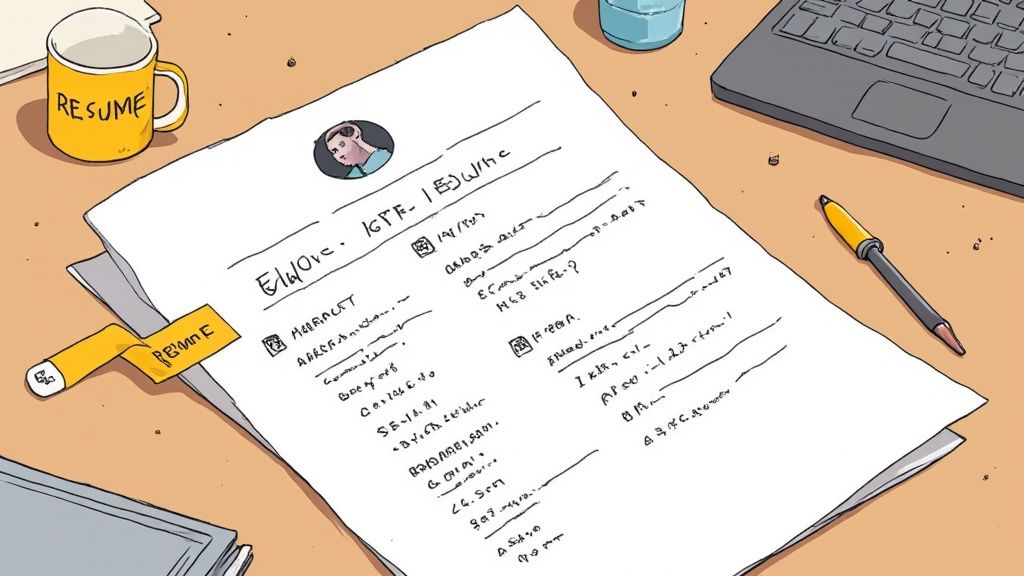
When you're applying for a remote role, your CV and cover letter are doing more than just listing your experience. They’re your opening argument, the first piece of evidence that proves you’re built for this way of working.
A generic application that just rehashes past duties is a missed opportunity. You need to show that you're an organised, self-sufficient professional who gets things done without someone looking over your shoulder. It’s your chance to prove you're a low-risk, high-reward hire for a team that's spread out across the map.
The real trick is to reframe your entire career history through a remote work lens. Think about the skills that truly matter when the office is just a concept: proactive communication, total ownership of your projects, and being comfortable with collaborative tech. It's all about answering the hiring manager’s biggest unspoken question: "Can I trust this person to deliver, no matter where they are?"
Making Your CV Prove Your Remote Chops
Every single line on your CV needs to work hard to show you can thrive on your own. Vague descriptions like "managed social media" just don't cut it anymore. What you need are concrete, quantifiable achievements that scream autonomy and impact.
Let’s look at a quick before-and-after. Instead of this:
- Weak Example: Responsible for community management and content creation.
Try reframing it to show how you worked and the results you got:
- Strong Example: Grew the Instagram community by 15% in six months by independently launching a user-generated content campaign, managed entirely through Asana and Slack.
See the difference? This one sentence instantly tells them you’re results-driven (15% growth), you take initiative (independently launched), and you already know the tools of the trade (Asana and Slack).
Don't sleep on your 'Skills' section; it's prime real estate. Forget just listing "Microsoft Office." Organise your tech stack into categories that show you understand a remote workflow. Think ‘Project Management Software’ (Trello, Jira), ‘Communication Tools’ (Slack, Microsoft Teams), and ‘Social Media Suites’ (Sprout Social, Hootsuite).
Weaving a Compelling Story in Your Cover Letter
Your CV lays out the facts, but your cover letter tells your story. This is where you connect the dots for the hiring manager, showing them not just what you've done, but why you’re the right person for their remote team.
Forget the stuffy, formal openings. Jump right in and tackle the remote aspect head-on. Explain why you’re specifically looking for jobs social media remote and what makes you good at it. Maybe share a quick story about a time you had to coordinate a complex project with minimal supervision or how you used asynchronous updates to solve a problem for a team in another time zone.
A simple structure that I’ve seen work time and time again is:
- The Hook: A sharp opening that names the role and shows you’re genuinely excited about their remote culture.
- The Proof: A couple of short paragraphs that pull out your best achievements from your CV and explicitly tie them to the demands of remote work.
- The Fit: A closing that proves you’ve done your homework on the company. Explain why your self-starting attitude is a perfect match for how their team operates.
In the end, your application needs to be a cohesive package. It should paint a crystal-clear picture of someone who isn't just a great social media manager, but someone who is wired for the day-to-day realities of working remotely. That intentional framing makes all the difference.
Acing the Virtual Interview

When you’re interviewing for a remote social media job, the video call is much more than just a chat. It’s your first real-world audition. The hiring manager is watching to see how well you communicate, how comfortable you are with technology, and whether you can present yourself professionally without an office to set the tone.
Essentially, how you show up on that call is a direct preview of how you’ll show up for the job every day. They need to see that you can build a connection through a screen, get your ideas across clearly, and navigate the world of digital communication with ease. This is your moment to prove you're not just a great candidate on paper, but a self-sufficient professional ready to jump in from day one.
Setting the Stage for Success
Before you even start rehearsing your answers, nail your setup. A messy background, dodgy Wi-Fi, or terrible audio can sink your chances before you’ve even said hello. It screams "unprepared," which is the biggest red flag for a role that requires you to be autonomous.
Your mission is to create an environment that looks and sounds professional, with zero distractions.
- Lighting is everything. Don't sit with a window behind you, or you’ll turn into a mysterious silhouette. Face a window for natural light, or invest in a simple ring light. It makes a world of difference.
- Test your audio. Please, don't rely on your laptop's built-in mic. It picks up every echo and bit of background noise. Use a headset or an external microphone and do a test run with a friend to make sure you sound crisp and clear.
- Curate your background. A tidy bookshelf, a neutral wall with one piece of art—keep it simple and uncluttered. If you opt for a virtual background, pick something professional and make sure it doesn’t glitch or pixelate around you.
Answering Remote-Specific Questions
Hiring managers for distributed teams will have a special set of questions designed to see if you have what it takes to thrive outside an office. They want to know how you stay organised, manage your time, and communicate effectively when your colleagues are miles away. Come prepared with specific examples, not vague promises.
They'll likely ask things like:
- "Tell me about a project you managed with minimal supervision."
- "How do you approach communicating with a team scattered across different time zones?"
- "What are your personal strategies for staying motivated and focused when working from home?"
Don't just talk about what you would do. Use a real story. The STAR method (Situation, Task, Action, Result) is perfect for this. It gives them concrete proof you can actually do what you say you can.
The move towards flexible work is a massive trend across Europe. In Germany, for example, remote work is now deeply ingrained, with hybrid models becoming the norm. It’s expected that by 2025, roughly 24.4 percent of German employees will work from home at least part-time, which really shows how the country has embraced this shift. You can find more insights about the German remote work landscape and its impressive digital infrastructure.
Finally, don't forget to ask your own questions. Go deeper than just salary and holiday time. Ask about their communication culture, the tools they use for collaboration (Slack, Asana, etc.), and how they build team spirit from a distance. It shows you’re not just looking for any of the jobs social media remote; you’re looking for the right remote team to join.
Negotiating Your Offer and Starting Strong
Getting that job offer is a fantastic moment, but don't pop the champagne just yet. For remote social media roles, the conversation isn't over. This is where you get to shape the job into something that truly works for you, well beyond just the salary.
Think about what makes remote work different. This is the perfect time to ask about a stipend for your home office—maybe for a proper ergonomic chair or a second monitor. What about formalising flexible hours to fit your life better? These kinds of perks can be just as valuable as a bigger paycheque and make a huge difference in your day-to-day happiness and productivity.
When you're looking at the offer, try to get a real feel for the company's remote culture. A high salary means very little if you feel disconnected and unsupported. It's smart to ask about the tools they use to communicate, how they handle team building with a distributed team, and what kind of opportunities exist for professional growth.
Secure the Right Terms for Remote Success
Negotiating should feel like a collaborative chat, not a battle. When you make a request, explain why it matters for your performance. For instance, a home office stipend isn't just a perk; it's a tool that helps you create an efficient and comfortable workspace, which directly benefits the company in the long run.
It helps to know that remote work is becoming standard practice, especially in places like Germany. Full-time employees there with university degrees work from home an average of 1.6 days per week, which is actually above the global average. This trend shows that companies are more open than ever to supporting solid remote setups.
Remember, the best remote job offers are partnerships. They should reflect the company's investment in you as a remote employee and your commitment to delivering outstanding results, regardless of your location.
Once you’ve locked in an offer you're genuinely excited about, the focus shifts to hitting the ground running and making a great impression from day one.
Your First 90 Days: A Remote Power Plan
Making a strong start is even more important when you can't rely on those casual "water cooler" moments to build relationships. A well-thought-out 30-60-90 day plan is your secret weapon to show you're proactive and confirm they made the right choice.
Here’s a simple framework to think about for your first three months:
- First 30 Days: Learn and Listen: Your main job is to be a sponge. Get virtual coffees on the calendar with your new teammates, dive deep into the current workflows, and get a solid grasp of the brand's voice and key performance metrics.
- Next 30 Days: Contribute and Collaborate: Now it's time to start taking the reins on smaller projects. Look for a "quick win"—maybe a small process you can improve or a successful piece of content—to build momentum and earn credibility.
- Final 30 Days: Optimise and Own: With a good foundation in place, you can begin to propose new ideas based on what you've observed. Take full ownership of your main responsibilities and start sketching out your strategy for the upcoming quarter.
This structured approach is a fantastic way to build trust and demonstrate your value quickly. For a deeper dive into making your first few months a massive success, check out our comprehensive guide on employee onboarding.
Of course, here is the rewritten section with a more natural, human-written tone.
Your Remote Social Media Job Questions, Answered
Jumping into the world of remote work can feel like navigating a new city—exciting, but you've probably got a few questions. Let's clear up some of the most common ones I hear from people trying to land a remote social media gig.
What Skills Do Companies Actually Want?
Look, knowing how to post a Reel is table stakes. When hiring managers are looking for a remote team member, they're digging deeper. They need proof you can drive results without someone looking over your shoulder.
They're almost always on the lookout for a few key things:
- Real Data Analysis: You need to be comfortable getting into the weeds of analytics, figuring out what’s actually working, and then explaining the return on investment (ROI) in plain English.
- Scrappy Content Creation: Can you whip up compelling visuals in Canva or the Adobe Suite? Companies love candidates who can create great content without relying on a separate design team.
- Scheduling Tool Fluency: Being proficient with a platform like Sprout Social or Hootsuite isn't just a bonus; it's pretty much essential for managing a content calendar from afar.
- Mastery of Asynchronous Communication: This one is huge. You have to be a crystal-clear communicator in writing, whether it’s through Slack updates or project management tools. It's how work gets done across different time zones.
Ultimately, they’re looking for someone who can own their projects from start to finish.
How Do I Get a Remote Job with No Remote Experience?
This is the classic chicken-or-egg problem, but don’t let it stop you. It's all about how you frame your current experience to show you’re already equipped for remote work.
Start thinking about "remote-adjacent" skills you've used. Did you manage a project with minimal supervision? Did you take the initiative on a task without waiting to be told? Highlight those moments on your CV. These are examples of the autonomy every remote manager craves.
Then, in your cover letter, you can tackle the issue head-on. Talk about your personal systems for staying organised and on-task when working independently.
Your job is to translate your office-based wins into the language of remote work. Show them your self-discipline, your reliability, and your killer written communication skills. Those are the things that really matter.
Are Most Remote Social Media Jobs Full-Time?
It’s actually a pretty good mix out there, which is great for anyone looking for flexibility. The type of role you find often comes down to the size of the company.
Start-ups and smaller businesses tend to lean on contract or freelance social media managers. This gives them flexibility, and it’s a brilliant way for you to rack up remote experience with different brands quickly.
Larger, more established corporations, on the other hand, are offering more permanent, full-time remote roles than ever before. These usually come with all the benefits and long-term stability you'd expect. The best remote job boards let you filter by employment type, so you can zero in on exactly what you’re looking for.
Keeping track of all the different roles and tailoring applications for each one can be a full-time job in itself. Acquispect is built to handle the heavy lifting by automatically finding the right jobs and creating personalised applications for you. If you want to spend less time searching and more time interviewing, check out how it works at https://acquispect.com.