Forget everything you thought you knew about landing top-tier freelancer jobs remote. The game has changed. It's no longer about who has the flashiest CV or the most polished portfolio. We're in an era where the only thing that truly matters is hard, verifiable proof of your skills.
This isn't just a trend; it's a fundamental shift that puts merit squarely back at the centre of the hiring process.
The Old Way is Broken: Welcome to Merit-Based Hiring
Let's be honest: the traditional way of hiring freelancers is a gamble. Clients sift through stacks of CVs and portfolios, which are painfully easy to exaggerate and nearly impossible to verify. This broken system often rewards slick self-promoters over genuinely skilled professionals.
But things are changing, especially in forward-thinking tech hubs. Companies are waking up and ditching this flawed model for something much more reliable.
This simple graphic shows exactly how the process has evolved, moving past the old, trust-based methods to a system where proof is king.
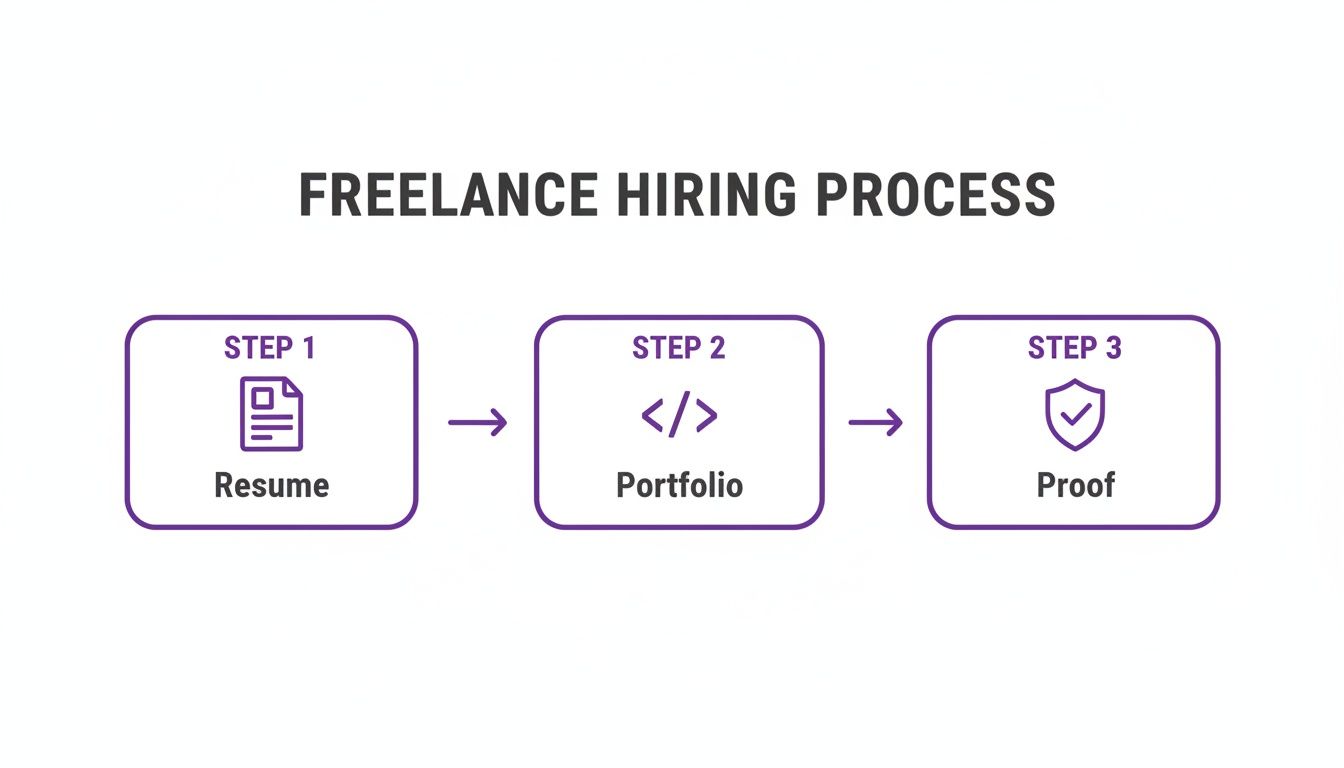
The takeaway here is crystal clear: while resumes and portfolios might get your foot in the door, it’s the verified proof of your work that will actually land you the contract.
Why Proof Always Beats Polish
Clients are burned out from hiring freelancers based on impressive promises, only to get underwhelming results. They're craving certainty. This has sparked a move toward a true meritocracy, where verifiable credentials—think audited GitHub commits, validated Figma prototypes, or cryptographically signed project deliverables—are the new gold standard.
Here’s why this approach just makes sense:
- It Slashes Hiring Risk: Clients aren't just taking your word for it. They can see exactly what you've accomplished.
- It’s Genuinely Objective: Skills are judged on tangible output, which helps strip unconscious bias from the hiring equation.
- It Justifies Fairer Pay: When your value is proven beyond a doubt, you're in a much stronger position to command the rates your expertise deserves.
We're seeing this shift happen in real-time, especially within Germany's booming tech sector, which grew an impressive 12% in 2023. This growth is driving a massive surge in demand for skilled remote freelancers. In fact, projections point to a 15% rise in remote roles across software development, health tech, and finance in the coming year.
Comparing Freelance Hiring Models
Let's break down how the traditional approach to hiring freelancers stacks up against the modern, proof-driven method. The differences are pretty stark.
| Attribute | Traditional Approach | Merit-Based Approach | | :--- | :--- | :--- | | Primary Documents | CVs, self-reported portfolios | Verifiable work history, on-chain credentials | | Basis of Trust | Relies on claims and references | Based on proven, auditable results | | Risk to Client | High; potential for embellished skills | Low; skills are pre-validated | | Evaluation Method | Subjective, prone to bias | Objective, based on tangible output | | Fairness | Favours good self-promoters | Favours genuinely skilled freelancers |
The table really highlights the core problem with the old model: it's built on trust, not truth. The merit-based approach flips that, making your actual work the foundation of your professional reputation.
This is more than just a passing phase. You can dig into the data on the growing freelance economy and see how platforms that champion verifiable proofs are perfectly positioned for where the market is heading.
The new rule is simple: don't just tell clients what you can do. Use verifiable proof to show them what you’ve already done. In a competitive global marketplace, this is what will set you apart.
Find Your Niche in High-Growth Remote Sectors
If you want to consistently land high-value freelancer jobs remote, the first thing you need to do is stop being a generalist. The market is absolutely flooded with freelancers who can "do a bit of everything," and it’s a race to the bottom on price. Real, sustainable success comes from becoming the go-to expert for a specific, high-demand problem.
This means getting much more specific than broad labels. You're not just a "web developer" anymore; you specialise in "Stripe payment integrations for Shopify Plus." This isn't just about sounding impressive on your profile. It's a strategic move to align your skills with booming sectors where clients are more than willing to pay a premium for someone who truly gets their world.
Identify Where the Money and Demand Are
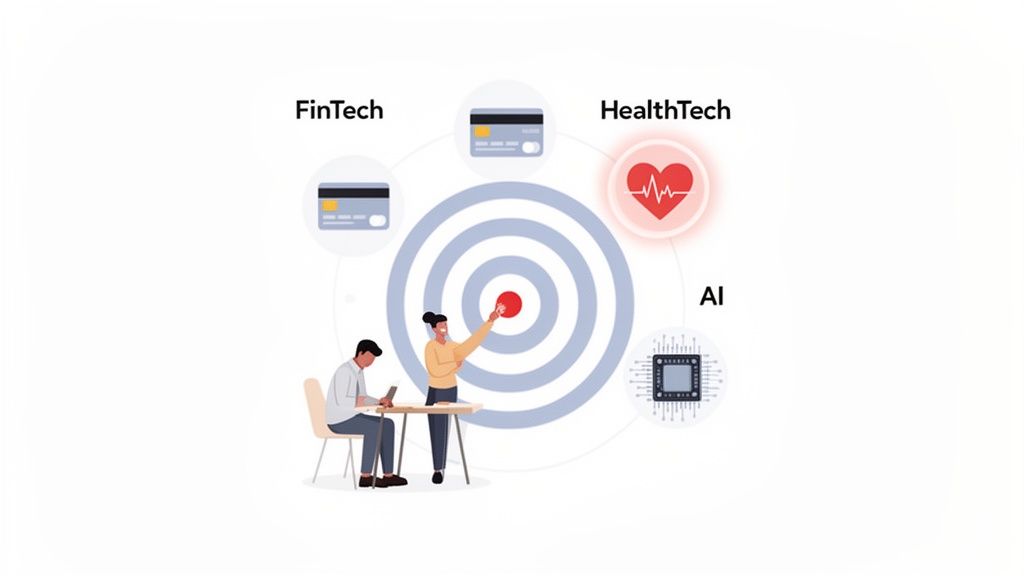
Start by looking at where the growth is. Industries like FinTech, HealthTech, and AI development are exploding right now. They're not just well-funded; they're wrestling with complex, high-stakes problems that demand specialist knowledge. Your job is to find the specific pain points inside these industries.
For instance, a FinTech startup doesn’t just need a "writer." They need someone who understands financial compliance, can break down complex investment products for a mainstream audience, and knows the tightrope walk of writing for a regulated industry. That specific knowledge is your ticket out of the generalist talent pool.
The sweet spot is the intersection of what you're good at, what you actually enjoy doing, and what the market is desperately searching for. Specialising makes you memorable and gives you the leverage to charge what you're worth.
Germany is a perfect real-world example of this shift. We're seeing a massive expansion of remote freelance jobs in these exact sectors, with a projected 15% increase in tech, health tech, and finance roles by the end of 2025. This comes on the heels of the tech industry's already impressive 12% growth in 2023. These aren't just any jobs; they demand niche skills, from telehealth data analysis to FinTech security. It’s a clear signal that the market is valuing specialists over generalists. You can read more about Germany's evolving remote work landscape on amatum.com.
Carve Out Your Expert Positioning
Once you’ve zeroed in on a promising sector, it's time to pinpoint a service you can completely master. Don't be afraid to go granular here. A narrow focus actually makes you easier for the right clients to find and much harder for them to replace.
Here’s a look at how you can reframe general skills into profitable, in-demand niches:
- From: Social Media Manager
- To: LinkedIn content strategist for B2B SaaS founders.
- From: Graphic Designer
- To: Brand identity designer for sustainable e-commerce startups.
- From: Software Engineer
- To: Python developer specialising in AI-powered data visualisation tools.
This deliberate, focused approach changes the game entirely. You stop being a commodity, a pair of hands to complete a task. Instead, you become a strategic partner who solves a very specific, very expensive business problem. This is how you unlock the most lucrative freelancer jobs remote—by becoming the undeniable solution to a particular challenge, you create your own demand and start setting your own terms.
Build a Portfolio That Proves Your Value
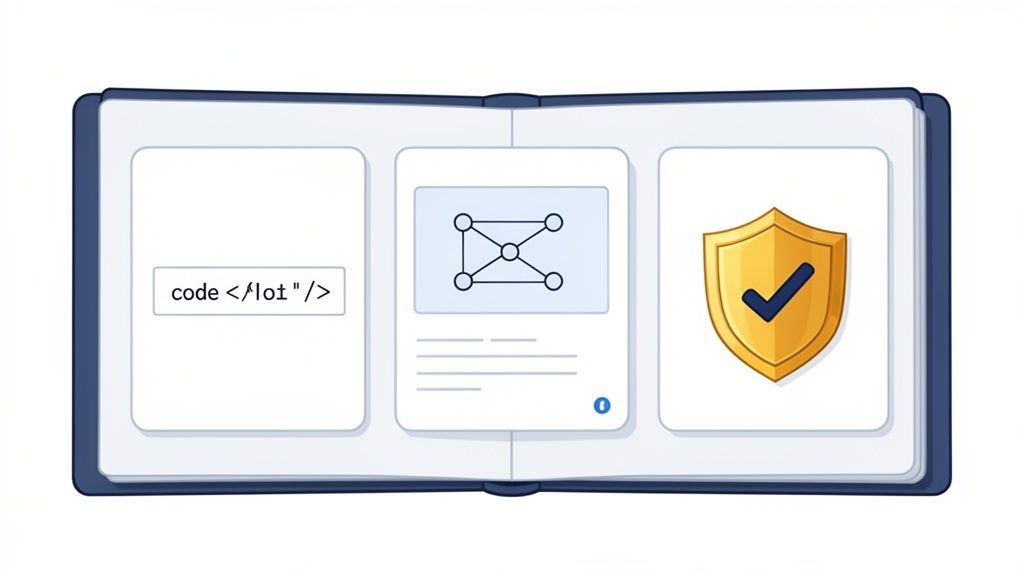
Let's get one thing straight: your portfolio isn't just a pretty gallery anymore. It's your evidence. To land the best freelancer jobs remote, you need to shift your portfolio's focus from simply showing what you did to actively proving your value with real, verifiable results.
Think of it less like a brochure and more like an evidence locker for your skills. Savvy clients have moved past pretty screenshots; they want undeniable proof that you deliver.
Connect Your Work Directly
First things first, bridge the gap between your portfolio and your actual work. Instead of just describing a project, link potential clients directly to the source—the platforms where the work lives and breathes. It's about creating a transparent, trustworthy window into your process.
Start by integrating your professional accounts right into your portfolio or freelance profiles. For example:
- Developers: Connect your GitHub repository. This lets clients see your commit history, the quality of your code, and how you collaborate. It's your work in its raw, most honest form.
- Designers: A link to your Figma files shows the entire creative journey, from rough wireframes to polished prototypes, not just the glossy final image.
- Project Managers: Share sanitised templates or workflow examples from tools like Notion or Asana. This demonstrates your organisational chops in a practical way.
This kind of direct connection gives a client an unfiltered look at your skills in action, which is far more convincing than any project description you could ever write.
Imagine a client seeing a verified credential confirming you contributed 80% of the code to a successful app. That single piece of evidence instantly puts you leagues ahead of competitors who are just making claims.
Frame Every Project Around Results
Once your proof is linked, you need to add context. Every project in your portfolio should be a mini-case study that answers one question: “What was the business outcome?” This is how you translate your skills into a language clients understand and value.
Stop just saying what you built; explain the impact it had.
For instance, you could reframe a simple project description to tell a much more compelling story:
- Before: "Designed a new checkout flow for an e-commerce website."
- After: "Overhauled the checkout process, leading to a 15% reduction in cart abandonment and boosting monthly revenue by £25,000 in the first quarter."
This approach requires a mindset shift. You're not just a freelancer for hire; you're a business partner. Get into the habit of asking clients for performance data after a project is done. Metrics on user engagement, conversion rates, or cost savings are the hard numbers that justify higher rates.
When you focus on tangible business value, you position yourself as a strategic investment, not just another expense. Your portfolio becomes a collection of success stories where you are the hero who delivered real, measurable results.
Master Outreach on Modern Freelance Platforms
If you're serious about landing the best freelancer jobs remote, you need to look beyond the usual suspects like Upwork and Fiverr. Don't get me wrong, they can be a decent starting point. But the real high-value, career-defining gigs? They’re usually hiding elsewhere.
You'll find them in corners of the internet where serious clients are searching for specialists, not just the cheapest option. This is where your proof-backed portfolio really starts to shine. It's not just about saying you're good; it's about showing it, instantly.
A smarter strategy involves diversifying where you look. Think niche job boards, private professional communities, and even Decentralised Autonomous Organisations (DAOs). These places are less crowded and value verifiable expertise above all else.
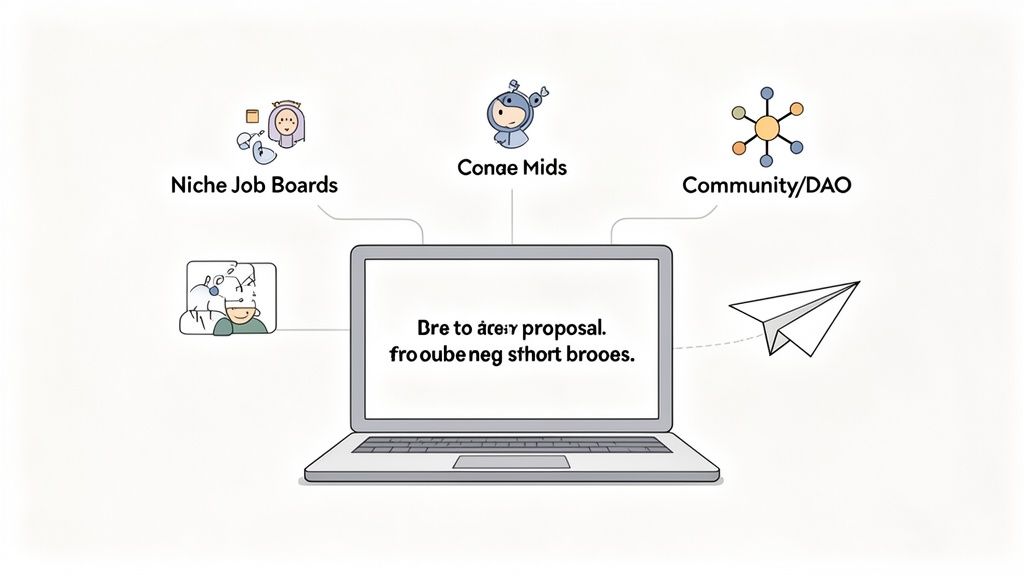
The trick is to treat your outreach as a multi-channel campaign. Your proven work history is the common thread that connects every application and makes you stand out.
Go Where the Best Clients Are Hiding
Let's be honest: top-tier clients aren't scrolling through massive, generic job boards. They look for talent in curated spaces. Your job is to figure out where those spaces are for your industry.
- Niche Job Boards: Get specific. If you're a writer, a site like Make Writing Your Job is infinitely better than a generalist platform. For elite developers, something like Toptal filters out the noise. The barrier to entry might be higher, but that’s a good thing—it means better projects and less competition.
- Professional Communities: Places like LinkedIn, or even curated Slack and Discord channels, are absolute gold. The best opportunities often aren't even listed under a "Jobs" tab. They pop up in a casual post from a founder or hiring manager looking for a recommendation or immediate help.
- DAOs and Web3 Platforms: If your skills fit the Web3 world, getting involved with a DAO is a direct path to paid work. Every contribution you make is transparent and on-chain, effectively building your portfolio in real-time for everyone to see.
The sophistication of your outreach should match the sophistication of your skills. Stop swimming in the generalist pool. Start conversations in exclusive channels where your verifiable credentials give you an immediate advantage.
Crafting an Outreach Message That Actually Works
So you've found a great opportunity. That first message is everything. Ditch the generic, copy-paste templates right now. Your only goal is to draw a straight line between the client's problem and your proven ability to solve it.
A killer outreach message really only needs three things:
- Acknowledge Their Need: Start by referencing a specific pain point from their post. It shows you’ve actually read it and aren't just spamming applications.
- Present Relevant Proof: Immediately follow up with a link to a specific project or credential from your portfolio. Show them you’ve solved this exact type of problem before.
- Propose a Clear Next Step: Keep it simple. Suggest a quick chat to discuss how you can help them hit their goals. No pressure, just a clear path forward.
This isn't just an application; it's a targeted business proposal. It shows you're a problem-solver, not just another freelancer looking for a pay cheque.
This proactive approach lines up perfectly with how the world of work is changing. Take Germany's remote freelance boom, for example. With 51% of employees now working from home at least part-time, companies are more comfortable than ever hiring remote experts. This widespread acceptance makes your targeted outreach even more effective. You can read more about Germany's remote work trends on splashtop.com.
Price Your Services and Negotiate with Confidence
Once your portfolio is loaded with solid, verifiable proof of your skills, you can stop thinking about hourly rates. Seriously. You're not selling your time anymore; you're selling results.
This is probably the most important mental switch you'll make in your freelance career. A client isn't buying 40 hours of your coding time. They're buying a feature that boosts user retention by 15%. That's where the real value lies, and your pricing needs to reflect that.
Forget the Clock, Focus on Value
The best way to do this is by adopting a value-based pricing model. This means your fee is tied directly to the business outcome you help the client achieve. To get this right, you have to dig a little deeper during your initial chats.
Get comfortable asking questions like:
- What's the goal here? What does success look like for this project in six months?
- How does this project fit into your bigger business objectives for the year?
- What happens if you don't do this project? What's the cost of inaction?
Let's say you find out that a new payment integration could open up a new market for them, potentially bringing in £100,000 in the first year. Suddenly, your £10,000 project fee doesn't just sound reasonable—it sounds like a brilliant investment.
Use Your Proof as Leverage
This is where your verifiable credentials become your superpower during negotiations. They shift the entire conversation from your cost to their confidence in you.
When a potential client pushes back on your rate, you have a powerful comeback.
Instead of just saying, "I'm worth it," you can point to concrete evidence: "On my last project, the work I delivered led to a verifiable 30% jump in their conversions. I'm confident I can bring that same impact here."
See the difference? You’re not talking about your price; you’re talking about your performance.
If someone asks for a discount, don't immediately slash your price. That devalues your work. Instead, pivot the conversation to the scope. Try saying something like, "My rates are set to deliver the best possible outcome based on the current plan. If we need to work within a specific budget, I'm happy to look at the scope together. What parts of the project could we potentially push to a second phase?"
This approach keeps your value intact, shows you're a flexible partner, and puts you in control of the negotiation. With undeniable proof backing you up, you can stand firm, ensuring you're paid what you're truly worth.
Create an Unforgettable Client Experience
Landing those high-value freelancer jobs remote is a huge win, but it’s really only half the job. The real secret to a long-term, thriving freelance career is turning those clients into repeat business and, even better, vocal advocates for your work. A standout client experience doesn't happen by accident; you have to build it, starting from the moment they agree to work with you.
Your aim is to make the entire process of working with you feel effortless, organised, and worth every penny. This all starts with a rock-solid onboarding process that clears up any confusion and builds trust right out of the gate. Never leave a new client wondering, "Okay, so what happens now?"
A smooth, professional onboarding immediately shows you’re a strategic partner, not just another freelancer they have to manage.
The Seamless Onboarding Checklist
Before you dive into the actual work, you need to guide your new client through a simple setup. This isn't about bogging them down with paperwork; it's about setting clear expectations and ground rules for how you'll work together.
Here’s what your onboarding should absolutely cover:
- A Clear Kick-off Call: Schedule a quick call to nail down the project's core goals. This is your chance to define what a "win" looks like and meet anyone else on their team who's involved.
- Set Communication Rules: Decide where you'll communicate. Will it be Slack, email, or a project tool like Asana? Be upfront about your typical response times so they know what to expect.
- Get Your Access sorted: Set up a shared Google Drive folder and ask for everything you need upfront—logins, brand guides, documents, you name it. No more chasing down files mid-project.
- Confirm Timelines & Payments: Briefly go over the key project milestones and the payment schedule you both agreed on in the proposal. It just reconfirms everyone is on the same page.
Taking these steps right at the beginning prevents so many headaches down the line. It instantly frames you as a professional who values the client’s time and their investment in you.
Every project you finish should become a powerful piece of marketing for your next one. The trick is to consistently and ethically document proof of your success as you go, turning great results into credentials you can actually verify.
This creates a brilliant feedback loop. As you hit different stages of the project, make a note of the wins. Did you help boost a key metric by 15%? Did your design get fantastic feedback in user testing? Capture those moments.
By the time the project wraps up, you won’t just have a happy client. You'll have a brand-new, verifiable piece of evidence for your portfolio. This turns every single job into a stepping stone, building your reputation and making it easier to land even better freelancer jobs remote in the future.
Got Questions? We've Got Answers
Stepping into the world of remote freelancing can feel like navigating a new city—exciting, but full of questions. Let's tackle some of the big ones that pop up for aspiring freelancers.
What's a Realistic Freelance Income?
Honestly, this comes down to your niche and the real-world value you can prove you deliver. If you're a generalist, you'll often find yourself in a race to the bottom on price. The real money is in specialisation.
Think about it this way: a developer with a proven track record in FinTech security can comfortably command a six-figure annual income. That's a world away from a general web developer. The key is to target high-growth industries where your specific skills solve very expensive problems for your clients.
Is a University Degree a Must-Have?
Not at all. In today's freelance market, especially in tech-focused economies like Germany, what you can do matters far more than a piece of paper. A hiring manager is going to be much more impressed by a powerful portfolio than a diploma.
What does that look like in practice? Think audited GitHub commits, detailed case studies of successful projects, or any other verifiable proof of your work. Your ability to deliver tangible results is the most powerful currency you have.
The biggest shift in landing remote freelance work is this: it's no longer about 'what you say you can do,' but 'what you can prove you have done.' Your verifiable work history is your new CV.
This shift is fantastic news because it creates a true meritocracy. It allows talented people to land high-paying roles based purely on their skills and the results they've achieved.
Ready to build a career where your work truly speaks for itself? Acquispect is building the trust layer for the digital economy, making it easy to let your proven skills land you the next big opportunity.
Learn more at Acquispect and see how it works.