The demand for remote social media jobs is more than just a passing trend; it’s a seismic shift in how businesses build brands and connect with people. Companies everywhere have realised the immense value of a powerful online presence, opening up a world of flexible and genuinely rewarding careers for those with the right skills.
Why Remote Social Media Careers Are Exploding in Popularity
The big pivot to remote work has shaken up countless industries, and social media marketing is right at the heart of it. Businesses are no longer tied to hiring talent within a 50-mile radius. Now, they can find the perfect community manager, a brilliant content creator, or a sharp-witted strategist, no matter where they call home. It's a classic win-win: companies tap into a global reservoir of expertise, and professionals get the freedom and flexibility they've been craving.
This boom isn't happening by accident. It's fuelled by a few key changes in how we think about work and marketing.
The Global Hunt for Digital Expertise
Let's face it: navigating the ever-changing tides of social media requires real expertise. Agile start-ups and established corporations alike need people who live and breathe specific platforms, whether it's crafting viral content for TikTok or building professional networks on LinkedIn. Going remote means they can hire a specialist for exactly what they need, without being limited to whoever is available locally. This access to a wider skills market is a huge competitive edge.
For a business, the ability to hire the best person for the job—not just the person who lives closest—is a complete game-changer. It means they can build a dream team of social media pros who deliver incredible results from anywhere on the planet.
It’s Just Good Business Sense
Hiring a distributed team also makes a lot of financial sense. Companies can dramatically slash overheads like office rent and utilities. On top of that, remote employees often report being more productive and happier in their roles, which leads to better work and lower staff turnover. This blend of efficiency and quality makes investing in remote social media jobs a no-brainer for smart businesses.
A Growing Market in Germany
This trend is especially pronounced in forward-thinking markets like Germany, where remote job openings are on a steep incline. As German companies double down on their digital transformation, the need for skilled social media professionals who can work flexibly is soaring.
The chart below from Amatum really paints a clear picture of the projected growth in demand for remote digital roles across the country.
The data points to a projected 15% increase in demand for remote digital marketers. It’s solid proof that the German market is a real hotspot for these opportunities. You can read more about the growth of remote job opportunities in Germany. If you're ready to make a move, you can explore a variety of open career paths in social media and marketing and find the perfect role for you.
What Kinds of Remote Social Media Roles Are Out There?
Stepping into the world of remote social media jobs can feel a bit overwhelming at first. You'll see titles like "Coordinator," "Manager," and "Strategist" thrown around, but what do these people actually do all day from their home office? Let's break down the most common roles so you can see where you might fit in.
The Core Roles: From Doing to Directing
Think of it like a film crew. You have people on set making things happen, a director guiding the action, and a producer who mapped out the entire vision from the start. Social media teams are structured in a very similar way.
The Social Media Coordinator: This is your on-the-ground crew member. Coordinators are the doers, the ones who are deep in the daily trenches of social media. They're scheduling posts, jumping into conversations, responding to DMs, and generally keeping the community buzzing. It's a hands-on role all about execution and engagement.
The Social Media Manager: This person is the director. They take the big-picture strategy and turn it into a concrete action plan. They're responsible for creating the content calendar, managing campaigns from start to finish, digging into the analytics to see what's working, and making sure the whole team is moving in the right direction. They are the essential link between daily tasks and overarching business goals.
The Social Media Strategist: And here we have the producer—the architect of it all. Long before a single tweet is written, the strategist is crafting the master plan. They dive deep into market research, define the brand's unique voice and personality, and set ambitious goals, like boosting brand awareness by 20% in the next quarter. They figure out which platforms matter most and how to win on them.
A strategist doesn't just ask, "What are we posting tomorrow?" They're asking, "Where do we need this brand to be in six months, and what's the exact social media roadmap that will get us there?" This long-term, high-level thinking is what separates a decent social media presence from a truly impactful one.
Of course, in smaller companies or start-ups, you might find one person wearing all three of these hats! But understanding this natural hierarchy is key to figuring out which remote social media jobs align best with your skills and where you want to take your career.
The market's need for these specialised skills is what makes these roles so common in the remote world.
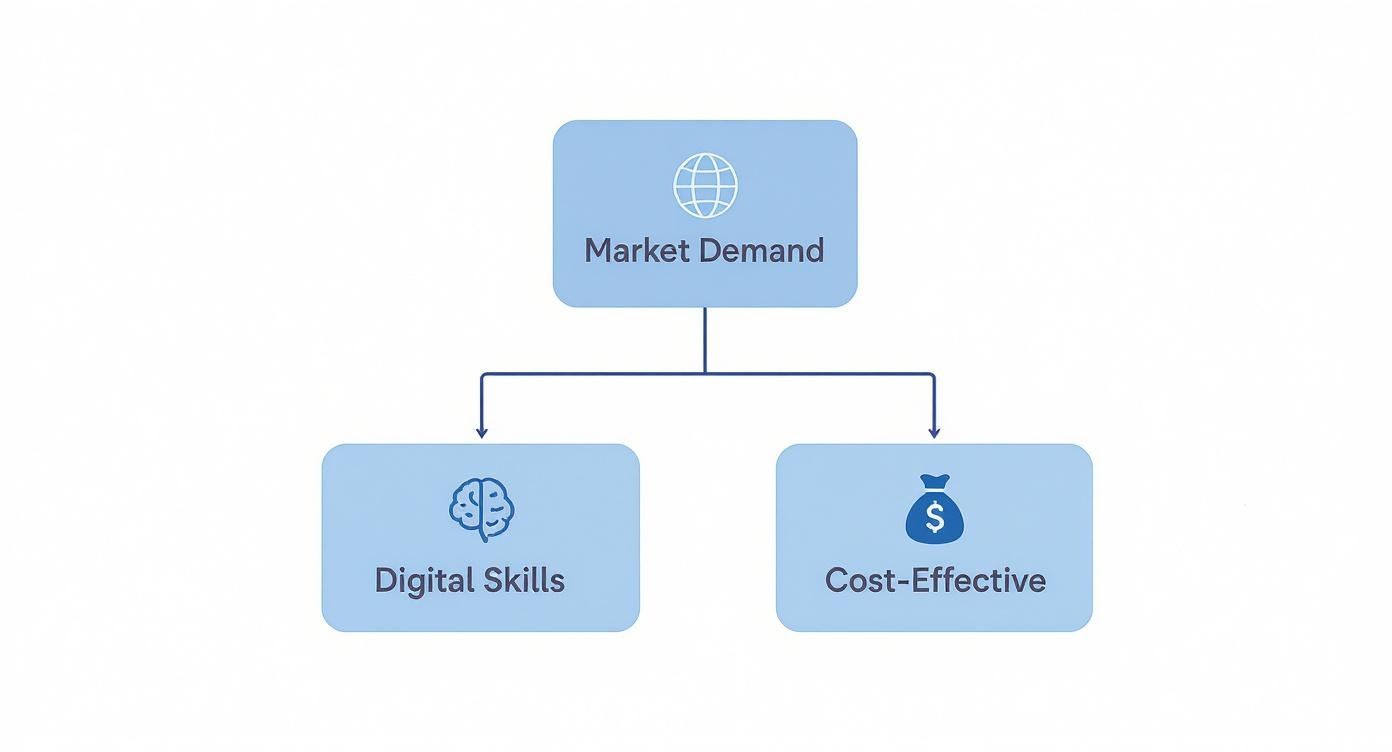
As you can see, strong market demand directly fuels the need for these digital skills, making remote talent a smart, cost-effective solution for businesses everywhere.
A Peek into the Daily Grind
While job titles can sometimes be fluid, the actual day-to-day work tends to be quite consistent across the board. No matter the role, you'll find yourself handling a few core responsibilities—all of which are perfectly suited for remote work.
- Content Creation & Curation: This is more than just hitting "publish." It's about designing eye-catching graphics, writing copy that stops the scroll, filming and editing short videos, and finding interesting articles or user-generated content that your audience will love.
- Community Management: This is the soul of social media. It involves actively talking with your followers, answering questions, handling feedback (both good and bad!), and nurturing a genuine sense of community around the brand.
- Performance Analysis & Reporting: You can't know what's working if you don't track it. This means using analytics tools to measure key metrics like engagement, reach, and clicks, and then turning that data into clear, actionable reports that guide future decisions.
- Campaign Management: Whether it’s a new product launch or a holiday promotion, this is about planning, executing, and monitoring specific marketing pushes. You'll manage the entire process to make sure the campaign hits its goals.
To give you an even clearer picture, here’s a quick-glance table comparing these common roles, what they focus on, and the tools they live in every day.
Common Remote Social Media Roles at a Glance
| Job Title | Primary Focus | Typical Daily Tasks | Common Tools | | :------------------------- | :----------------------------------- | :-------------------------------------------------------------------------------- | :--------------------------------------------------------------------------------------------- | | Social Media Coordinator | Execution & Community Engagement | Scheduling posts, responding to comments, monitoring brand mentions, creating simple graphics. | Buffer, Hootsuite, Canva, Sprout Social | | Social Media Manager | Campaign Management & Content Strategy | Developing content calendars, managing ad campaigns, analysing performance data, collaborating with creators. | Asana, Trello, Facebook Ads Manager, Google Analytics | | Social Media Strategist | High-Level Planning & Research | Conducting audience research, setting KPIs, defining brand voice, analysing competitor performance. | Semrush, Brandwatch, Audiense, SparkToro |
Getting a handle on these differences is the first real step to finding a remote job you'll thrive in. Whether you're a master of daily details or a visionary big-picture thinker, there’s a place for you in the ever-expanding world of remote social media.
Building a Standout Remote Work Portfolio
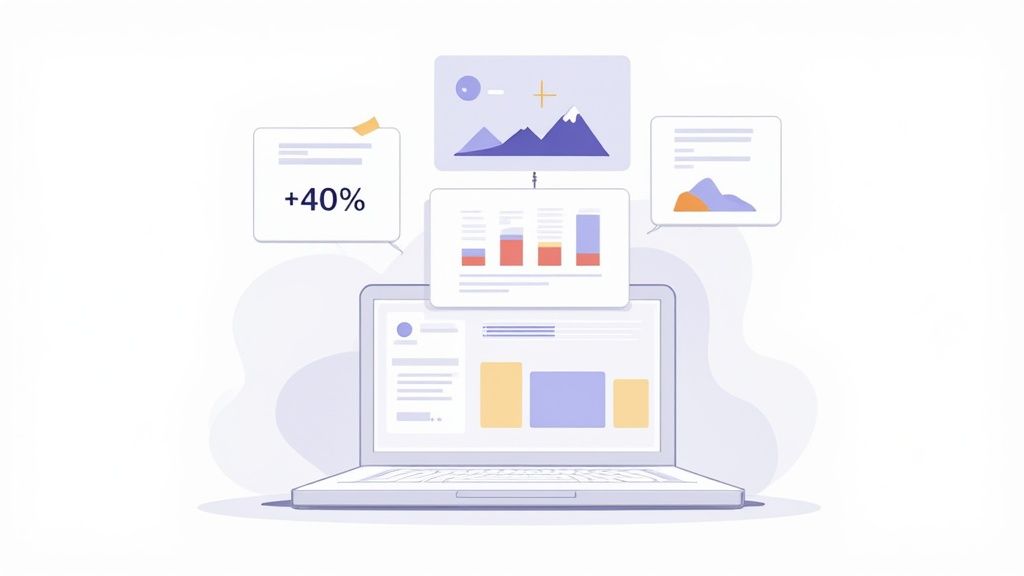
When you’re going for social media jobs remote, your CV tells a hiring manager what you’ve done. Your portfolio shows them. Think of it as your secret weapon, the single most powerful tool you have to prove you can deliver the goods, not just talk about them.
This is especially true for remote positions. Recruiters need to see that you're a self-starter who can get things done without someone looking over your shoulder. A killer portfolio builds that trust before you even get on a call. It's your silent salesperson, making the case for you 24/7.
More Than Just Pretty Pictures
A great portfolio is so much more than a gallery of nice-looking Instagram posts. Anyone can make things look pretty. What really matters is the story and the strategy behind the work. Every potential employer is asking themselves one simple question: "So what?"
Your job is to answer that question for them. Frame every project you include with clear goals and, most importantly, measurable results. Treat each piece as a mini-case study. What was the problem? What did you do about it? And what happened next?
Your portfolio should be a highlight reel of your greatest successes, presented as compelling case studies. Instead of saying you "managed an account," show how you "increased follower engagement by 40% in Q3 through a targeted content series," and then back it up with screenshots and data.
This evidence-based approach is what separates the pros from the amateurs. It turns vague claims into concrete achievements that a hiring manager can easily understand and appreciate.
What to Include in Your Portfolio
To build a portfolio that truly persuades, you need to show off the full range of your skills. It's not just about what you did, but why it mattered. I always recommend organising a portfolio into clear sections that highlight different parts of your expertise.
Here’s what every strong social media portfolio should have:
- Mini Case Studies: Pick 2-3 of your proudest projects and break them down. Start with the challenge, walk them through your strategy, show off the content you created, and finish with the cold, hard numbers that prove it worked (e.g., reach, engagement rates, conversion data).
- Content Showcase: This is where you can create a gallery of your best stuff. Think viral videos, well-written blog posts, clever ad copy, or high-performing social media graphics. Let the quality of your work shine.
- Campaign Overviews: Briefly summarise a few campaigns you’ve run. Highlight your specific role, what the campaign was trying to achieve, and the key performance indicators (KPIs) you smashed. This shows you can handle the project management side of things.
Adding Layers of Credibility
Once you've showcased your work, it's time to add some social proof. Having other people vouch for you is incredibly powerful and helps build trust right out of the gate. It shows you’re not just good at what you do, but you’re also great to work with.
Try weaving these elements into your portfolio to give it that extra punch:
- Client or Manager Testimonials: A short, punchy quote from a happy client or a former boss can be more convincing than anything you could write yourself. Just reach out to people you’ve had a great working relationship with and ask for a few lines.
- Platform Expertise: Don't just list the tools you know. Show them. Including logos of the social media management and analytics tools you’ve mastered (like Sprout Social, Hootsuite, or Google Analytics) gives a quick, visual snapshot of your technical skills.
- Certifications and Training: Got any relevant certifications, maybe from Meta Blueprint or Google Digital Garage? Make sure they’re featured prominently. It shows you're serious about your craft and always learning.
By structuring your portfolio this way, you’re not just showing off—you’re telling a compelling story that proves your value. For more tips on putting together a winning application, check out our other guides on the JobCopilot blog.
Decoding Salaries for Remote Social Media Jobs
Figuring out what you can earn is a massive part of looking for social media jobs remote. It can often feel like a total mystery, with salaries all over the place. Let’s pull back the curtain on the numbers so you can walk into any negotiation feeling confident about what you’re worth.
Your salary isn't just some random number pulled out of a hat; it’s a direct reflection of the value and expertise you bring to a company. A few key things come together to determine what you can expect to make, especially in a competitive market like Germany.
Key Factors That Shape Your Pay
Think of your potential salary like a recipe – certain ingredients just make it better. The biggest influencers are almost always your experience, any specialised skills you have, and whether you're working as a freelancer or a full-time employee.
- Years of Experience: This one’s pretty straightforward. Someone with a decade of experience running major campaigns is naturally going to command a higher salary than a recent graduate who’s just getting their feet wet.
- Specialised Skills: Are you a whiz with paid media buying, a master of complex Google Ad campaigns, or an analytics guru? These kinds of high-demand skills are serious salary boosters.
- Employment Type: The way you get paid as a full-time employee looks very different from how a freelancer operates. Employees get a steady salary and benefits, whereas freelancers have to charge higher rates to cover their own taxes, insurance, and holiday time.
It's a classic mistake to compare a freelance rate directly to a full-time salary. A freelancer charging €60 per hour isn't necessarily making more than an employee on a €55,000 salary once you factor in all the overheads and unpaid time.
Typical Salary Ranges in Germany
To give you a real-world picture, let's look at the typical annual salaries for full-time, remote social media roles here in Germany. These are solid benchmarks to keep in mind during your job hunt.
Entry-Level Roles (0-2 years' experience): If you're looking at jobs like Social Media Coordinator or Junior Community Manager, you can generally expect a salary somewhere in the €38,000 to €45,000 range. At this level, the focus is all on execution and learning the ropes.
Mid-Level Roles (3-5 years' experience): Once you’ve got a few years under your belt and are working as a Social Media Manager, your salary expectations should be climbing to between €45,000 and €58,000. Here, you’re expected to run campaigns on your own and have a hand in the strategy.
Senior-Level Roles (5+ years' experience): For top-tier roles like Social Media Strategist or Head of Social, salaries usually start around €60,000 and can go much higher. This is especially true if you have a proven track record of delivering real, measurable results for a business.
The remote social media scene in Germany is bustling with opportunities, and the salaries reflect how vital these roles have become. A quick look at current job listings shows that remote social media manager roles can pull in anywhere from €40,000 to over €65,000 a year, depending on experience. You can discover more insights about German remote job salaries to see how things stack up across the board.
The data is clear: whether you're creating content or deep in the analytics, your skills are definitely in demand. By getting a good handle on these benchmarks, you'll be in a much stronger position to assess job offers and negotiate a salary that truly matches your value.
How to Find and Apply for Your Next Remote Job
Alright, you’ve figured out your worth and your portfolio is looking sharp. Now for the exciting part: actually finding and landing one of those social media jobs remote work has to offer. The key here isn't to just spray and pray by sending your CV everywhere. A focused, strategic approach will get you much further. It’s all about knowing where to look and how to frame yourself as the perfect candidate for a remote setup.
Think of your job search as a campaign. You wouldn't use just one channel for a social media campaign, would you? The same logic applies here. A mix of big-name platforms and hidden-gem communities will give you the best shot at finding a role that truly fits what you're looking for.
Where to Discover the Best Remote Openings
Your search should definitely start with the usual suspects, but don't stop there. The real magic often happens on job boards built specifically for remote work. These niche sites are brilliant because the companies posting there are already sold on the idea of a remote workforce.
Major Job Boards: Platforms like LinkedIn, Indeed, and StepStone are great places to begin. Get smart with their filters. Search for terms like "remote," "home office," or "telecommute" and set up daily alerts for new roles in Germany.
Remote-First Websites: This is where you'll find the gold. Sites like We Work Remotely, Dynamite Jobs, and RemoteOK are dedicated to location-independent jobs. The companies here get it—they value autonomy and results.
Niche Social Media Communities: Don't underestimate the power of networking. Join marketing and social media groups on LinkedIn or even specialised Slack channels. Companies often drop job openings into these groups to find talent that's already part of the conversation.
Here’s a quick peek at Dynamite Jobs. Notice how it lets you filter specifically for remote roles open to people based in Germany.
This kind of targeted search saves you a ton of time by cutting through the noise you’d find on a more general site.
Optimising Your Application for Remote Roles
When a hiring manager looks at an application for a remote role, they're searching for more than just great social media skills. They need to see evidence that you're a self-starter, a brilliant communicator, and someone who can deliver without constant oversight. Your CV and cover letter need to scream this from the rooftops.
Sending out a generic application is a waste of your time. Every single one should feel like it was written specifically for that company and that role. It shows you've done your homework and you genuinely care.
Think of your application as a direct response to the job description. Mirror its language, address the specific challenges mentioned, and position yourself as the perfect solution to their needs.
This isn’t just about flattering them; it proves you have a proactive mindset and an eye for detail. Those are two of the most valuable traits in any remote employee.
Tailoring Your CV and Cover Letter
To make your application pop, it needs to speak the language of remote work. It's not just about what you can do, but how you get it done from anywhere.
Emphasise Remote-Friendly Skills: Weave in terms like "asynchronous communication," "project management," "self-motivated," and "time management." If you've ever worked with a distributed team—even on a small project—make sure you mention it.
Focus on Measurable Results: Don't just list your duties. Show your impact with hard numbers. Instead of saying you "Managed social media accounts," try "Grew Instagram following by 30% in six months, leading to a 15% increase in website traffic." Numbers prove your value.
Showcase Your Tech Stack: Let them know you're ready to hit the ground running. List the collaboration and project management tools you're comfortable with, like Slack, Asana, Trello, or Jira. This signals that you can slot right into their existing workflow without a steep learning curve.
Let's be honest, customising every application can feel like a full-time job in itself. Automating parts of the process can be a game-changer, saving you heaps of time while still producing high-quality applications. Looking into tools that offer integrations for your job search can help you track openings and manage everything in one place. With the right strategy and tools, you’ll be in a fantastic position to land that dream remote social media role.
Nailing the Virtual Interview and Getting the Offer

So, you’ve navigated the job boards and your portfolio has caught their eye. Excellent. Now for the final hurdle in landing one of those coveted social media jobs remote work offers: the virtual interview.
This isn’t just a regular chat over video. It’s your prime opportunity to prove you have that special mix of skills needed to crush it without someone looking over your shoulder. Landing a remote role means showing you’re not just a great social media pro, but also a disciplined, self-starting communicator who thrives on autonomy. How you come across on this call can make or break your chances.
Setting the Stage for Success
First impressions are made in a heartbeat, and in a video interview, your background and tech setup are a huge part of that. A chaotic backdrop or crackling audio can completely overshadow your expertise. Think of it like you're producing a one-person show – you’re the star, and the stage needs to look the part.
Before you click "Join," run through this quick pre-flight checklist:
- Test Your Tech: Check your internet, camera, and mic at least an hour before go-time. A last-minute scramble feels awful and looks unprofessional.
- Curate Your Background: Keep it simple and uncluttered. A clean wall, a tidy bookshelf, or even a plant works way better than a messy room.
- Get Your Lighting Right: Face a light source, don’t have it behind you. Natural light from a window is perfect, but a well-placed lamp does the trick too.
- Kill the Distractions: Close all those extra browser tabs, silence your phone, and give your family or flatmates a heads-up that you need some quiet time.
A professional virtual setup isn't about fancy gear. It's about showing you respect the interviewer's time and proving you’re a detail-oriented pro who can manage their own environment—a must-have skill for any remote job.
Answering Questions Unique to Remote Work
You’ll get the usual social media questions, but expect the hiring manager to dig into your remote work chops. They need to feel confident you can manage your own schedule, work with a team you rarely see in person, and stay motivated without a boss down the hall.
Get ready for questions like these:
- How do you structure your day to stay productive when working from home?
- Great Answer: Talk about your actual routine. Mention things like time-blocking, setting daily non-negotiable tasks, and having a dedicated workspace to signal to your brain it's time to focus.
- Can you describe your experience with asynchronous communication?
- How do you build a connection with your team when you're all remote?
- Great Answer: Highlight how you take initiative. Talk about scheduling regular check-ins, being an active and helpful voice in team channels, or being the person who suggests a quick video call to sort something out.
Asking the Questions That Show You're a Pro
Remember, an interview is a two-way street. The questions you ask are just as revealing as the answers you give. This is your chance to show you’ve really thought about what it takes to succeed in a remote setup.
Ditch the generic questions and try these instead:
- "How does your team handle creative brainstorming when everyone is in different time zones?"
- "What does the onboarding process look like for new remote hires to make sure they feel truly part of the team?"
- "Which platforms are the go-to for the team's project management and day-to-day chats?"
Asking sharp, thoughtful questions shows you're not just looking for any job; you're looking for the right remote culture to plug into. It’s this kind of insight that lifts you from "good candidate" to "the one we have to hire."
This approach can help you secure a great offer, especially in strong markets. In Germany, for instance, the demand for skilled digital professionals means remote monthly salaries often fall between $2,900 to $8,000. You can explore more detailed salary benchmarks for remote jobs in Germany to get a clearer picture of the earning potential.
Got Questions? Let's Get Them Answered
Diving into the world of remote social media work can feel a bit like exploring new territory. You're bound to have questions, from practicalities like language barriers to the real-world challenges you might face. Let's clear up some of the most common ones.
Do I Really Need to Speak German for a Remote Job Based There?
That's a great question, and the answer is often "no, but it helps." While being fluent in German is a massive plus for any role targeting the local market, it's definitely not a deal-breaker across the board.
You'll find that many international companies, especially in the tech and start-up scenes in cities like Berlin, use English as their official working language. Always read the job description carefully—they'll make it very clear if English is all you need. This has really opened the door for talent from all over the world to find great remote roles in Germany.
What's the Toughest Part of Working Remotely in Social Media?
Honestly? The biggest challenge isn't mastering the latest algorithm or a new piece of software. It’s learning to switch off. Social media is a 24/7 beast, and the pressure to be ‘always on’ can creep in and lead straight to burnout.
The pros get around this by being incredibly disciplined with their boundaries. It’s not just about having the skills to do the job; it’s about building the habits to do it sustainably. This means:
- Defining clear start and end times for your workday—and actually sticking to them.
- Setting up a dedicated workspace, so you can physically and mentally "leave" work.
- Leaning heavily on scheduling tools. Plan your content in advance so you aren't chained to your desk.
The biggest hurdle isn't a lack of tools or skills; it's the discipline to unplug. Mastering the "off switch" is just as important as mastering the platforms themselves for a sustainable remote career.
Is it Easier to Find Freelance Gigs or Full-Time Remote Jobs?
You’ll find a pretty even split, which is great news because it means there's something for everyone, whether you crave the freedom of freelancing or the security of a permanent role.
Plenty of companies look for freelance social media experts for short-term projects or specific campaigns, giving you a ton of flexibility. On the other hand, more and more organisations are offering full-time, permanent remote contracts with all the benefits. They know it's the best way to attract top-tier talent. It really just comes down to what fits your lifestyle and career ambitions best.
Ready to stop scrolling through job boards and start landing interviews? Acquispect uses AI to find the perfect remote roles for you, writes personalised applications, and tracks your success automatically. Learn more and start your free trial at Acquispect.