Finding a work-from-home job in Germany has never been more realistic. What used to be a rare perk is now a common expectation, thanks to a major national push for more flexible work arrangements and the solid digital infrastructure to back it up. This shift has opened up a wave of opportunities across various industries for professionals looking to reclaim their work-life balance.
The New Era of Remote Work in Germany

In Germany, the "home office" is no longer just a temporary fix—it's become a permanent and respected part of the professional landscape. This wasn't an accident. It's the direct result of serious investment in digital connectivity and a cultural evolution where employees now expect, and often demand, more say over where and how they work. Smart companies get it; offering remote work isn't just a benefit, it's a critical strategy for attracting and keeping the best people.
The numbers really tell the story. Remote work is here to stay, especially in hybrid forms. Projections show that by 2025, roughly 24.4% of German employees will be working from home at least some of the time. This isn't a fleeting trend; it’s a fundamental change from the old office-first mindset. It's all made possible by Germany’s excellent digital backbone and its famously strict data privacy laws, which make remote setups both functional and secure. You can dive deeper into these trends with Splashtop's research on Germany.
Which Industries Are Leading the Way?
While the shift is widespread, some sectors have naturally adapted faster than others. If you're serious about your search, focusing on these digitally-native and knowledge-based fields will give you a real advantage.
To help you target your search, here's a quick look at the sectors where remote roles are most common.
Top Industries for Remote Work in Germany
| Sector | Common Remote Roles | Key Skills in Demand | | :--- | :--- | :--- | | Information Technology | Software Developer, Cybersecurity Analyst, Data Scientist, DevOps Engineer | Programming (Python, Java), Cloud Computing (AWS, Azure), Network Security | | Marketing & Communications | Digital Marketing Manager, SEO Specialist, Content Creator, Social Media Manager | SEO/SEM, Content Strategy, Analytics, E-commerce Marketing | | Consulting & Business Services | Management Consultant, Financial Analyst, HR Specialist, Project Manager | Data Analysis, Strategic Planning, Financial Modelling, Client Relations | | Customer Support | Customer Service Representative, Technical Support Specialist, Team Lead | Communication, Problem-Solving, CRM Software (e.g., Zendesk, Salesforce) |
These industries are just the beginning, but they represent the core of Germany's remote job market right now.
Why Germany Is a Prime Location for Remote Professionals
It’s not just about the number of jobs available. Germany itself offers a fantastic environment that makes it a top choice for remote workers from around the world. The country’s powerhouse economy provides a level of stability you can count on, while its high quality of life and incredible social benefits—including robust public health insurance—are huge draws.
One of the best parts of the German work culture is the concept of Feierabend. It’s the cherished ritual of finishing work for the day and truly disconnecting. This deep-seated respect for personal time is a massive plus for remote workers, as it helps fight the burnout that can easily creep in when your office is always just a few steps away.
This cultural mindset, combined with a central location in Europe and strong legal protections for employees, creates a uniquely supportive ecosystem. For anyone looking to build a meaningful, long-term career without being chained to a desk, Germany offers a compelling and very practical path forward. The infrastructure is there, the companies are on board, and the culture is ready.
Where to Find Genuine Remote Job Listings in Germany
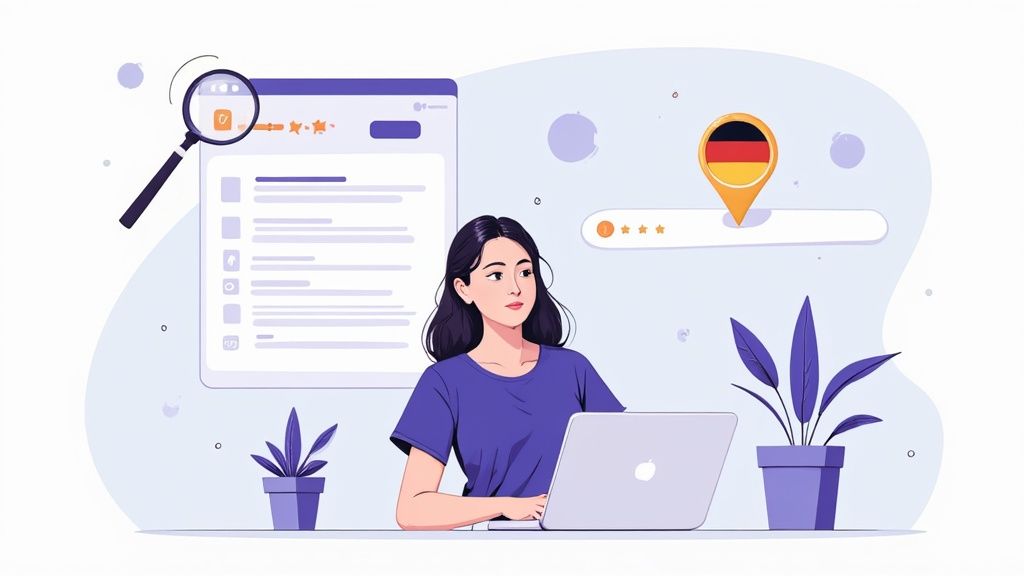
Knowing where to look is half the battle when you're after work from home jobs in Germany. The sheer volume of online listings can feel like you're drinking from a firehose, but a smart, targeted approach will save you a world of time and connect you with much better opportunities. Let's ditch the aimless scrolling and focus your energy on the platforms that actually deliver.
Your search should really kick off with the major German job portals. Think of them as the big, bustling city centres of the job market. These sites have the largest databases and are the first stop for most German companies when posting new roles. The trick, however, is to cut through the noise, because just typing "remote job" into the search bar won't cut it.
Getting the Most Out of Major German Job Boards
Platforms like StepStone.de, Indeed.de, and Xing Stellenmarkt are indispensable tools in your job-hunting kit. The real secret is refining your search strategy to unearth the genuinely remote positions. Don't just rely on the "remote" filter; companies often have their own unique ways of listing these roles.
To really maximise your results, you'll want to use a mix of German search terms. This is a big one. Many listings are posted only in German, even if English is the day-to-day working language.
Here are some of the most effective German keywords to plug into your searches:
- Homeoffice: This is the most common and widely understood German term for a home office or remote work setup.
- Remote: An English word, yes, but it’s completely understood and used all the time in German job ads, especially in the tech world.
- Mobiles Arbeiten: This translates to "mobile working." It implies flexibility in where you work, which might not always mean 100% remote, but it's a strong signal.
- Telearbeit: This is a slightly older, more formal term for telecommuting, but you'll still see it used by some of the more traditional companies.
By combining these terms with your job title (for instance, "Softwareentwickler Homeoffice"), you'll stumble upon listings that a simple "remote developer" search would have completely missed. It’s a small tweak that can massively expand your pool of options.
Tapping into Niche and International Remote-First Platforms
While the big German job boards are a fantastic starting point, some of the most exciting and truly innovative remote roles are tucked away on specialised platforms. These sites are built from the ground up for remote workers and attract companies with a genuine remote-first culture, not just those offering it as a temporary perk.
You'll often find jobs here from forward-thinking startups and international companies actively hiring in Germany. They get what remote professionals are looking for and structure their listings with clear info on time zones, equipment, and company culture.
Some of the best niche platforms for finding work from home jobs in Germany include:
- RemoteOK: A globally recognised board with a great filter for jobs based in Germany or the European timezone.
- We Work Remotely: One of the largest remote-specific communities out there, packed with high-quality roles in tech, marketing, and support.
- Remotive: This platform not only has a curated job board but also a really supportive community for remote professionals.
Using these sites connects you directly with companies that have fully embraced the remote model. In my experience, that usually means better processes, clearer communication, and a much more supportive environment for you.
Here’s a critical tip from my own job-hunting days: set up alerts on multiple platforms, but dedicate your actual application time to only the most promising and relevant listings. Quality over quantity is the mantra for a successful remote job search. Don't burn yourself out applying to everything that moves.
Putting LinkedIn to Work for You
LinkedIn is so much more than a professional network; it's a powerhouse for finding remote jobs if you know how to use it right. The job search function has some pretty robust filters that let you specifically select "Remote" as a location type. But don't just stop at the main job board—get active with your network.
A huge number of recruiters and hiring managers in Germany live on LinkedIn. Follow the companies you'd love to work for and turn on notifications for their job postings. It also pays to join groups focused on remote work in Germany or your specific field.
To make this process even smoother, you can look into tools designed to automate parts of your search. For instance, you can learn how to make your job application process more efficient with JobCopilot. This kind of tool helps you stay on top of new opportunities without having to spend hours manually sifting through sites every single day.
Getting Your Application Ready for German Recruiters
So, you’ve found some promising work from home jobs in Germany. Great. Now comes the part where you need to make sure your application actually gets noticed. In Germany, the application process is often more formal and buttoned-up than what you might be used to. Think of your CV and cover letter as your first professional handshake—getting them right is everything.
A word of warning: simply translating your current CV or firing off a generic cover letter is a one-way ticket to the "no" pile. German hiring managers expect a certain structure and level of detail. It shows them you're a serious professional who understands the local business culture.
The German Lebenslauf: More Than Just a CV
The German CV, known as a Lebenslauf, has its own set of unwritten rules. While many international companies are a bit more relaxed these days, sticking to the traditional format shows you’ve done your homework and respect local customs.
Unlike CVs in the UK or the US, the German version is strictly chronological, starting with your most recent job. Keep it concise, stick to the facts, and try to cap it at two pages. They value clarity and structure far more than flashy designs.
Here’s what makes a German Lebenslauf stand out:
- A Professional Photo: It’s still very common to include a professional, high-quality headshot. This isn't a selfie from your holiday; it needs to look competent yet approachable. Think of it as a small investment.
- Personal Details: This section is usually more detailed than you might expect. It includes your full name, address, phone, email, date of birth, and sometimes even marital status (though this is becoming less frequent).
- Work Experience (Berufserfahrung): List your jobs in reverse chronological order. For each one, include the company, your title, dates, and a bulleted list of your main responsibilities and, more importantly, your achievements. Whenever you can, use numbers to back it up (e.g., "Grew user engagement by 15% in six months").
- Education (Ausbildung): Same deal here—reverse chronological order. Detail your degrees, vocational training, and even your secondary school qualifications.
A classic mistake I see from international applicants is leaving unexplained gaps in their timeline. If you have any significant breaks, it's best to address them head-on. A simple "Parental Leave" or "Professional Sabbatical for Further Training" works perfectly. Honesty is a big deal here.
Proving You Can Thrive While Working Remotely
For a home office job, you can’t just list your standard duties. You have to spell out the skills that prove you can deliver results without a manager hovering over your shoulder. The best way to do this is to weave these skills directly into your work experience.
For instance, instead of a vague "Managed projects," try something like this:
"Independently managed a cross-functional project using Asana and Slack, ensuring all milestones were met 10% ahead of schedule in a fully remote team."
See the difference? This one sentence shows you’re a pro at project management, comfortable with digital tools, and can get things done on your own. It’s this kind of specific detail that makes a recruiter pause and take a closer look.
Writing a Cover Letter (Anschreiben) That Connects
Your cover letter, or Anschreiben, is your moment to show some personality and draw a direct line between your skills and the job ad. It must be formal and, if at all possible, addressed to a specific person. Do a little digging on LinkedIn; it's worth the effort.
A generic "To whom it may concern" is a major red flag for German recruiters—it just screams "I couldn't be bothered." Stick to a clear structure: an intro stating the role, a body explaining why you're the right person for their company, and a professional closing.
This focus on structure mirrors the German work culture itself, which really values organisation and planning, even for remote work. In fact, a study by the ifo Institute found that Germans work from home an average of 1.6 days per week, which is well above the global average. This shows just how integrated remote work has become.
Your Anschreiben needs to prove you get this and are ready to be a productive part of that setup.
If you’re looking for more strategies to nail your job search, check out the insights and tips available on our blog. We regularly post new guides to help you navigate the German job market.
Navigating Visas, Taxes, and Legal Rules
So you've landed one of the many fantastic work from home jobs in Germany. Congratulations! That's a huge step. But what comes next is often the part that feels a bit daunting: the infamous German bureaucracy.
Don't let the paperwork intimidate you. Getting a handle on the key requirements for visas, taxes, and local registration will make the whole process feel much more manageable. It’s all about knowing what you need to do to start your new remote role on solid legal ground.
Your path forward really boils down to one thing: your citizenship.
If you're an EU national, things are refreshingly simple. Freedom of movement means you can live and work in Germany without needing a special visa or permit. Your biggest task will be registering your address once you arrive.
For everyone else coming from outside the EU, the journey requires a bit more planning. You'll absolutely need to secure the right kind of residence permit that allows you to work, even if your office is just your living room. The good news is that Germany has caught up with the times, offering visa options that cater specifically to remote professionals.
Your Visa and Residence Permit Options
For non-EU citizens, getting your legal status sorted is the absolute first priority. You can't just show up with a laptop and start working. The German government has a few different pathways, each tailored to specific work situations.
The most traditional route, if you have a contract with a German company, is the standard Employment Visa. In this scenario, your new employer will usually help guide you through the process, providing the contract and other documents you need to prove you have a confirmed job offer. This visa is directly tied to that specific job.
But what if your employer isn't in Germany? This is where the Digital Nomad Visa comes in, and it's a real game-changer. This visa is specifically designed for freelancers and remote employees who work for companies outside of Germany. It gives you the freedom to live in Germany while earning your income from abroad, making it a perfect match for the modern remote worker.
To get the green light for the Digital Nomad Visa, you’ll typically need to prove you have enough regular income to support yourself, show you have valid health insurance, and make it clear that your work is entirely location-independent. It’s a fantastic way to experience life in Germany without being locked into a local employment contract.
To make things clearer, let's compare the two main options side-by-side.
Comparing Visa Options for Remote Workers
Deciding which visa to apply for can feel confusing, but it generally comes down to where your employer is based. This table breaks down the fundamental differences between the two most common paths for remote professionals.
| Requirement | Digital Nomad Visa | Standard Employment Visa | | :--- | :--- | :--- | | Employer Location | Can be anywhere in the world | Must be a German-based company | | Proof of Income | You must show self-sustaining income (e.g., from client contracts) | Your German employment contract serves as proof of income | | Primary Purpose | For freelancers or remote employees of foreign companies | For direct employment with a German company | | Flexibility | High degree of independence and work flexibility | Tied directly to your specific employer in Germany |
As you can see, the key difference is who you work for. Picking the right visa from the get-go is fundamental to your legal status and your ability to work remotely from Germany without any trouble.
Essential First Step: The Anmeldung
No matter where you're from, once you have an address in Germany, you have a legal deadline to meet. You must register that address, a process known as the Anmeldung. This is a non-negotiable cornerstone of German administrative life, and you usually have just two weeks to do it after moving in.
You’ll need to book an appointment at your local registration office (the Bürgeramt) and show up with your passport, your rental contract, and a specific form from your landlord called a Wohnungsgeberbestätigung.
Seriously, don't put this off. Completing your Anmeldung is the key that unlocks everything else you'll need, from opening a German bank account to getting your all-important tax identification number.
This decision tree gives you a great visual of the prep work needed before you even get to the legal steps.
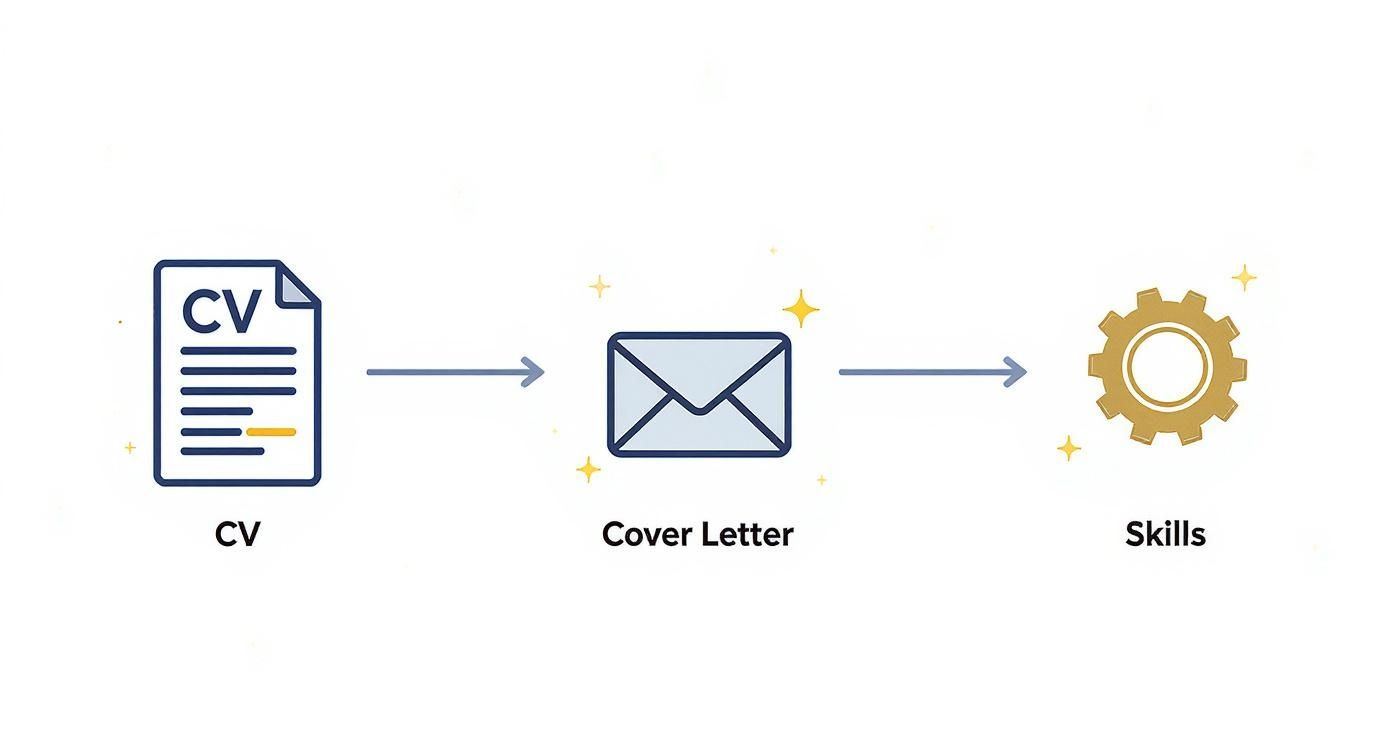
It all starts with a solid application. A strong CV, a tailored cover letter, and the right skills are what get you the job offer in the first place, setting you on the path to navigate the German system.
Understanding German Taxes and Health Insurance
Once you're registered and have your tax ID (Steueridentifikationsnummer) in hand, welcome to the German tax system! If you’re a remote employee of a German company, things are pretty straightforward—your employer will automatically handle deducting taxes and social security contributions from your paycheque.
How much tax you pay is based on your tax class (Steuerklasse), which is determined by things like whether you're single or married. You also have to sort out health insurance, which is mandatory in Germany. You’ll need to choose between the public system (gesetzliche Krankenversicherung) or a private one (private Krankenversicherung), but you must have coverage.
Now for some good news for remote workers. Germany has a specific home office tax deduction called the Homeoffice-Pauschale. This lets you claim a flat rate for each day you work exclusively from home, up to an annual limit. It's the government's way of acknowledging the extra costs of working from home. Just be sure to track your home-office days so you can claim this handy deduction on your annual tax return.
How to Succeed in a German Remote Workplace
So, you've landed one of the many work from home jobs in Germany—congratulations! That's a huge win, but it's really just the beginning. To build a lasting career here, you need to tune into the specific rhythms of the German remote workplace.
The culture is built on a bedrock of efficiency, clarity, and a sharp line between your professional and personal life. Getting these unwritten rules right will help you earn your colleagues' trust, sidestep common cultural tripwires, and become a genuinely valuable part of the team. This is about more than just logging on; it's about plugging into a professional mindset that prizes structure and respect, even when you're miles apart.
Master Direct and Efficient Communication
German business communication has a reputation for being direct, and for good reason. In a remote setup, that clarity isn't just helpful—it's essential.
Forget about long, meandering emails or vague meeting agendas. Your German colleagues will appreciate communication that's concise, logical, and cuts straight to the chase. This isn't rudeness; it's a deep-seated respect for everyone's time. When you write a message, put the most important information right at the top. Use bullet points for action items and be crystal clear about deadlines. This simple approach cuts down on the noise and ensures everyone is aligned without a dozen follow-up emails.
Punctuality is another cornerstone of German work culture that absolutely translates to the virtual world. Showing up on time for a video call is treated with the same seriousness as arriving on time for an in-person meeting. It’s a powerful signal of your reliability and respect for your team's schedule.
Respect the Sacred Boundary Between Work and Life
If there's one concept you need to understand about German professional life, it's Feierabend. The literal translation is "end of the workday," but it's so much more than that. It represents a cultural commitment to truly and completely disconnecting from your job once your hours are done.
Fighting the urge to ping colleagues on Slack late at night or fire off "just one more email" is non-negotiable. For remote workers, this boundary is your best defence against burnout.
Here’s how to embrace Feierabend like a local:
- Log Off for Real: When your workday ends, shut down your work-related apps and silence notifications. Seriously.
- Signal Your Availability: Use your calendar and status messages to make it obvious when you're online and when you're off the clock.
- Don't Expect After-Hours Replies: Respect that your colleagues are doing the same. They will see your message the next business day, and that's perfectly normal.
This shared respect for personal time is what makes the German work-life balance so effective, especially when your office is also your home.
Build Trust Through Unwavering Reliability
When you’re not sharing an office, trust isn't built over coffee breaks. It's built on a foundation of pure reliability. It means consistently delivering excellent work when you say you will and being proactive in your communication.
Germany's major shift to remote work was accelerated by the pandemic. Back in 2020, 36% of employed people were working from a home office, a massive leap from just a few years prior. This sudden change threw challenges like communication gaps and tech issues into sharp relief, making it clearer than ever that remote teams need members who are transparent and dependable. You can find more data on Germany's remote work trends on Statista.com.
To prove you're that person:
- Own Your Deadlines: Nothing builds trust faster than hitting your targets, time and time again.
- Communicate Proactively: If you see a potential roadblock or delay, flag it early. Don’t wait for someone to chase you.
- Show Up Prepared: Come to virtual meetings ready with your updates and contribute thoughtfully to the conversation.
By internalising these cultural pillars—clear communication, a hard stop to the workday, and rock-solid reliability—you'll do more than just succeed. You’ll become a truly integrated and respected member of your German team, setting yourself up for long-term success.
Got Questions About Remote Work in Germany? Let's Clear Things Up
Navigating the German job market from a distance can bring up a lot of questions. It's easy to get bogged down in the details, but understanding the essentials from the start will make your search much more effective.
Let's walk through some of the most common things people ask.
Is German Language a Must-Have?
This is probably the most frequent question I hear, and the honest answer is: it really depends. You'll find a lot of international companies, especially in the tech scenes of Berlin, Munich, and Hamburg, where English is the official office language. For roles like software engineering or data science, you can often land a great job without being fluent in German.
But, if you're looking at roles that involve talking to local customers or working with more traditional German partners, then yes, German proficiency becomes non-negotiable. The best clue is always the job advert itself. If it's written entirely in English, you can be pretty sure that's the main language they use internally.
Here’s a piece of advice I always give: learn some basic German anyway. Even just mastering greetings and simple conversational phrases shows a real effort to integrate. It goes a long way with colleagues and makes life outside of work much easier.
Can I Live Outside Germany and Work for a German Company?
While it sounds great in theory, this setup is a legal and administrative headache. That's why the vast majority of German companies require their remote employees to be legally resident in Germany.
For the employer, having you based in Germany simplifies everything:
- Taxes: They can easily manage your income tax contributions within the German system.
- Social Security: Your payments for health insurance, pension, and unemployment are straightforward.
- Legal Compliance: The employment contract falls squarely under German labour law, avoiding tricky international regulations.
The alternative is working as a freelancer or independent contractor, but that’s a completely different ballgame. If you’re aiming for a permanent employment contract, you should plan on moving to and registering in Germany.
Do Remote Jobs Pay Less in Germany?
Not really. This is a common myth. Salaries for work from home jobs in Germany are almost always based on the market rate for the role and your experience, not on the fact that you’re working from a home office.
For instance, a company in Munich will offer a salary based on the high cost of living and competitive market there, regardless of whether you’re coming into the office or not. You get the benefit of saving on your commute, but employers generally don't use remote work as an excuse to cut your pay.
Ready to stop searching and start interviewing? Acquispect uses AI to find your ideal remote jobs, create tailored application documents in minutes, and track your success. Save time and get better results by automating your job hunt. Start your free 30-day trial and find your next role faster at Acquispect.