So, what can a data analyst expect to earn in Germany? The headline figure you'll often see is an average of around €50,122 per year. While that’s a decent starting point, it's just that—a starting point.
The reality is that your actual paycheque will be influenced by a whole host of factors, from your years on the job to where you're based and the type of company you work for.
Decoding Your Potential Earnings in Germany
Think of the national average salary as a landmark on a map. It gives you a general idea of where you are, but the specific route you take—and your final destination—depends on your personal journey. A data analyst's compensation is never just one flat number; it’s a dynamic range.
Fresh survey data for 2025 backs this up, placing the estimated average annual salary right at that €50,122 mark. This figure represents the middle ground across all sorts of industries and cities.
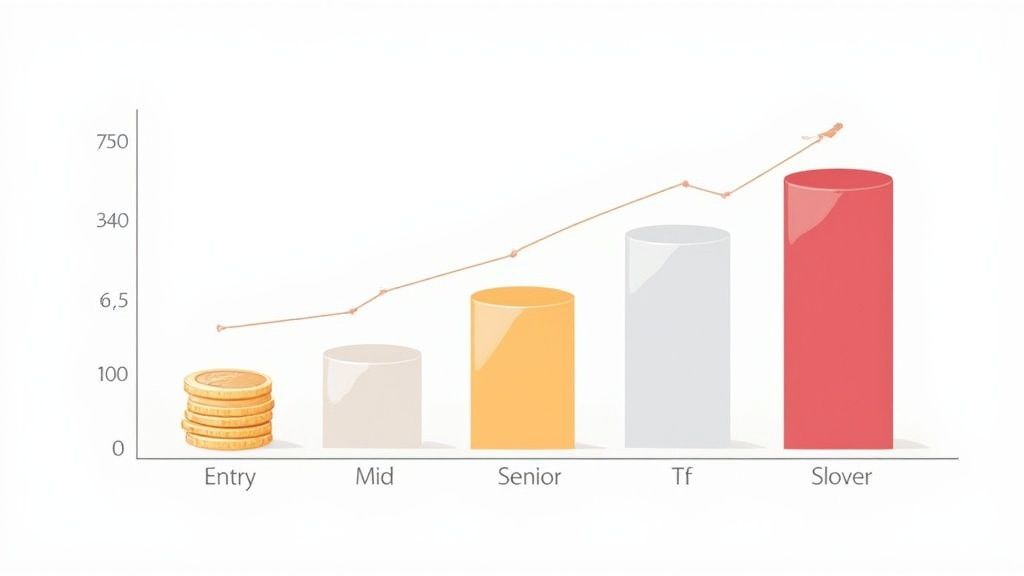
If you're just stepping into the field with less than a year under your belt, you’re likely looking at something closer to €43,505. With one to four years of experience, that figure climbs to a more solid €50,335. Of course, specific skills can push these numbers even higher.
Let's break it down by experience level to give you a clearer picture.
Data Analyst Salary in Germany by Experience Level
Here’s a quick overview of what you can generally expect to see offered at different stages of your career. Keep in mind these are gross annual salaries.
| Experience Level | Average Annual Gross Salary | | :--- | :--- | | Entry-Level (0-2 years) | €43,000 - €48,000 | | Mid-Career (3-5 years) | €50,000 - €60,000 | | Senior (5+ years) | €62,000 - €75,000+ |
Remember, these are median ranges. Your ability to negotiate, the size of the company, and the specific tech stack you bring to the table can all make a significant difference.
We'll dig into all these details throughout the rest of this guide. And if you're looking to get a leg up on the job hunt, you might want to check out tools that can help you tailor and manage your applications, like JobCopilot.
How Experience Shapes Your Earning Potential
In the world of data analytics in Germany, experience isn't just a number on your CV—it's the single biggest driver of your salary. As you clock more years in the field, your pay doesn't just climb steadily; it accelerates. This isn't just about getting an annual raise. It's about a fundamental shift in the value you bring, moving from someone who executes tasks to someone who shapes business strategy.
Think of it this way: a junior analyst is learning the tools of the trade, like a skilled carpenter learning to measure twice and cut once. A senior analyst, on the other hand, is the architect—they're designing the blueprint for the entire project, anticipating problems, and ensuring the final structure is sound. Your pay grows as your responsibility expands from a single piece of wood to the entire building.
The Junior Data Analyst Journey
As a Junior Data Analyst, you're typically in your first two years on the job. Your world revolves around the fundamentals. Day-to-day, you’ll find yourself wrestling with data cleaning, running SQL queries that others have likely written, and building straightforward reports in tools like Excel or Tableau. You’re learning the ropes, supporting the senior members of your team, and proving you can be trusted with the data.
Your main job is to deliver clean, reliable data so that others can draw conclusions. No one expects you to uncover groundbreaking insights just yet, but the quality of your work is the foundation everything else is built on. Naturally, your salary reflects this crucial, yet foundational, stage.
Advancing to a Mid-Level Role
Once you have three to five years under your belt, you’ll step into a Mid-Level Data Analyst role. This is where things get interesting and your responsibilities deepen significantly. You’re no longer just prepping data; you’re digging in, interpreting what it means, building more sophisticated dashboards, and confidently presenting your findings to managers and stakeholders.
You start to own projects and tackle tougher business questions on your own. Your technical skills are sharper, and you've learned how to translate a vague business request into a clear analytical plan. This leap in autonomy and direct impact on the business is rewarded with a substantial jump in your paycheque.
Your career progression is about moving from "what happened?" to "why did it happen?" and eventually to "what will happen next?" Each step up that ladder comes with greater responsibility and a higher salary.
Recent salary data backs this up. According to Levels.fyi's 2025 salary report, the median total compensation for Data Analysts in Germany is €74,104. The numbers show a pretty wide range, with the top 25% earning over €86,210—a figure often reached by analysts with solid mid-level to senior experience.
Reaching Senior-Level Expertise
As a Senior Data Analyst with five or more years of experience, you become a strategic partner. Your role is no longer just about routine analysis; you're a key player in the business's success.
Your responsibilities now typically include:
- Leading Projects: You're the one managing analytics projects from start to finish, often guiding and mentoring junior analysts.
- Building Models: You might be developing predictive models to forecast sales trends or identify new market opportunities, creating immense value.
- Driving Strategy: You're in the room with leadership, helping to define the metrics that matter and using data to inform high-stakes business decisions.
At this level, your work directly influences revenue, operational efficiency, and company growth. Because of this strategic importance, you’re in the highest salary bracket. Your value isn't just in your technical prowess anymore; it’s in your proven ability to turn raw data into a powerful business asset.
Salaries in Germany's Top Tech Hubs: A City-by-City Breakdown
Where you work in Germany matters. A lot. The salary you can expect as a data analyst isn't a single national number; it's a patchwork quilt of regional economies, living costs, and the local demand for your skills. A job offer in Munich will look worlds apart from one in Berlin, even if the job description is nearly identical.
Think of it this way: Germany's major cities are like magnets for talent and investment. This creates buzzing, competitive job markets where companies have to pay more to attract top analysts. But remember, a bigger paycheque doesn't always translate to more cash in your pocket once you've paid your bills.
Munich: The Corporate Powerhouse
Munich consistently leads the pack with the highest average salaries for data analysts, often hovering around €62,000 or more. This isn't surprising when you consider it's home to corporate titans like BMW and Allianz. These established giants in the automotive, insurance, and engineering sectors have deep pockets and an urgent need for sharp data analysis, which naturally pushes wages up.
But here’s the catch: Munich is also Germany's most expensive city. That handsome salary is a direct reflection of the sky-high costs for rent and day-to-day life. So, while the pay is certainly a big draw, you absolutely have to weigh it against the steep cost of living.
Berlin: The Startup Capital
Berlin offers a completely different flavour. The city is bursting with energy from its famous startup scene and tech ecosystem, creating huge demand for data analysts. However, the average salary tends to be a bit lower, typically around €56,000. This difference really comes down to the startup world's unique approach to compensation.
A Berlin startup might offer a lower base salary, but the package could include stock options or equity. This gives you a stake in the company's future success—a long-term financial upside that a traditional corporation in Munich might not offer.
On top of that, Berlin's cost of living, while on the rise, is still significantly more manageable than in other major German cities. This makes it a fantastic choice if you're drawn to a creative, fast-paced work environment and are happy to trade a bit of base salary for a great lifestyle and exciting growth potential.
Hamburg and Frankfurt: The Commercial Hubs
Sitting comfortably in the middle are Hamburg and Frankfurt. Hamburg, a powerhouse in media, trade, and logistics, offers an average salary of around €58,000. Frankfurt, Germany’s financial heart, offers similarly attractive opportunities in FinTech and banking, with salaries that are often right on par with Hamburg's.
Both cities strike a great balance between solid earning potential and a cost of living that isn't as eye-watering as Munich's. They're fantastic places to build a career in well-established industries without facing the intense financial pressures of the Bavarian capital.
To give you a clearer picture, let's look at the numbers side-by-side.
Average Data Analyst Salaries in Major German Cities
A comparative look at average annual salaries for data analysts across key metropolitan areas in Germany.
| City | Average Annual Salary | | :--- | :--- | | Munich | €62,000+ | | Berlin | €56,000 | | Hamburg | €58,000 | | Frankfurt | €58,000 |
As you can see, your choice of city is about much more than just chasing the highest number. It's about finding the perfect match for your career ambitions, your lifestyle, and your bank account.
Decoding Your German Payslip: Gross vs. Net Pay
When you land a job offer in Germany, the big number you see is the gross salary (or Bruttoeinkommen). It looks great on paper, but it's not what you'll actually see in your bank account each month. That amount is your net salary (Nettoeinkommen), and the difference between the two can be a real eye-opener.
Think of it this way: your gross salary is the entire pizza. Before you can take a single bite, the German government takes a few slices to pay for things like public healthcare, infrastructure, and social security. What's left on your plate is your net pay—the money you can actually spend.
The Major Deductions Explained
So, where do those slices go? Several mandatory deductions shrink your gross pay. The biggest chunk is income tax (Lohnsteuer), which works on a progressive scale—the more you earn, the higher the percentage you pay. Your exact rate also depends on your tax class (Steuerklasse), which is mostly determined by your marital status.
On top of taxes, you’ll also pay into the social security system. This isn't a single payment but a bundle of contributions that provide a robust safety net. These typically cover:
- Pension Insurance (Rentenversicherung): This builds up your state pension for when you retire.
- Health Insurance (Krankenversicherung): A mandatory contribution that covers your medical expenses.
- Unemployment Insurance (Arbeitslosenversicherung): This provides financial support if you happen to lose your job.
- Long-term Care Insurance (Pflegeversicherung): This funds your care if you need assistance due to old age or disability.
A Practical Salary Calculation
Let's put this into practice with a typical salary for a data analyst in Germany.
According to a 2025 report, an average data analyst earns a gross annual salary of €53,200. Broken down monthly, that’s about €4,400. But after taxes and social contributions (which average out to around 36%), your net monthly income plummets to roughly €2,800. This means your actual take-home pay for the year is closer to €34,000. For a deeper dive, you can check out the WeAreDevelopers 2025 report.
Key Takeaway: Always remember the gross salary isn't your take-home pay. A hefty portion—often between 35% and 42%—gets deducted for taxes and social security, which dramatically changes how much disposable income you really have.
As you can see below, where you live in Germany also plays a huge role in that initial gross salary figure, which then affects your final net income.
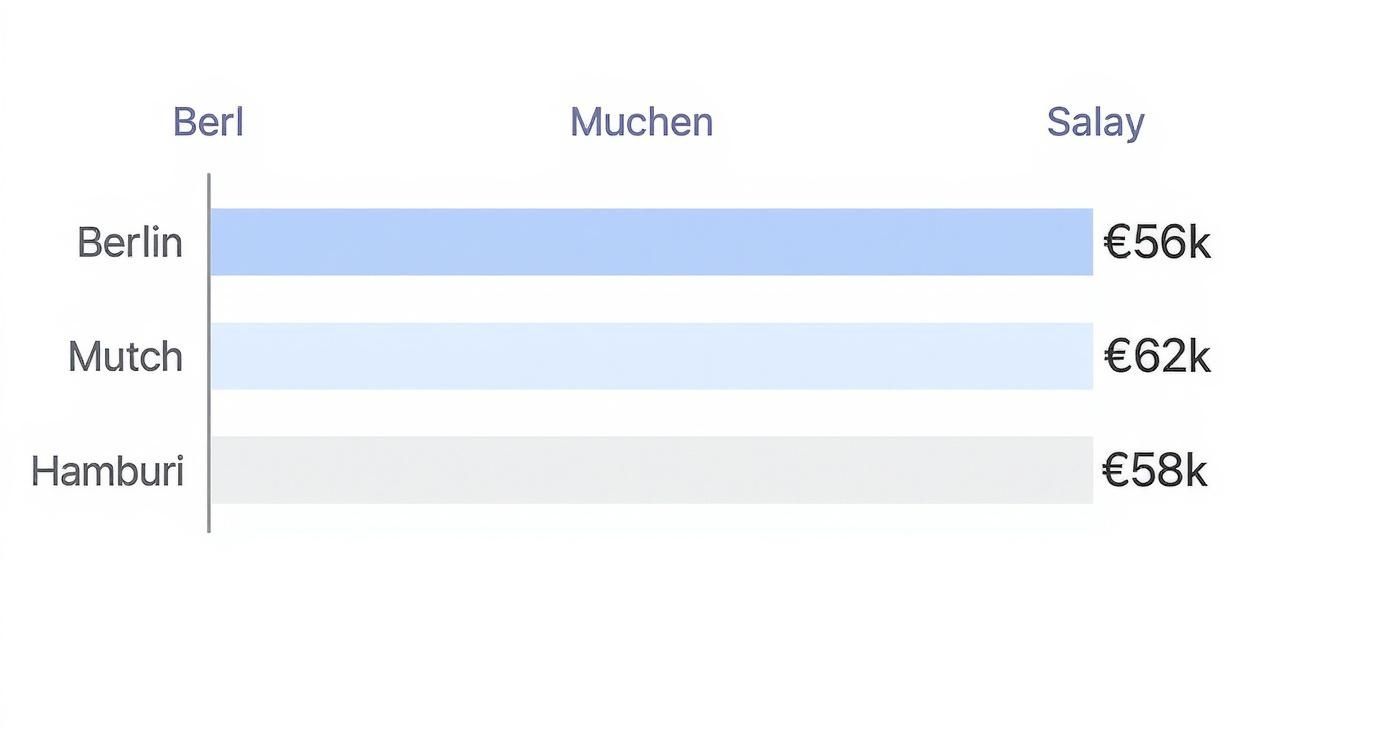
The data clearly shows Munich leading in gross salary. However, keep in mind that Munich also has a much higher cost of living, which could mean your net purchasing power ends up being quite similar to what you'd have in a city like Hamburg.
How Top Industries Influence Data Analyst Salaries
The industry you work in will have a massive say in your paycheque. While data skills are in demand everywhere, some sectors are simply willing to pay a lot more for them. It's a bit like being a skilled chef: you're valuable whether you're working at a local café or a Michelin-starred restaurant, but the salary will be worlds apart. The same principle holds true for data analytics.
Industries that live and breathe data, deal with huge financial stakes, or rely on minute-by-minute optimisation view data analysts as absolutely essential. In other sectors, where data is more of a supporting player for general reporting, the compensation is often more modest. Getting your head around this is the first step to finding the most rewarding jobs.
High-Paying Industries for Data Analysts
So, where’s the big money? Certain industries consistently pay top-tier salaries because the insights from data analysis are directly wired to their profit and loss statements. A single good idea from an analyst can literally mean millions of euros in new revenue or saved costs.
In Germany, the highest-paying sectors tend to be:
- Automotive: It's no secret that German car giants are data powerhouses. They use analysts for everything from fine-tuning supply chains and predicting when a car part will fail to developing the brains for self-driving cars. The work is incredibly complex, and the pay reflects that.
- FinTech and Banking: Finance is all about managing risk and finding opportunities, and that’s pure data analysis. Analysts here build models to spot fraud, calculate risk for trading desks, and create algorithmic trading strategies. When your work is directly protecting the bank's assets, you can command a premium salary.
- Pharmaceuticals and Healthcare: This is another high-stakes field. Analysts are crucial for making sense of clinical trial data, speeding up the drug discovery process, and improving patient care. It’s a heavily regulated and scientifically complex area, and companies pay well for analysts who can handle it.
Why the big difference in pay? It all comes down to the directness of impact. When your analysis can stop a multi-million euro financial loss or tweak a manufacturing process to save thousands every single day, your value to the company skyrockets.
Industries with More Standard Salary Ranges
On the other side of the coin, you have industries that definitely need data analysis, but it's not always tied to such immediate, high-stakes outcomes. Think about sectors like retail, media, or even education. Here, data analysts are busy figuring out customer behaviour, tracking website engagement, or making operations run a bit smoother.
This work is still incredibly important, but it often supports the core business strategy rather than driving it at a fundamental financial level.
For example, a data analyst in e-commerce might help optimise a marketing campaign to boost sales—which is great. But an analyst in the automotive industry might build a model that prevents a factory production line from shutting down, saving the company a fortune. This difference in potential financial impact is directly reflected in the data analyst salary in Germany. If you want to maximise your earnings, aim for industries where data isn't just a helpful tool, but the engine of the entire business.
Negotiating Your Salary in the German Job Market
Landing a great job offer is a huge win, but your work isn't quite done. The next conversation is about salary, and in Germany, this requires a careful mix of self-assurance and cultural tact. Getting this part right can make a real difference to your final compensation package.
The secret to a successful negotiation? Preparation. German business culture is built on professionalism and facts. Simply walking in and stating a number you want won't cut it. You need to build a solid case that shows why you deserve it.

Building a Data-Driven Case for Your Value
Before you even think about talking numbers, you need to do some research. Dig into the typical data analyst salary in Germany, factoring in your own experience, specific tech skills, and the city you'll be working in. This groundwork is the bedrock of your entire negotiation, allowing you to anchor your request in what the market is actually paying.
From there, you need to connect your skills directly to what the company needs. Don't just list what you've done; quantify it. Instead of saying you "improved reporting," explain how you "developed automated dashboards that cut reporting time by 15%." This simple shift turns a vague claim into a concrete business benefit they can understand.
Expert Tip: Think of your salary expectation not as what you want, but as a reflection of your market value and the direct impact you'll have. A data-backed approach earns respect and is far more persuasive than just asking for more money.
Expanding the Negotiation Beyond Base Salary
The gross salary might be the headline figure, but it’s not the whole story. Sometimes, a company has strict salary bands and just can't budge on the base number. If you hit a wall, it’s a good time to get creative and negotiate other parts of the package. This shows you're flexible and focused on the total value, not just the cash.
Here are a few non-monetary perks that are well worth discussing:
- Professional Development: Ask for a dedicated annual budget for courses, certifications (like from Tableau or Power BI), or tickets to industry conferences.
- Home Office Stipend: Negotiate a one-off payment or a recurring allowance to properly equip your remote workspace.
- Additional Vacation Days: A few extra days of paid time off can be just as valuable as a modest pay rise.
- Flexible Working Hours: Having more autonomy over your start and end times can dramatically improve your work-life balance.
When you walk into that conversation armed with data, confidence, and a clear picture of the entire compensation landscape, you put yourself in the best possible position to secure an offer that truly reflects your worth.
Frequently Asked Questions
Figuring out the German job market as a data analyst can feel like you're trying to solve a puzzle. You’ve got questions, especially about pay and career moves. Let’s tackle some of the most common ones to clear things up.
What Skills Really Push a Data Analyst Salary Higher in Germany?
If you want to earn top euro, you need to focus on the skills that companies are desperate for. Being a pro with Python, R, and SQL isn't just a nice-to-have; it's your foundation. On top of that, getting really good with visualisation tools like Tableau or Power BI is what German employers are looking for.
But to really jump into the next salary bracket, you need to think bigger. Experience with cloud platforms like AWS, Azure, or GCP is a huge plus. The same goes for big data tech like Spark or Hadoop. Don't forget the human side, though. The ability to communicate your findings and connect data to real business strategy is what separates a good analyst from a great one—and gets you into those high-paying senior roles.
Do I Absolutely Need a Master's Degree for a Top Job?
Not necessarily. While a Master's in Data Science, Statistics, or a related field can give you a great head start—especially right out of university—it's not the only way to the top. Plenty of German companies value hands-on experience and a solid portfolio of projects just as much, if not more.
Think of it this way: a degree gets your foot in the door, but a proven track record kicks it wide open. For senior roles, showing how you’ve used data to create real business value will always be more impressive than your academic credentials. Relevant certifications can also be a fantastic way to prove your skills without going back to school.
What Does a Typical Career Path Look Like Here?
Most people start out as a Junior Data Analyst. In this role, you’ll spend your time cleaning data, building reports, and generally learning the ropes from more experienced colleagues. After a solid two to four years, you’re ready to step up to a Mid-Level or Senior Data Analyst position, where you'll own bigger projects and start mentoring others.
From that senior spot, the path starts to branch out. You could dive deep into a specialism and become a Business Intelligence (BI) Analyst, or you might make the leap to Data Scientist. Another common and rewarding path is moving into leadership, taking on a role like Data Analytics Manager or even Head of Data. For more tips on climbing the career ladder, check out the JobCopilot career advice blog.
Ready to accelerate your job search? Acquispect uses AI to find the perfect roles for you, create tailored applications, and track your performance, helping you secure more interviews with less effort.