Germany’s market for data scientist roles pulses with energy, centred on Industry 4.0 and data-driven sectors such as automotive, healthcare and manufacturing. While hiring rates can ebb with economic tides, the country’s industrial backbone and appetite for innovation keep the demand alive.
Opportunities abound for candidates who blend solid technical skills with a targeted search strategy.
Decoding The German Data Science Job Market
Imagine stepping into a sprawling tech bazaar, stall after stall alive with companies hunting for the next data whiz. Germany’s storied manufacturing engine—once all about nuts and bolts—now runs on data too. That constant need builds a steady foundation for data roles even when hiring cools.
Understanding Market Fluctuations
The market isn’t flat. Active listings plunged by 70-75% over one recent three-month span, mirroring wider economic cycles. Yet those drops don’t erase the core demand.
In fact, German employers are looking for over 200 distinct skills across 124 companies in 67 locations. That kind of spread means there’s always a niche to fill.
While the number of open roles may swing, Germany’s thirst for data talent remains unshaken.
Germany’s Data Science Job Market at a Glance
Below is a quick summary of the key statistics defining data scientist jobs in Germany:
| Metric | Details | |--------------------------------|-----------------------------------------------------------------| | Active Positions Fluctuation | 70-75% drop over a recent three-month period | | Skills In Demand | Over 200 distinct skills | | Companies Hiring | 124 | | Locations | 67 cities | | Top Industries | Automotive, Manufacturing, Pharmaceuticals, FinTech, E-commerce | | Major Geographic Hubs | Berlin, Munich, Hamburg, Frankfurt |
These figures highlight the market’s depth and the many paths into a data role.
Key Market Characteristics
To navigate effectively, get to know these defining traits:
• Industry Focus
Legacy sectors—automotive, manufacturing, pharmaceuticals—sit alongside a booming FinTech scene in Frankfurt and e-commerce hotspots in Hamburg and Berlin start-ups.
• Skill Diversity
From Python and SQL to machine learning frameworks, cloud platforms (AWS, Azure) and data visualisation tools, breadth counts.
• Role Specialisation
Titles run the gamut: Data Analyst, Machine Learning Engineer, AI Specialist, Business Intelligence Developer—each with its own must-have toolset.
• Geographic Hubs
Berlin’s start-up buzz, Munich’s engineering heritage, Hamburg’s logistics power and Frankfurt’s financial centre all offer distinct flavours of opportunity.
Automating parts of your application process—like generating tailored cover letters—saves time and sharpens your edge. For a guided, user-friendly approach, check out JobCopilot. It streamlines each step so you can focus on what you do best: turning data into insight.
Data Scientist Salaries and Compensation in Germany
Let's talk about the money. When you're looking for a data scientist job in Germany, understanding what you can realistically earn is a huge piece of the puzzle. The good news is that Germany's powerful economy and the massive demand for tech talent mean companies are willing to pay well for the right skills. A strong salary isn't just about a number on a contract; it shows how much a company values data-driven decisions.
Data scientists in Germany are well-compensated, reflecting just how critical their work is. As of 2025, you're looking at an average annual salary of around €73,497. This figure firmly places data science among the most lucrative careers in the tech world. The reason for the high pay is simple: the job is complex, demanding advanced skills in areas like machine learning, predictive modelling, and handling massive datasets. For more context on these figures, you can find some great data science statistics on mindinventory.com.
Breaking Down Salary by Experience Level
Naturally, your earning potential grows as you gain more experience. The jump from a junior role to a senior one comes with significant pay bumps, which makes sense—you're bringing more value and handling more responsibility.
Junior Data Scientist (0-2 years): Just starting out? Expect a salary somewhere in the €55,000 to €65,000 range. At this stage, your job is all about getting your hands dirty: cleaning data, running initial analyses, and supporting the more senior members of your team.
Mid-Level Data Scientist (3-5 years): Once you've got a few years under your belt, your salary will likely climb to between €65,000 and €80,000. You'll be trusted to run your own projects, build more sophisticated models, and work more independently.
Senior Data Scientist (5+ years): With a solid track record, you can command a salary from €80,000 to well over €100,000. Senior roles are about more than just coding; you'll be mentoring junior colleagues, helping to shape the company's data strategy, and solving the biggest, thorniest business problems. For highly specialised roles in AI research or ML engineering, it's not uncommon to see figures pushing €120,000 or higher.
This infographic provides a snapshot of the market, including job trends and the skills companies are looking for.
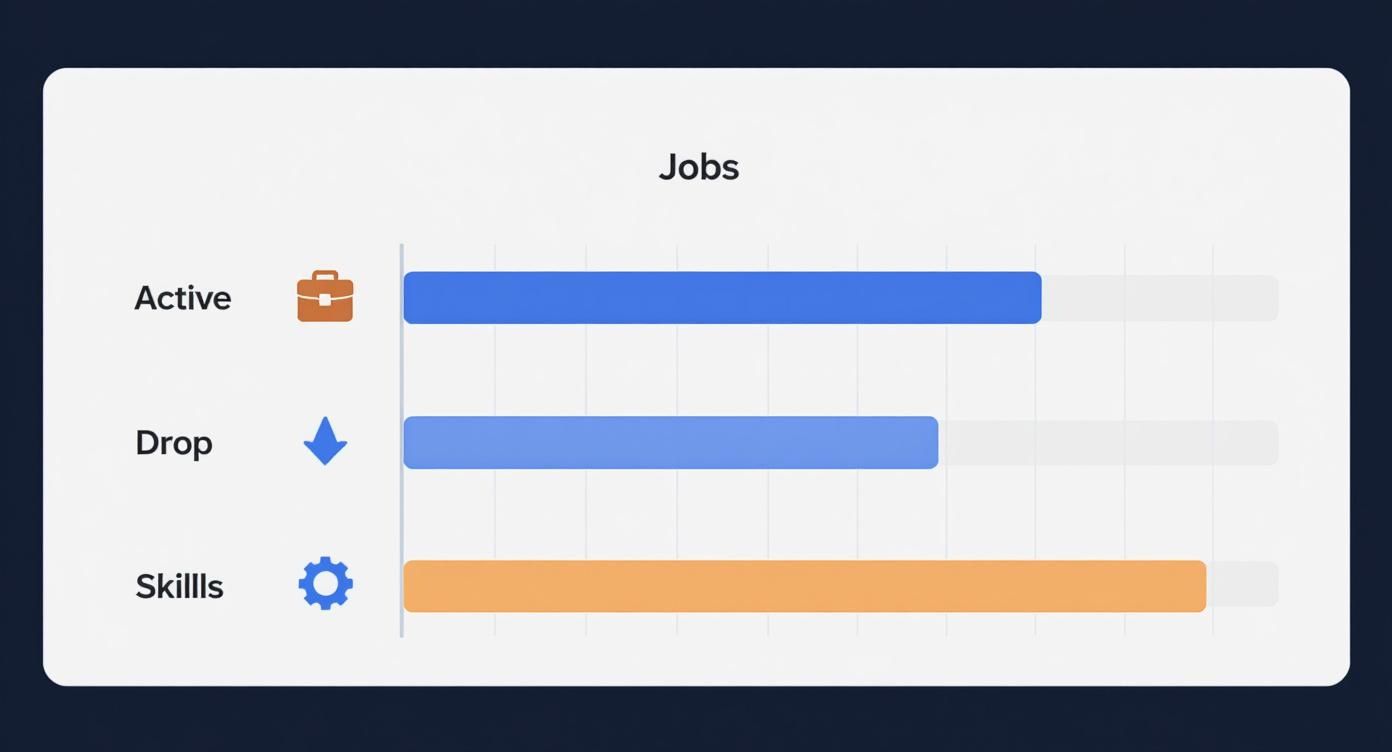
As you can see, while the exact number of open jobs can go up and down, the demand for a broad range of skills is constant. This really drives home the point that to maximise your salary, you need to keep learning and adapting.
How Location and Industry Impact Your Paycheck
Your experience level is one thing, but where you work in Germany can make a big difference to your bank account. The major economic hubs almost always offer higher salaries, partly to offset a higher cost of living and partly to attract the best talent in a very competitive market.
Munich, home to automotive and engineering titans, often tops the salary charts. Berlin has its world-famous startup scene, which means pay can be competitive, though it varies a lot depending on whether you're at a bootstrapped startup or a well-funded scale-up. Don't overlook cities like Hamburg and Frankfurt either, which are major players in e-commerce and FinTech, respectively.
Your choice of industry is another key lever. A data scientist working for a high-margin automotive or pharmaceutical company will almost certainly earn more than someone in the public sector or for a non-profit.
Beyond the Base Salary: Looking at Total Compensation
A job offer in Germany is about much more than just the gross salary. German companies are known for offering fantastic benefits packages that add a ton of value. When you're weighing your options, make sure you look at the whole picture.
Here are a few common perks to look out for:
- Performance Bonuses: Annual bonuses are very common and are usually tied to your performance and the company's success. These can easily add another 5-15% on top of your base salary.
- Company Pension Scheme (Betriebliche Altersvorsorge): Many employers will contribute to a private pension plan on your behalf, giving your retirement savings a nice boost.
- Professional Development Budget: A dedicated annual budget for conferences, courses, or certifications is a standard perk in many tech companies.
- Transportation Allowances: Subsidised public transport tickets or even a company car are common benefits, especially in larger cities.
- Equity or Stock Options: This is especially true for startups and high-growth tech firms. Getting a slice of the company can be a huge long-term financial win.
Navigate Data Scientist Opportunities In Major German Cities
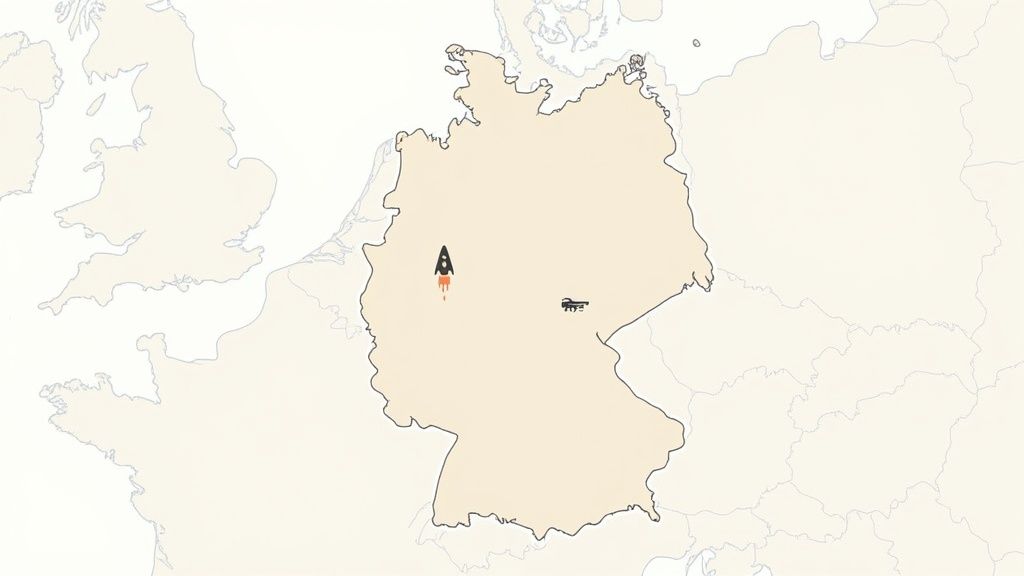
Picking the right city is as crucial as choosing your first role. Each German metropolis brings its own flavour of technology, culture and industry focus.
By late 2025, more than 400 data science openings are advertised nationwide, signalling a healthy yet competitive market. Munich alone accounts for nearly 25% of these roles. You can explore the latest data science job trends in Germany to see how demand is shifting.
Here’s a quick run-down of the main hotspots:
Data Science Hubs in Germany Compared
A comparison of the top German cities for data scientists, highlighting their primary industries, company types, and job market focus.
| City | Primary Industries | Dominant Company Type | Typical Job Focus | |-----------|--------------------------------------------------------|--------------------------------|-----------------------------------------------------| | Berlin | E-commerce, FinTech, SaaS, Digital Media | Startups, Scale-ups | Product analytics, ML prototypes, A/B testing | | Munich | Automotive, Aerospace, Insurance, High-Tech Manufacturing | Corporate Giants | Autonomous driving algorithms, Supply chain optimisation | | Hamburg | E-commerce, Media, Logistics, Gaming | Retail & Media Corporations | Consumer behaviour prediction, Inventory management | | Frankfurt | Finance, FinTech, Banking, Regulatory Compliance | Banks, Financial Institutions | Algorithmic trading, Risk modelling, Fraud detection |
This snapshot shows how each city carves out its own niche. Next, let’s dive into what makes each location special.
Berlin: The Agile Startup Capital
Berlin thrives on speed and experimentation. Here you’ll find small teams moving fast, often juggling analytics, prototypes and feature launches all at once.
- Culture: Flat structures, English-friendly offices and a mindset that prizes quick wins.
- Key Employers: Companies like Zalando, N26 and Delivery Hero.
- Core Skills: Comfort with Python and R, strong grasp of A/B testing and the ability to deploy models on AWS or GCP.
Many roles expect you to wear several hats—so adaptability is your greatest asset.
Munich: The Corporate Engineering Powerhouse
Munich’s data science scene revolves around deep expertise and large budgets. You’ll often join specialised teams tackling high-stakes problems for established firms.
- Culture: Structured hierarchies, German language skills valued for cross-department projects.
- Key Employers: BMW, Audi, Siemens and Allianz.
- Core Skills: Domain knowledge in computer vision, natural language processing and advanced statistical modelling. Familiarity with enterprise-grade platforms is a plus.
Here, precision matters more than velocity.
Hamburg: The E-commerce and Logistics Hub
Thanks to its port legacy, Hamburg excels at supply chain and e-commerce analytics. Data scientists help optimise everything from warehouse flows to personalised marketing.
- Culture: Balanced work-life ethos with both large corporations and nimble tech firms.
- Key Employers: Otto Group, major media houses, gaming studios.
- Core Skills: Time-series forecasting, inventory optimisation and customer segmentation techniques.
You’ll join teams that use data to keep goods moving and customers engaged.
Frankfurt: The FinTech and Finance Centre
Frankfurt lives and breathes finance. Here, data science intersects with risk management, trading algorithms and regulatory compliance.
- Culture: A blend of traditional banking rigour and a growing cohort of startups.
- Key Employers: Deutsche Bank, Commerzbank, emerging FinTechs.
- Core Skills: Quantitative analysis, time-series econometrics and fraud-detection methods.
If you’ve got a strong maths background and a curiosity about markets, Frankfurt offers some of the most challenging—and rewarding—projects.
What German Employers Actually Look for in a Data Scientist
Landing a data scientist job in Germany isn't just about ticking boxes on a CV. It’s about showing you have a specific mix of hard technical skills, sharp analytical thinking, and the business sense to make it all count.
Think of it like building a bridge. You need a rock-solid engineering foundation (your tech skills), a brilliant design that solves a real problem (your modelling expertise), and the ability to explain to everyone why the bridge is needed and how to use it (your communication skills). German employers, known for their focus on quality and practical results, look for this complete package.
A data scientist who can code up a storm in Python but can’t explain their model's business impact to the marketing team is only doing half the job. Likewise, a great storyteller who can't back up their narrative with sound statistical methods won't get far. Let's break down what you need to bring to the table.
Your Technical Toolkit: The Non-Negotiables
These are the foundational skills you simply must have. This is your ability to get your hands dirty with data—to pull it, clean it, and prepare it for analysis. For nearly any data science role in Germany, being proficient here is the cost of entry.
Job descriptions will consistently call out these core competencies:
- Fluency in Python and its Core Libraries: You need to be completely comfortable with Python. This specifically means using libraries like Pandas for manipulating data, NumPy for numerical work, and Scikit-learn for building machine learning models. It's the de facto language for data science here.
- SQL for Getting Data: The ability to write clean, efficient SQL is absolutely fundamental. You'll be expected to pull, join, and filter data from relational databases every single day, whether you're at a massive corporation or a small startup.
- Experience with a Cloud Platform: You need to know your way around at least one of the big three: AWS, Azure, or Google Cloud Platform (GCP). Employers expect you to be familiar with services for storage (like AWS S3), computing (EC2), or building models at scale (SageMaker).
Want to really stand out? Experience with big data tools like Spark or data visualisation platforms like Tableau or Power BI will give your application a serious edge.
The Brains of the Operation: Statistical and Machine Learning Know-How
Your tech skills let you work with data, but your modelling skills are what let you create value from it. This is where you turn raw information into predictive power and smart business decisions. German companies, with their deep engineering heritage, have a huge appreciation for analytical rigour.
Here’s what they’re looking for:
- A/B Testing and Causal Inference: This is a big one, especially for e-commerce and product roles in cities like Berlin and Hamburg. You have to understand causality—how to design and run experiments that prove a specific change caused a specific result, not just that they were correlated.
- Machine Learning Algorithms: A solid grasp of core ML models is a must. This covers everything from linear and logistic regression to decision trees and clustering. For more senior roles, you’ll be expected to know your way around more advanced techniques like gradient boosting (think XGBoost) or even neural networks.
- Predictive Analytics: Companies want to see the future. Can you build a model to forecast sales? Predict which customers are about to churn? Optimise inventory levels? This skill has a direct and obvious impact on the bottom line, making it incredibly valuable.
The real mark of an expert isn't just building a model with 99% accuracy. It's about choosing the right model for the business problem and being honest about its limitations. That kind of judgement is what separates a junior data scientist from a lead.
The Human Element: Communication and the German Language Question
Finally, all the technical brilliance in the world is useless if you can't convince people to act on your findings. This is where your interpersonal skills come in.
First and foremost is business acumen. You have to understand what the company is trying to achieve and how your work fits into that bigger picture. You’ll need to translate dense statistical findings into clear, compelling stories for managers, product owners, and engineers who aren't data experts.
So, do you need to speak German? It depends. In the Berlin startup scene, you'll find many companies operating almost exclusively in English. However, once you move into more traditional industries or outside the major tech hubs, German becomes a huge advantage. For senior roles in places like Munich or Stuttgart that involve working with different departments, a B2 level or higher is often a firm requirement. That said, plenty of data scientist jobs in Germany are open to English-only speakers, especially at large international firms.
Practical Playbook For Data Scientist Job Applications
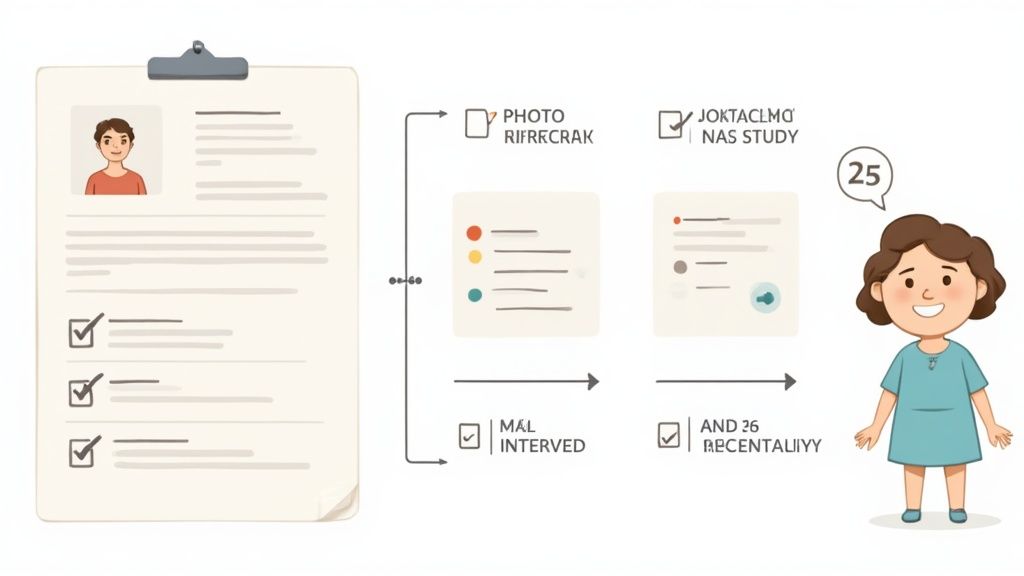
Tackling the German job market means more than showcasing your technical chops. You need to present your skills exactly how German recruiters expect. This guide will walk you through each step—from crafting a standout CV to nailing the final interview.
Treat your application as a clear business case. Every document should be tailored, precise and reflect the German ethos of thoroughness. That first bit of polish already demonstrates the analytical mindset you bring to the table.
Crafting A German-Style CV And Cover Letter
Preparing a Lebenslauf and an Anschreiben to German standards takes some adjustments. Your Lebenslauf should be tabular, chronological and no longer than two pages. A professional headshot is now optional but can still leave a positive impression in traditional companies.
The Anschreiben gives your story context. Avoid repeating your CV verbatim. Instead, connect past projects directly to the role’s needs and outline exactly how you plan to tackle their challenges.
- Emphasise your research: mention a recent company initiative.
- Keep paragraphs concise: aim for a logical flow.
- Answer this question: “Why am I the perfect candidate for this data scientist role?”
Showcasing Your Skills With A Strong Portfolio
A CV alone rarely convinces a hiring manager in data science. Your GitHub profile is your digital workshop—proof you can solve real problems. Building a tight portfolio lets recruiters see your code and thought process first-hand.
Here’s how to structure your GitHub portfolio for maximum impact:
- Curate Your Best Projects: Pick 3-5 that showcase end-to-end workflows—from data cleaning to model deployment.
- Write Clear READMEs: Describe the business problem, data source, methodology and key insights.
- Clean, Commented Code: Follow best practices so your code reads like well-penned prose.
This portfolio is concrete evidence of the skills you list on your CV. For more tips on building a standout application, visit the JobCopilot blog.
Mastering The German Interview Process
Interviews for data scientist jobs in Germany often unfold in multiple stages. Each step tests a different blend of technical depth, problem-solving and cultural fit. Knowing what to expect lets you stay calm and present your best self.
- HR Screening (30-45 minutes): A chat about your motivation, salary expectations and broad experience. Prepare to explain why you want to work in Germany and at that specific company.
- Technical Interview With The Team (60-90 minutes): Deep-dive into your past projects, statistical foundations and preferred tools. Be ready for questions on machine learning theory and data analysis methods.
- Take-Home Case Study Or Live Coding Challenge: You might analyse a dataset in your own time or solve a problem under pressure. Aim for clear, reproducible code and a structured presentation of your results.
- Final Round (On-site Or Video Call): Often with senior leadership or the department head. You’ll discuss your case study findings and how you would drive long-term success for the team.
Preparation makes all the difference. Practice explaining your work succinctly, revisit core concepts and adopt a step-by-step approach to problem-solving. In many cases, showing how you think is just as important as the solution itself.
Getting to Grips with Visas and Relocation to Germany
Landing a data scientist job offer in Germany is a huge win. If you're coming from outside the EU, your next big challenge is the famous German bureaucracy. It can seem intimidating, but Germany has well-defined routes for skilled professionals, so with a bit of prep, the process is actually quite manageable.
Think of your visa application as your first real-world German data project. You have a clear goal (get the permit), a set of requirements (eligibility rules), and a list of necessary inputs (your documents). Success comes down to organising everything perfectly and executing with precision. For most non-EU data scientists, there are two main paths: the EU Blue Card and the Skilled Worker Permit.
Choosing Your Visa Pathway
The EU Blue Card is the gold standard for highly-qualified professionals. It's designed to attract top talent and comes with some great perks, like a faster route to permanent residency and making it easier for your family to join you. To get one, you’ll need a university degree that Germany recognises and a job offer with a salary that hits a specific minimum threshold.
The Skilled Worker Permit is another great option, often for those with vocational training or academic degrees that might not meet the Blue Card's specific criteria. The salary requirements here are a bit more flexible, though it might take a little longer to secure permanent residency. The right visa for you really just depends on your qualifications and the salary you've negotiated.
For most data scientists, hitting the salary threshold for the EU Blue Card is well within reach, especially if you're in a mid-level or senior role. This visa was practically made for people with your skillset, which is in high demand across Germany.
Key Requirements and Documents
No matter which visa you go for, being prepared is half the battle. German authorities appreciate when everything is in perfect order, so getting your paperwork sorted from the get-go is non-negotiable.
- Degree Recognition: First things first, check if your university degree is recognised in Germany. You can do this by searching the official Anabin database. If your degree isn't listed, you'll likely need to get a "Statement of Comparability" from the Central Office for Foreign Education (ZAB).
- Employment Contract: You absolutely need a signed contract from your German employer. It should clearly state your job title, responsibilities, and—most importantly—your gross annual salary.
- Proof of Health Insurance: You must be able to prove you have valid health insurance coverage starting from day one of your arrival in Germany.
Navigating the Relocation Essentials
Once the visa is sorted, it's time to tackle the move itself. When you land, there are a few key administrative tasks you need to tick off to get your life up and running.
- Find a Place to Live: The housing market, especially in cities like Berlin and Munich, is notoriously tough. Get a head start by searching on major online portals well before you arrive.
- Register Your Address (Anmeldung): This is a big one. You are legally required to register your address at the local citizens' office (Bürgeramt) within two weeks of moving in.
- Open a Bank Account: You'll need a German bank account for your salary, rent, and all your day-to-day spending.
- Get Your Tax ID: After you complete your Anmeldung, your tax identification number (Steueridentifikationsnummer) will be mailed to your registered address automatically.
Taking care of these steps one by one will make the transition much smoother, freeing you up to focus on what really matters: starting your exciting new job as a data scientist in Germany.
Got Questions? Here Are Some Straight Answers
Even with a detailed guide in hand, you probably still have a few questions buzzing around. Let's tackle some of the most common ones that come up for international data scientists looking to work in Germany.
How Much German Do I Really Need to Know?
This is a big one. While you can definitely find English-speaking roles, especially in the buzzing Berlin startup world, knowing German gives you a massive advantage. For a lot of corporate jobs in cities like Munich or Stuttgart, a B2 level is pretty much the unofficial minimum for working smoothly with teams outside of the tech bubble.
Bottom line: Being fluent opens up far more doors, makes daily life a whole lot easier, and is almost essential if you're aiming for senior positions where you'll be managing stakeholders.
What's the Work-Life Balance Like?
Germany has a reputation for great work-life balance, and it's well-deserved. By law, you get at least 20 days of paid holiday, but most companies give you somewhere between 25 and 30 days. The standard work week is usually around 38-40 hours.
Working late isn't a badge of honour here; in fact, it's often discouraged. Plus, flexible hours and hybrid models are becoming much more common. This focus on personal time is a huge pull for professionals who want a career they can sustain long-term.
The German work ethic is all about being highly efficient and focused during work hours. This creates a really clear line between your professional life and your private time.
Can I Get a Fully Remote Data Science Job?
Fully remote jobs aren't as widespread in Germany as they might be in other countries, but things are shifting. You'll find that many companies now prefer a hybrid setup, asking you to come into the office maybe two or three days a week.
If you're set on a 100% remote role, your best bet is to look at startups and international tech companies. More traditional sectors, like the automotive or manufacturing industries, often need you on-site simply because of the hands-on nature of the work.
What Are the Biggest Challenges for International Applicants?
The two main hurdles people face when applying from abroad are the visa process and getting their degree recognised. Before you do anything else, you need to check if your university qualifications are considered equivalent in Germany by using the Anabin database.
Another thing that trips people up is the German application style. They have very specific expectations for your Lebenslauf (CV) and Anschreiben (cover letter). To make your application stand out, you really need to adapt it to fit these local customs.
Ready to speed up your job search and actually land interviews? Acquispect uses AI to match you with the best roles for your profile and writes tailored applications in minutes. It saves you a ton of time and seriously improves your chances. Start your free 30-day trial today and find your ideal job faster.